Robert
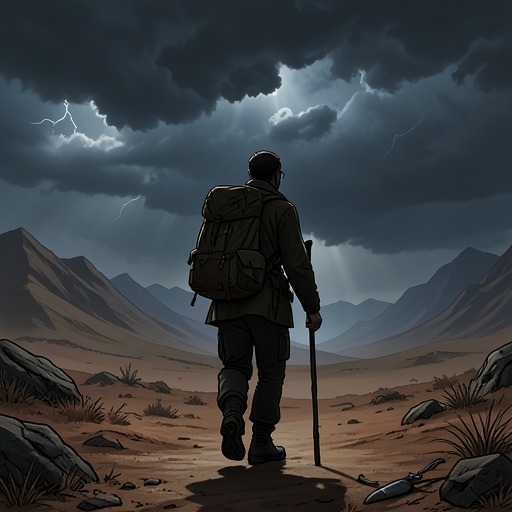
Narcissus and GoldmundRobert is a young pilgrim from Lake Constance whose short-lived companionship with Goldmund unfolds as the Black Death overtakes the countryside. A former cabinetmaker and an inexperienced religious traveler, he brings a mixture of devotional habits, restless wandering, and acute fear into a journey otherwise shaped by Goldmund’s steadier curiosity about mortality. He follows Goldmund through deserted settlements, helps make a temporary shelter, and ultimately disappears from the narrative; his fate is left unknown.
Identity and Background
Robert is the son of an artisan and grew up working in his father’s cabinetmaking shop. As a boy he had attended the school of the St. Gallus monks and resolved to make a pilgrimage to Rome. His father’s death gave him the opportunity to set out, but the decision left his mother and sister without his help. His sister took charge of the household and workshop, married an assistant, and established herself in the family business while Robert was away.
The pilgrimage expressed a genuine urge to travel, but it was also bound up with a modest, ritual-centered piety. Robert enjoyed churches and their ceremonies—masses, baptisms, burials, incense, and candles—and had once been an enthusiastic altar boy. His interest was less in study than in contemplation and quiet devotion. He reached Rome, stayed for a year or more with religious communities, visited holy places, and received the sacraments. Returning home, he found that the household had reorganized without him; when he proposed traveling again, no one asked him to stay. His mother gave him a few pennies, and he resumed wandering in pilgrim’s clothes, with shrine tokens and blessed rosaries attached to him.
Companionship with Goldmund
Robert first met Goldmund during his travels. After accompanying him for a day and exchanging stories about the road, he disappeared in a town, reappeared elsewhere, and eventually stayed with him for an extended time. Unlike Viktor, Goldmund’s earlier traveling companion, Robert became an amiable and dependable presence. He admired Goldmund’s knowledge, boldness, intelligence, strength, and directness, and tried to win his approval through small acts of service. Goldmund, in turn, liked Robert and recognized a limited kinship in his companion’s surrender to wandering and unfamiliar places, though he did not take him entirely seriously.
Their closeness had a practical limit: Robert had to learn not to press Goldmund when melancholy made him withdraw into silence. At such times Goldmund would neither talk nor accept questions or consolation. Robert adjusted to this pattern and learned to leave him alone. He also regarded Goldmund’s talents with near-wonder. He had heard him recite Latin verses and songs, explain the carved figures at a cathedral portal, and draw full-sized figures quickly on a bare wall. Robert admired Goldmund’s ability to attract women as well, although that aspect of his companion’s life pleased him less.
The Plague and Their Divergent Responses
The pair’s travels changed abruptly when armed peasants stopped them outside a village and threatened them with violence if they came closer. Goldmund asked what had happened, but a stone struck him; Robert had already run. He waited beneath a crucifix in a field while Goldmund followed. The next morning, at an isolated farm, the reason for the villagers’ hostility became clear. The household was silent and abandoned, and Goldmund entered the house and discovered that its inhabitants were dead. Robert remained outside and recoiled when Goldmund came back with the news that the whole family had died.
Robert immediately understood the danger as plague and urged Goldmund to leave him, fearing that his companion had been infected by contact with the dead. Goldmund stopped him. He reasoned that either of them might fall ill and insisted that they remain together rather than let Robert die alone without anyone to bury him. Goldmund promised to bury Robert if he died, and told him that Robert could decide for himself what to do if Goldmund died. Until then, he said, neither would leave. The decision settled their immediate dispute: Robert obeyed, and Goldmund directed their work, sending him to find a bucket so they could milk the unattended cow.
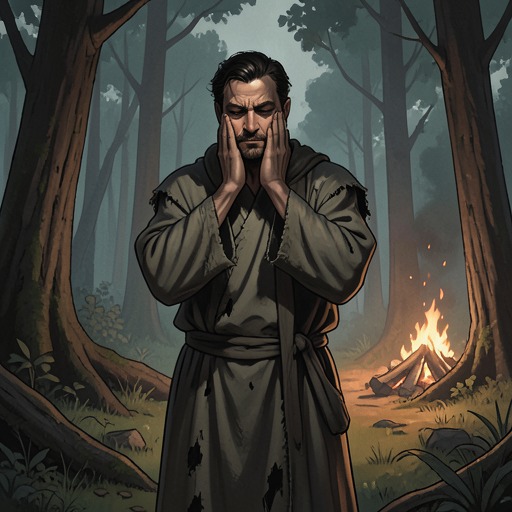
As they continued through plague-stricken country, the scale of the crisis made Robert’s fear persistent. Villages varied in how they treated strangers, farms stood empty, corpses lay unburied, and livestock wandered or starved. The companions fed and milked animals and found provisions in deserted places, but the abundance did not make the journey easy. Robert remained frightened by the disease and by the dead, repeatedly suspecting that he had caught the plague and checking his body for signs of illness. He also tried to protect himself by holding his head and hands in campfire smoke, which he believed might prevent infection. Goldmund mocked and scolded him, but did not share his fear or revulsion; he moved through the devastated landscape with a grave fascination.
Lene and the End of the Partnership
The disagreement became decisive when Goldmund met Lene, who wanted to leave a city where people were dying. Robert was waiting outside the gates. Seeing Goldmund with her, he protested that bringing someone out of the plague-stricken city was reckless and said he would not continue with them. Goldmund let him finish, then declared that Lene would stay with him and that Robert would come too. He proposed that the three live in an empty hut or build one: he would head the household, Lene would be its mistress, and Robert would share their life as a friend.
The following day they found an empty log cabin in a birch wood, apparently built by woodcutters. They had also taken a stray goat. Goldmund assigned the former cabinetmaker’s task of making a partition so that he and Lene could have one room while Robert and the goat used another. Robert began cutting birch posts, while Goldmund and Lene gathered bedding materials. The shelter briefly made their arrangement workable, but it did not resolve the distance between Robert’s caution and Goldmund’s determination to follow his own attachments.
When Lene later became gravely ill, Robert called from the forest to ask whether she had improved and said he would stay if it was not plague. Goldmund, who had already tired of Robert’s presence and considered him too timid for the crisis, falsely told him that Lene was dying and that he too was infected. The lie was intended to drive Robert away. Robert vanished and did not return. The narrative does not establish whether he escaped the disease or where he went afterward.
Narrative Significance
Robert’s role is defined by contrast rather than by a separate destination. He is pious but not scholarly, restless but reluctant to accept the full danger of the road, and capable of companionship so long as Goldmund’s moods and choices do not overwhelm him. The plague exposes the difference between them: Robert tries to avoid exposure and repeatedly fears his own infection, while Goldmund accepts the shared risk and insists on mutual care. Yet Goldmund’s offer of solidarity has limits. Once Robert’s fear becomes intolerable to him, Goldmund ends the companionship through deception rather than continued persuasion.
Robert also gives Goldmund’s wandering a practical human counterpoint. Their work at the abandoned farm and the cabin makes survival depend on shared labor, while their arguments reveal how differently each man inhabits the same catastrophe. Robert’s last known place in the story is not a confirmed death but an absence. Later, Goldmund remembers him as someone who might still be wandering, unless the plague had caught up with him; that uncertainty preserves Robert as one of the many lives dispersed across Goldmund’s memory of the devastated lands.