
The City’s Sunday Social Machinery
NauseaThis flow follows the class rituals of Bouville and Roquentin’s growing awareness that their apparent solidity depends on repeated conventions.
increasing Bearing strength in each event
 decreasing
Bearing strength in each eventdecreasingCivic History Made Visible
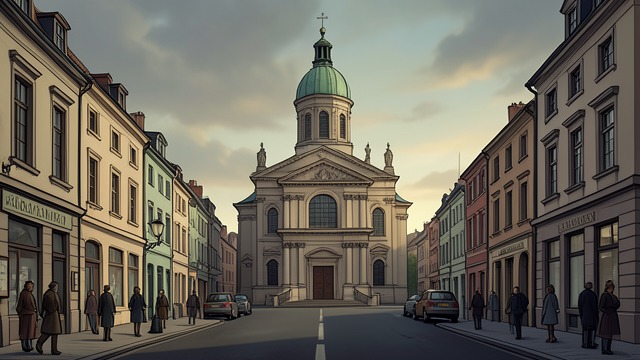
Civic History Made Visible
A church and a district
Roquentin recounts how elite influence reshaped a street and placed a major church between rival districts. The built landscape records compromises among powerful groups while appearing permanent to later residents.
Memory as civic display
The polished Sunday street presents the city’s history as a story of refinement and success. Its prosperity depends on choices and conflicts that its present rituals largely conceal.
Respectability in Repeated Gestures

Respectability in Repeated Gestures
Greetings affirm rank
Families exchange formal greetings, recognize familiar faces, and signal their position through clothes and manners. The street’s movement turns social distinctions into repeated bodily habits.
A role mistaken for nature
The rituals seem self-evident to those performing them. Roquentin’s detached gaze reveals that their authority comes from repetition, not from an unquestionable order written into existence.
Nature Behind the City
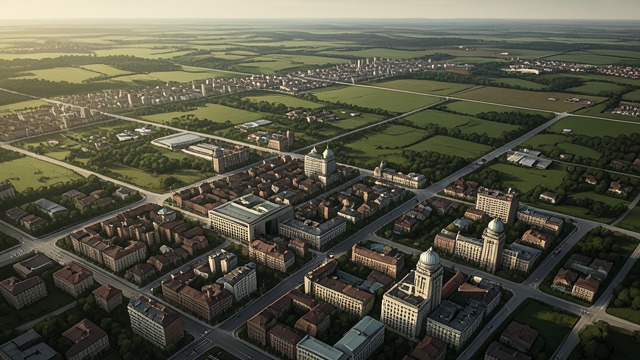
Nature Behind the City
The city appears fragile
From above Bouville, Roquentin imagines its orderly streets as a thin arrangement laid over indifferent natural existence. The inhabitants trust schedules, rules, and familiar cycles as if they were permanent laws.
Habit offers no guarantee
He foresees how a small change could make ordinary things seem monstrous. The vision deepens his distance from bourgeois confidence: stability may be only habit, not a secure foundation.
During Roquentin’s Sunday walk
Sunday morning, as the crowd fills Rue Tournebride
Near the end, as Roquentin prepares to leave
