
The News of Little Lucienne
NauseaThis thread traces how a newspaper report of a child’s rape and murder intensifies Roquentin’s bodily horror and his sense of existence.
increasing Bearing strength in each event
 decreasing
Bearing strength in each eventdecreasingThe Report Arrives
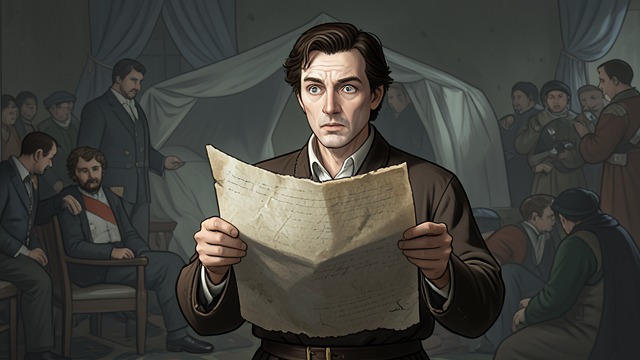
The Report Arrives
A public horror
Roquentin reads that Little Lucienne’s body has been found after an assault and murder. The news brings a concrete human crime into a day already dominated by his reflections on existence.
Violence enters perception
The printed report does not remain safely abstract. It becomes entangled with the smell of ink, the paper in his hands, and the disturbing physical reality of a body that exists after its victim is gone.
The Body and the Newspaper
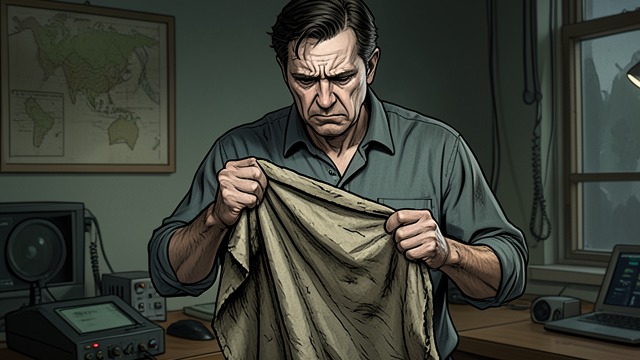
The Body and the Newspaper
Sensation overwhelms thought
Roquentin crumples the paper but cannot escape the fact it describes. His thoughts fragment into bodily images, joining his own flesh to the crime’s violence in a frightening rush.
Existence feels invasive
The report sharpens his sense that existence is not an idea kept at a distance. It presses through bodies, objects, and sensations, making ordinary separation feel precarious.
No Resolution Offered
No Resolution Offered
The crime remains outside his control
Roquentin does not investigate or solve the murder. The news remains a fragment of the surrounding world, unresolved and resistant to the meanings he might want to impose on it.
A harsher confrontation
The episode deepens the novel’s refusal to turn suffering into a neat lesson. Roquentin’s response reveals his distress, but it cannot restore the child or make the world’s contingency morally coherent.
After Roquentin abandons his Rollebon research
On the walk after reading the report
Later that same evening
