
The City as a Temporary Refuge
NauseaThis flow follows Roquentin’s uneasy attachment to urban spaces as temporary shelters from nature and solitude.
increasing Bearing strength in each event
 decreasing
Bearing strength in each eventdecreasingFamiliar Cafés
Familiar Cafés
Company without intimacy
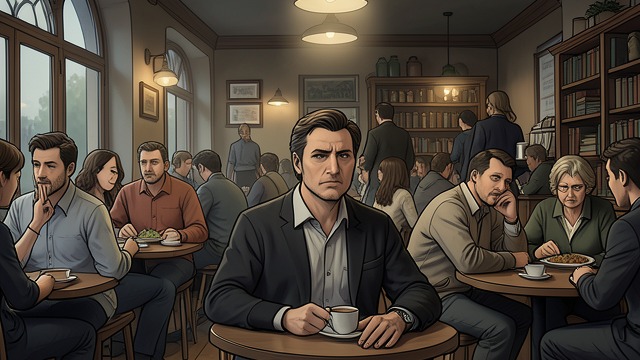
Roquentin spends time in cafés where customers eat, talk, and follow repeated routines. Their presence seems to protect him from the isolation he experiences in his room.
Shelter proves limited
He recognizes that he has few genuine connections to the people around him. When nausea enters the café, even its familiar light and company cease to offer reliable refuge.
The Mineral Boulevard
The Mineral Boulevard
A colder refuge
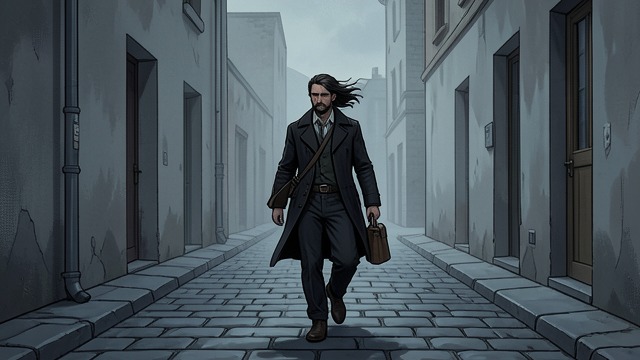
Roquentin walks along Boulevard Noir, drawn to its empty streets, walls, and stones. Its apparent lifelessness feels cleaner than the crowded, expressive world of the cafés.
Separation mistaken for freedom
He imagines himself as a wave of cold air, detached from flesh and company. The moment offers purity, but it does not provide a lasting escape from existence.
The Garden Refuses Shelter

The Garden Refuses Shelter
A place turns overwhelming
In the public garden, the chestnut root defeats Roquentin’s effort to see nature as background or useful scenery. The place becomes an encounter with existence rather than a calming retreat.
Refuge becomes revelation
The garden does not save him from nausea; it makes its source unmistakable. Roquentin leaves with knowledge, not comfort, and the city’s spaces can no longer be treated as secure borders against nature.
Early in the diary
On the night of the café episode
Near the ending
