
Lucie’s Suffering
NauseaThis thread follows Roquentin’s changing view of Lucie’s private sorrow and his brief encounter with its more exposed, overwhelming form.
increasing Bearing strength in each event
 decreasing
Bearing strength in each eventdecreasingSorrow Kept Under Control

Sorrow Kept Under Control
The everyday complaint
Roquentin overhears Lucie speaking about her drunken, declining husband while she works. She maintains a composed tone and offers advice, but her sorrow persists beneath the routine.
Pain constrained by habit
She hums when alone to keep from thinking and describes a feeling lodged in her throat. Her suffering appears bound to the familiar domestic life she cannot simply leave.
A Cry on Boulevard Noir
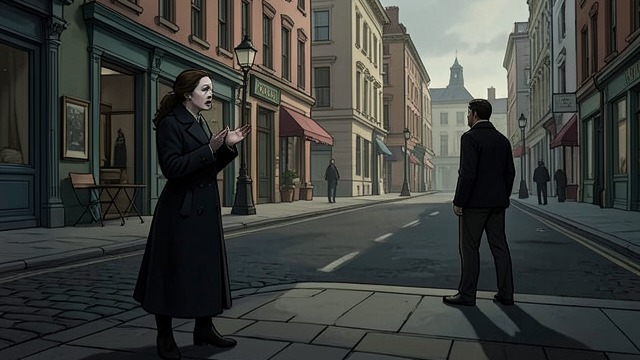
A Cry on Boulevard Noir
Private pain erupts
Roquentin sees Lucie pleading with a man who has left her in the darkness. Her restrained daytime sorrow becomes an exposed cry that fills the empty street.
A changed perception
He sees her as transformed by suffering, almost stone-like, and wonders whether this is her true nature. The encounter shows how a familiar person can become newly strange when pain breaks through social routine.
The Street’s Influence

The Street’s Influence
Suffering seems to come from outside
Roquentin senses that the desolate boulevard intensifies Lucie’s distress. He imagines that bringing her back among people and lights might soften the force of the moment.
No rescue follows
He does not intervene and turns away, recognizing that his own calm has kept him from sharing her suffering. Lucie’s pain remains hers, not an occasion for Roquentin to claim a heroic role.
Early in the diary
On the night Roquentin walks Boulevard Noir
Immediately after the encounter
