
Roquentin’s Bond with the Record
NauseaThis flow follows Roquentin’s changing response to a jazz recording, from sensory relief to an idea of artistic form and possible creation.
increasing Bearing strength in each event
 decreasing
Bearing strength in each eventdecreasingA Familiar Tune Returns
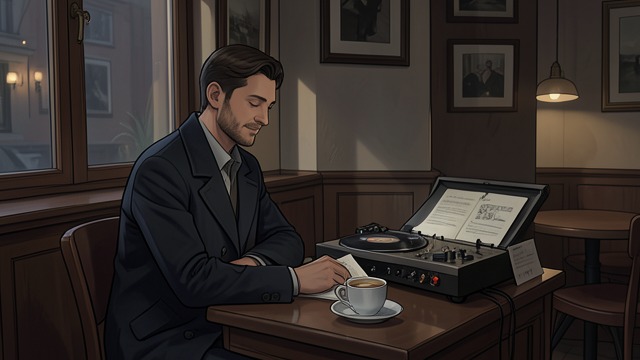
A Familiar Tune Returns
The record interrupts nausea
At Railwaymen's Rendezvous, Roquentin asks for a familiar recording. Its ordered melody briefly makes his body feel firm and his immediate surroundings less oppressive.
Relief remains temporary
The music does not change the physical objects or abolish the nausea permanently. Its force lies in the experience it creates while it plays, a contrasting order within the café’s unstable present.
A Melody Beyond Its Medium

A Melody Beyond Its Medium
Worn record, enduring form
As Roquentin listens again, he distinguishes the melody from the scratched, aging disc that carries it. The recording’s material decay does not seem to diminish the tune’s formal identity.
Beauty without comfort
He rejects the idea that music simply consoles suffering. The melody is moving because it seems to possess a necessity absent from the accidental, excessive world around him.
The Listener Imagines Creation

The Listener Imagines Creation
Attention turns to the maker
Roquentin imagines the unknown composer working in heat and difficulty. The ordinary human circumstances of the tune’s creation become moving because they have produced a form that can outlast them.
A possible work of his own
He wonders whether he could make a book that achieved something similar. The idea becomes a tentative motive for action, not proof that art can excuse existence or guarantee success.
During the first café crisis
On the final evening in Bouville
Immediately before Roquentin leaves Bouville
