
Roquentin’s Recognition of Lucie
NauseaThis flow traces Roquentin’s changing awareness of Lucie, from a familiar worker to a person whose suffering briefly becomes impossible to ignore.
increasing Bearing strength in each event
 decreasing
Bearing strength in each eventdecreasingFamiliarity Without Knowledge
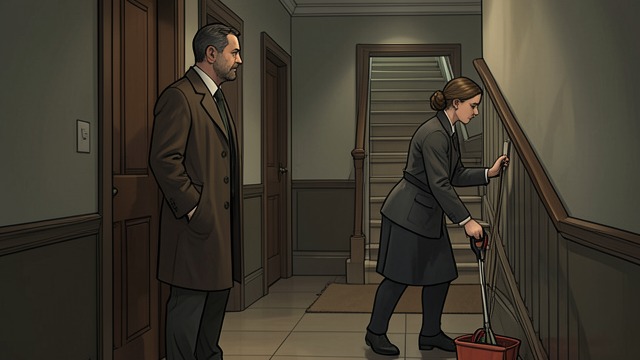
Familiarity Without Knowledge
A worker in the background
Roquentin hears Lucie cleaning the hotel stairs and talking about her husband. He knows her routine and some details of her home life, but their connection remains distant.
Observation has limits
His account interprets her behavior from outside, including her efforts to hum while alone. The intimacy of hearing her does not mean he can fully enter or relieve her experience.
Pain in the Open Street

Pain in the Open Street
A private crisis appears
Roquentin recognizes Lucie pleading with a departing man. Her voice and posture turn her familiar distress into an acute public encounter.
An unexpected emotional response
He envies the intensity of her suffering even as he watches with concern. Her pain has become vivid in a way that his own controlled isolation rarely permits.
Recognition Without Rescue

Recognition Without Rescue
A moment of compassion
Roquentin considers whether Lucie has revealed a deeper nature through her anguish. He imagines that the street itself has magnified what she feels.
Distance remains
He does not offer her comfort and eventually walks away. The moment deepens his awareness of another person’s suffering without transforming him into her rescuer or companion.
Early in the diary
On the night of the Boulevard Noir walk
Immediately after Lucie’s cry
