
The Elite’s Claim to Rule
NauseaThis flow traces the conflict between Bouville’s elite self-image and Roquentin’s perception that authority and inherited rights are human constructions.
increasing Bearing strength in each event
 decreasing
Bearing strength in each eventdecreasingA Civic Elite on Canvas
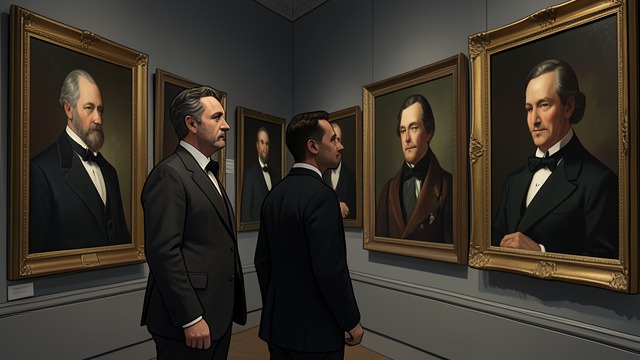
A Civic Elite on Canvas
Leaders presented as exemplary
The portrait gallery presents Bouville’s former business and civic leaders as dutiful builders of prosperity. Their composed images link wealth, family, public service, and moral authority.
A polished account of power
The gallery makes social privilege appear deserved and continuous. Roquentin reads the portraits as a carefully constructed civic story rather than an impartial record of existence.
Duty as a Right
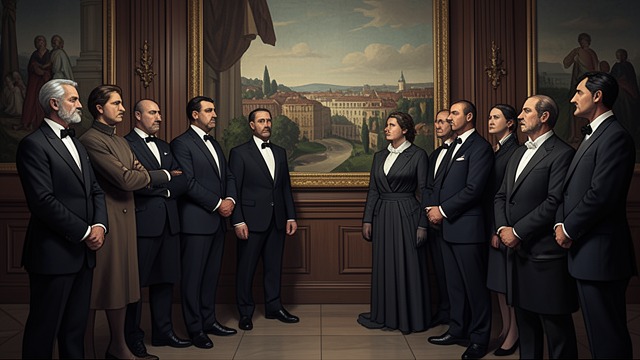
Duty as a Right
The language of obligation
The portraits and remembered speeches cast elite command as a duty belonging to those educated and experienced enough to rule. Their public authority is framed as service to the city.
Roquentin sees self-interest
He recognizes that the claimed duty also protects status and entitlement. The language of civic responsibility cannot make the leaders’ existence necessary or their power beyond question.
The Claim Loses Its Force
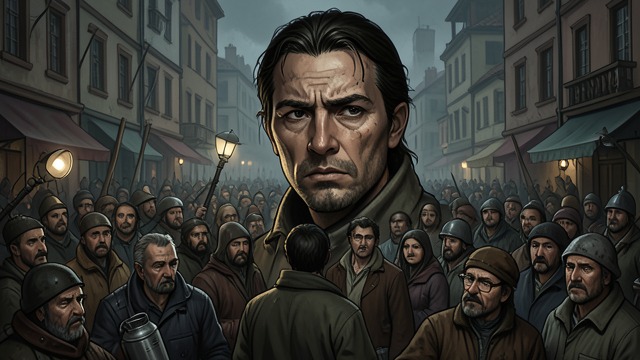
The Claim Loses Its Force
Contingency enters the gallery
Roquentin sees the leaders as people who happened to live, not as figures whose rights were guaranteed by nature. Their portraits preserve public authority but cannot prove a cosmic entitlement to exist.
Respectability is exposed
The elite’s confidence appears to be one way of hiding superfluity and uncertainty. The gallery’s moral order remains socially powerful, but Roquentin no longer accepts it as an answer to existence.
During Roquentin’s museum visit
Before Roquentin leaves the portrait room
Near the end of the museum visit
