
Roquentin’s Fear of Madness
NauseaThis flow follows Roquentin’s fear that his altered perceptions will isolate him from ordinary people and his discovery that the disturbance cannot be dismissed as illness.
increasing Bearing strength in each event
 decreasing
Bearing strength in each eventdecreasingA Fearful Self-Check

A Fearful Self-Check
Changes seem external
Roquentin records odd responses to objects and wonders whether he is becoming insane. Because the changes seem to concern things around him, he tries to reassure himself that he remains rational.
Normality as refuge
He imagines a regular world in which familiar visitors and routines can restore calm. That reassurance lasts only as long as the objects retain their ordinary appearance.
The Fear Spreads to Public Space

The Fear Spreads to Public Space
The world seems unstable
Roquentin imagines the café manager’s possible death and finds the city full of unpredictable threats. Familiar streets and buildings no longer limit what might happen.
Isolation intensifies
He moves through Bouville watching objects for signs of change. The effort to control uncertainty leaves him increasingly alone, unable to use shared routines as reliable proof that everything is normal.
Madness Gives Way to Recognition
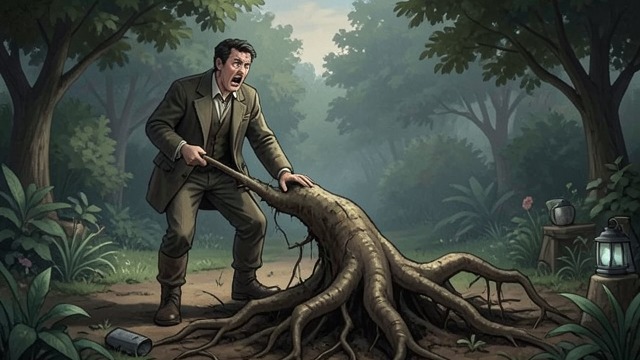
Madness Gives Way to Recognition
A coherent object of fear
The garden encounter seems at first to threaten Roquentin with a world gone mad. He discovers, however, that the root’s overwhelming presence is not a private hallucination with a simple cure.
A philosophical crisis
He recognizes the disturbance as an encounter with existence itself. The fear remains, but it becomes intelligible as a response to contingency rather than evidence that he alone has lost his mind.
In the undated pages before the diary
On the foggy Friday
During the chestnut-root revelation
