
Art, Existence, and Possible Meaning
NauseaThis flow traces the novel’s contrast between accidental existence and the formal coherence of art, culminating in Roquentin’s tentative decision to create.
increasing Bearing strength in each event
 decreasing
Bearing strength in each eventdecreasingMusic Offers a Different Time
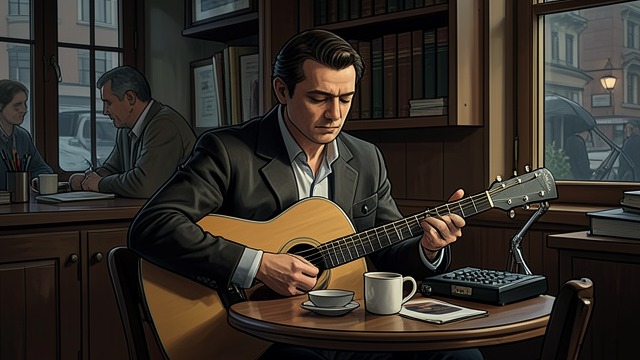
Music Offers a Different Time
A melody crosses the present
The recording’s sequence of notes briefly seems distinct from the café’s slow, material time. Its form carries Roquentin away from the oppressive immediacy of objects and bodies.
The difference is temporary
The melody ends and the café returns. Music has not abolished existence, but has shown Roquentin a form that seems ordered in a way ordinary life is not.
A Work Outlasts Its Conditions
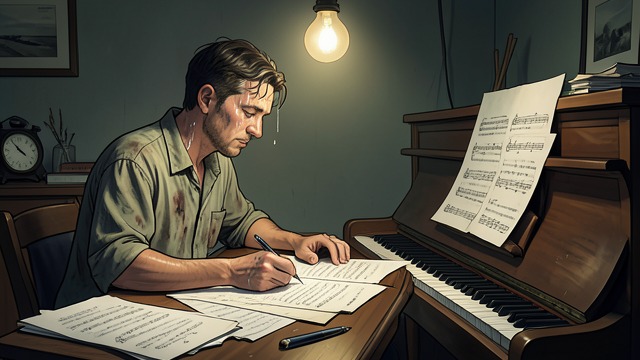
A Work Outlasts Its Conditions
The maker is imagined
Roquentin pictures an unknown composer writing the tune amid heat, sweat, and everyday difficulties. Those contingent circumstances have produced a melody that can be heard beyond the moment of its creation.
Form does not erase suffering
He finds the imagined labor moving without pretending that the composer’s hardship was necessary. Art gives those conditions a form, but does not turn them into a cosmic justification.
A Novel Becomes an Experiment

A Novel Becomes an Experiment
A chosen medium
Roquentin wonders whether a novel could create something beautiful and hard rather than merely recount what has existed. The form might make a different relation to his past possible.
No promise of salvation
He has no proof that he can write such a work or that readers will value it. His decision is a provisional experiment in freedom, not a definitive cure for nausea or a guaranteed defense of life.
During the first café episode
On the last evening in Bouville
In the final entry
