
The Portrait Gallery’s Moral Order
NauseaThis thread follows Roquentin’s encounter with Bouville’s elite portraits and his rejection of the authority and immortality they claim.
increasing Bearing strength in each event
 decreasing
Bearing strength in each eventdecreasingEntering the Gallery
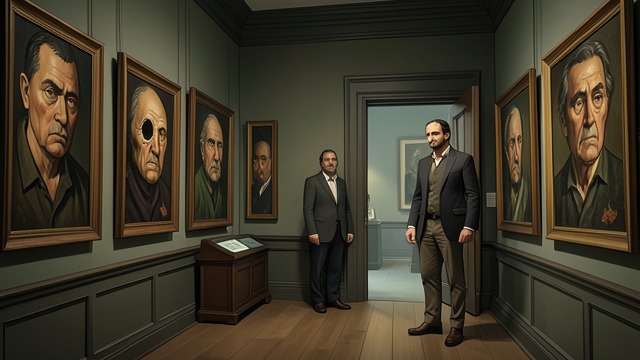
Entering the Gallery
The city’s honored dead
Roquentin enters the museum’s portrait room, where the former leaders of Bouville appear carefully composed and permanently assured. Their portraits present civic power as a settled moral inheritance.
A warning in paint
A separate image of a dead bachelor suggests the social cost of living outside family and respectability. Roquentin feels the gallery’s judgment but does not accept its values as universal truth.
The Leaders’ Claimed Rights
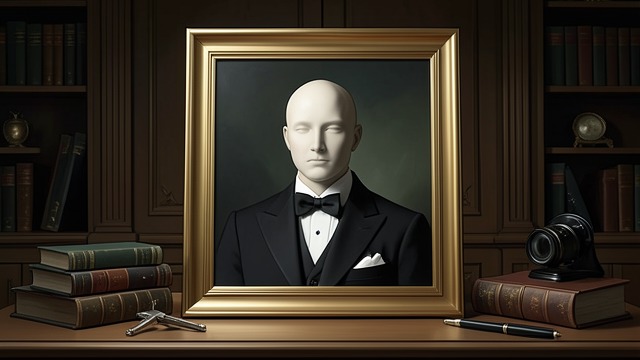
The Leaders’ Claimed Rights
A life authorized
Jean Pacome’s portrait embodies a life organized around duties, family standing, and the right to command. Roquentin sees how the elite treat social success as proof that they deserved to exist.
Authority challenged
The portraits’ certainty cannot answer Roquentin’s sense of contingency. Their smooth moral surfaces look like human efforts to domesticate nature and convert privilege into legitimacy.
The Scale of Blevigne
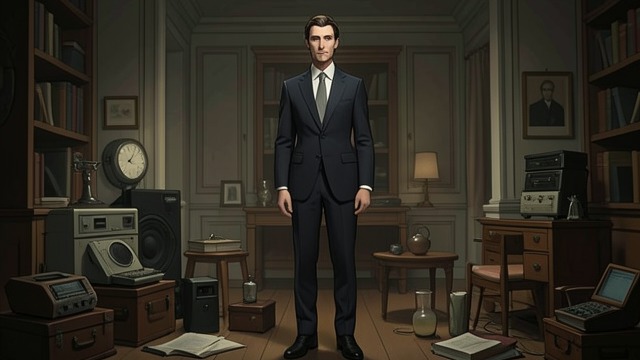
The Scale of Blevigne
A discrepancy noticed
Roquentin recalls his unease before Olivier Blevigne’s portrait and finds a satirical account revealing that the deputy was unusually short. The portrait’s surrounding objects had concealed the scale of his body.
Immortality as construction
The image preserves not the awkward man but a commanding public identity. Roquentin recognizes how art and civic memory can transform weakness into a lasting legend, without making that legend the whole truth.
A Saturday afternoon in Bouville
During the gallery visit
Later in the same museum visit
