Bazun rod and reel
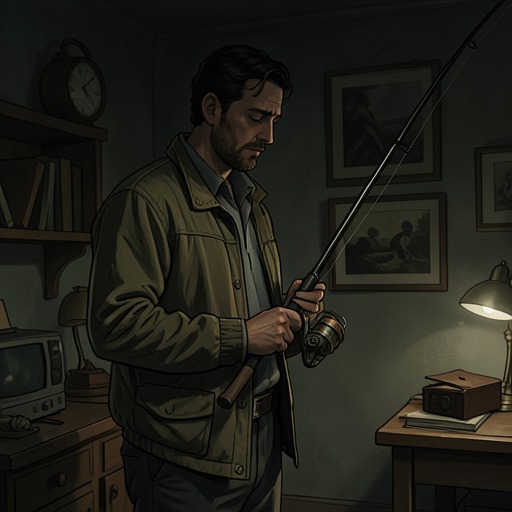
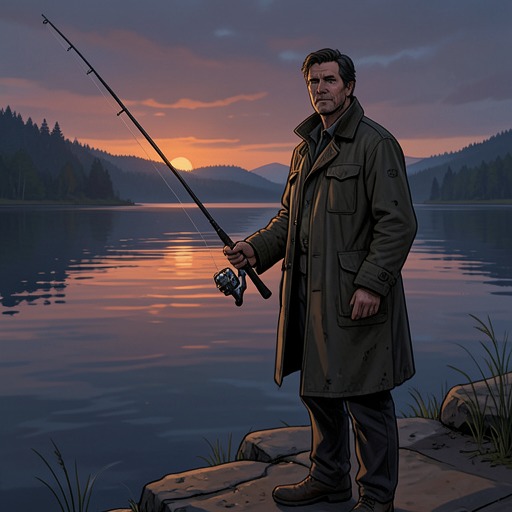
Needful ThingsThe Bazun rod and reel is a Japanese-made fishing rod and reel displayed in Leland Gaunt’s Needful Things, where it becomes the object through which Gaunt reaches Norris Ridgewick. To Norris, it is at once the finest lake-and-stream rod he can imagine, a possible recovery of the fishing gear that vanished after his father’s death, and a vivid return to the happiness of their time together. Gaunt’s offer turns that private grief into the opening of a bargain, making the rod’s appeal both emotional and perilous.
Identity and display
Norris first sees the rod through the window of Needful Things while on duty. He expects it to be an ordinary Zebco, but the display, arranged with a net and bright yellow rubber boots, holds a Bazun. The brand is rare enough that he has not seen one since his father died sixteen years earlier. Gaunt later describes the rod as old but in very good condition, Japanese-made, and well regarded among serious fishermen, though not widely known.
The display places the rod among the shop’s collected curiosities, where objects are presented without price tags. This absence of a stated price matters: customers must first reveal how much an object means to them. In Norris’s case, the rod’s value cannot be reduced to its age or fishing quality. Its appearance makes a lost family history feel suddenly recoverable.
What the rod recalls
Norris loved the Bazun for what it was and what it represented. As equipment, he considered it the best lake-and-stream fishing rod in the world. As a memory, it belonged to the good times he spent with his father, Henry Ridgewick: walking beside streams in the woods and sitting together in a small boat on Castle Lake. The mist rising from the lake enclosed father and son in a world that felt private to them, even as ordinary family life continued elsewhere.
After Henry died of a coronary, the rod and reel disappeared. Norris searched the garage, the cellar, and even his parents’ bedroom closet, but could not find it. He suspected his Uncle Phil might have taken it, yet repeatedly lost his nerve before asking him. Because the Bazun in the shop could have been the very same rod, its reappearance seems to offer more than a chance to fish again: it touches the unresolved absence left by both his father’s death and the equipment’s unexplained disappearance.
The shop-window sighting breaks through Norris’s attention to the day’s immediate business. He forgets about Buster Keeton and is overwhelmed by a memory of Henry in the stern of the boat, tackle box between his feet, handing him the rod while pouring coffee from a large red Thermos with gray stripes. The remembered coffee and Henry’s Southern Gentleman aftershave accompany the recollection; Norris feels the old grief return with the force of the day his mother told him they had to be brave. The scene makes the rod more than a token of nostalgia: its physical presence opens a remembered world and revives pain that had seemed long past.
Gaunt’s offer and Norris’s choice
Norris tells Gaunt that his father had owned a Bazun and identifies it as Japanese. Gaunt responds that this is a coincidence, then offers an extremely fair deal and invites the officer inside. Norris has not introduced himself, but notices that his name appears on his badge. He sets a limit—if they cannot make a deal in a couple of minutes, he will have to leave—yet also blurts out that he would very much like to have the rod. He recognizes that this is a poor way to begin bargaining, but cannot help saying it.
Gaunt promises the best deal of Norris’s life and leads him into Needful Things, closing the door behind them. The moment converts recognition into action: Norris’s grief and desire have already made the rod difficult to refuse before the terms of the trade are revealed. The scene’s tension lies in the gap between the ordinary object Gaunt appears to sell and the extraordinary emotional leverage it exerts.
Consequences and significance
The rod’s influence is soon visible in the way others describe Norris. Alan Pangborn hears that Norris has bought a rod and reel from Gaunt and is in a good mood, talking about going fishing that weekend even though the weather will be cold. Alan also objects to the way people mock Norris as skinny and somewhat ditzy, emphasizing that he has become a capable small-town peace officer and is as sensitive as anyone else. The rod thus provides an apparent lift in mood while exposing how easily Norris’s private longing can be dismissed by those around him.
That cheerfulness is not the same as a harmless resolution of grief. Gaunt has identified a memory that Norris cannot treat as merely a commodity: the rod promises renewed access to his father and the lost good times at Castle Lake. Its appeal joins use, scarcity, and emotional association, while the shop’s bargain structure turns desire into a vulnerability. The Bazun’s narrative importance comes from this double function: it is a fishing tool that can restore an old pleasure in imagination, and the instrument through which Gaunt draws Norris into the shop’s dangerous economy of need.