Brian Rusk
Needful ThingsBrian Rusk is an eleven-year-old student at Castle Rock Middle School whose fascination with a Sandy Koufax baseball card makes him one of the first children drawn into Leland Gaunt’s Needful Things. What begins as an enticing purchase becomes a trap: Brian’s prank on Wilma Jerzyck feeds a wider chain of hostility, while his guilt and fear deepen until he cannot see a way out. His last clear act of care is warning his younger brother Sean to avoid the shop.
Identity and Introduction
Brian is an honor student at Castle Rock Middle School. On Thursdays, because he has no school activity until casting begins for the Winter Play, he is allowed to leave early; the schedule also balances his late Tuesdays. He is less interested in the new store than his mother and some of his teachers, but, at eleven, he is curious about anything new. The name Needful Things catches his attention: he wonders what, exactly, the store means by needful.
The novel first places him in motion, pushing his bicycle, a glimpse recognizable to a character who has seen the boy around town. That ordinary image becomes important as Brian’s bicycle carries him between school, the store, and the Jerzyck home. His youth and relative innocence make him especially vulnerable to a bargain whose consequences he does not understand.
The Card and the First Prank
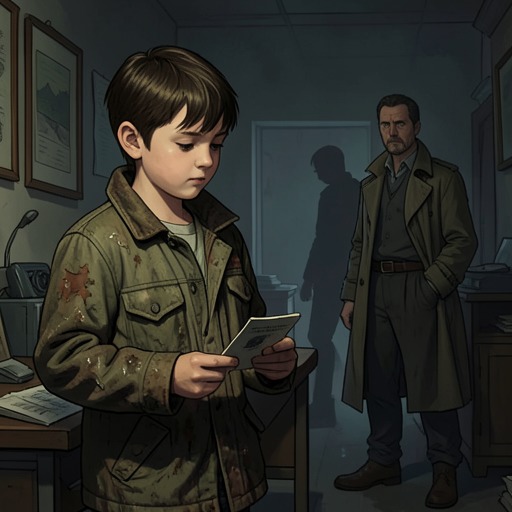
When Brian visits the store, its door is unlocked. Gaunt explains that he has opened briefly for a preview and welcomes Brian as his first customer. He draws a card from a box with the practiced flourish of a magician and places it in Brian’s hand. He prices the supposedly autographed 1956 Sandy Koufax card at eighty-five cents, a small cash payment that helps make the transaction seem harmless.
Brian becomes attached to the card and does not want to give it back. The bargain’s other demand turns that attachment into leverage. On a Thursday when school lets out early, Brian rides away with a task already in mind, one that has come to him while he daydreamed in math class. He goes to the Jerzyck property, takes handfuls of dark garden muck, and throws it at Wilma’s sheets on the clothesline. Afterwards, he walks his bicycle back down the driveway. When a small car passes, his red, chapped hands and guilty expression make visible how frightened he is of being discovered.
The prank is not a self-contained joke. Gaunt later frames it as the beginning of an avalanche: Brian has started something by throwing mud, and Gaunt insists that the deal requires further acts. In a dream, Brian sees an imagined World Series game in which Koufax is pitching. He tells the baseball figure that he was supposed to play a trick on Wilma and has already done so; the scene shifts when the pitcher’s face is revealed as Gaunt’s. Gaunt argues that Brian had mistaken one required prank for the only one, making the boy’s assumption part of the trap.
Escalation and Guilt
The pressure grows beyond Brian’s original act. Gaunt tells him that the matter is no longer just about the card and compares the spread of consequences to an avalanche set off by a shout. Brian is sent to the Jerzyck home again. He leaves his parents at home by saying he feels sick and prepares a cooler containing about a dozen rocks, each wrapped with a sheet of notebook paper bearing a message. He throws a rock directly at a Sony television. The attack is another attempt to carry out what he understands as his side of the bargain, and he leaves feeling that he may finally have fulfilled it.
A neighbor later reports seeing a frightened boy pedaling away from the Jerzyck house after hearing noises. When asked what was happening, Brian says that he thinks the Jerzycks may be fighting. The account shows him attempting to conceal his involvement, even as fear makes him noticeable. A witness initially remembers him uncertainly as Billy or Bruce, but identifies him more clearly when she recalls that the boy had a cooler in his bicycle basket.
Brian’s distress persists after the vandalism. On a holiday when the schools are closed, he would not have attended even if they had been open. When conversation turns to the newspaper, he breaks off after noticing a front-page headline. He wants to do something kind for Sean, or for anyone, to make up at least a little for what he has done to Wilma. He suggests that Sean play video games that afternoon and tells him to take some quarters in the meantime. The small gesture cannot undo the damage, but it marks Brian’s growing awareness of the harm and his effort to turn guilt toward care.
Alan’s Inquiry and Brian’s Silence
As the investigation into the violence between Nettle Cobb and Wilma develops, Alan Pangborn tries to find the boy witnesses describe. He waits on School Street as students leave and sees Brian riding toward him. Alan thinks the boy may confess to breaking the windows and help explain what happened between the two women. Brian offers little. He says he has dreamed about going to the house and seeing what is really making the noise, a troubling detail that connects the house to his recurring dreams without amounting to a confession.
Alan asks whether Brian had his Playmate cooler with him on Sunday morning. The question is grounded in the neighbor’s account, and Brian’s tightened lips register his reaction, but the available conversation does not show him giving Alan a full explanation. When Alan asks whether he is scared, the question names what the boy’s evasions and listlessness have suggested. Brian’s inability to speak plainly leaves the truth unresolved for the investigator at that point, while his dreams and fear show how the prank has continued to occupy him.
Death and Warning to Sean
Brian’s older brother Sean sees him go into the garage carrying something and recognizes it as the special baseball card Brian has kept going upstairs to look at. Sean waits in the kitchen doorway for him to come back, but Brian does not emerge. Brian looks down at the card, says that Sandy Koufax sucks, and pulls the trigger with his toe. Sean later tells Alan that Brian died by suicide in the garage and that the baseball card was involved.
Afterwards, Sean explains that Brian had made him promise never to visit the new store where he had obtained the card. Brian believed Sandy Koufax was on it, though Sean says the player was someone else; the card was old and dirty, and Sean doubts Brian knew that. Sean also remembers Brian coming home one day with mud on his hands. These details join the apparently irresistible card to the prank and its aftermath, clarifying the connection Brian had not managed to explain to Alan.
Brian had described Needful Things as a poison place and Gaunt as a poison man, warning Sean never to go there. He had also said that Gaunt was not really a man. The warning survives him as his clearest explanation of the danger he recognized too late: the shop’s purchases carry obligations, and Gaunt can make a child’s wish feel impossible to refuse. Brian’s trajectory gives that mechanism a devastating human cost, as fascination becomes attachment, attachment becomes an instrument of pressure, and remorse arrives without a path back to the life he had before the bargain.