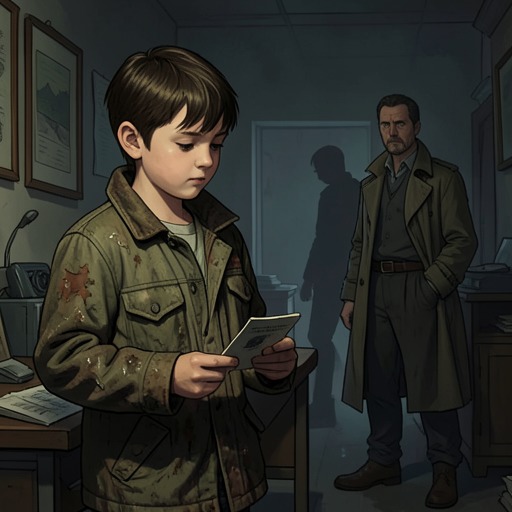
Brian Rusk's attack on the Jerzyck home
Needful ThingsBrian Rusk’s attack on the Jerzyck home is a calculated act of vandalism that converts a written warning into a household assault. Sent by Leland Gaunt to frighten Wilma Jerzyck, Brian breaks windows, damages property, and leaves repeated notes ordering the Jerzycks to leave him alone. The episode shows Gaunt’s influence taking material form in Brian’s actions, while the growing cost of the bargain deepens the boy’s fear and guilt.
Causes and Instructions
Brian sets out on a Sunday morning after telling his parents he feels too sick to attend church. He carries a heavily loaded Playmate cooler on his bicycle to the Jerzyck house, relying on information supplied to him in a dream by Gaunt, appearing as Sandy Koufax. Brian believes the Jerzycks will be away after Mass, and accepts Gaunt’s assurance that the timing makes the attack safe. His guiding rules are that Gaunt knows best and that the deal remains in force until Gaunt declares it finished.
The cooler contains about a dozen rocks, each wrapped with a sheet of notebook paper bearing the same message: “I TOLD YOU TO LEAVE ME ALONE. THIS IS YOUR LAST WARNING”. The words make the attack look like an extension of a personal dispute, but Brian is carrying out a task Gaunt has directed. His compliance is tied to the baseball card Gaunt has used to draw him into the bargain: after the first window breaks, Brian finds that he wants the card even more, as though the effort and risk invested in possessing it have tightened its hold.
The Attack on the House
Brian begins behind a hedge, where he expects not to be seen. He throws the first rock through the large living-room window. The crash changes his state: his fear recedes, and the task no longer feels to him like an inconsequential prank. He continues, striking the family’s Sony television with another rock and damaging ceramic ornaments and a wall with further throws.
Moving around the house with the cooler, Brian breaks two bedroom windows and throws rocks through the upper glass of the kitchen door. The stones damage a Cuisinart and the glass front of a RadarRange. He then breaks the basement windows among Wilma’s fall flowers and tears up some of the blooms. The cooler grows light as he uses its contents. When the attack is over, he closes it, puts it back in his bicycle basket, and rides away.
Wilma Finds the Warning
Wilma returns to a house marked by broken glass and damaged belongings. At first, the object in the doorway gives her reason to be cautious, but she discovers that it is a rock wrapped in lined notebook paper and secured with a rubber band. She reads the warning and finds identical messages attached to other rocks. The repetition turns scattered damage into an explicit threat, and Wilma interprets it as evidence against Nettle Cobb, whom she blames for the attack.
Wilma collects the notes as she moves through the rooms and finds further damage, including a rock lodged in the microwave. Her conclusion directs the threat toward Nettle, although Brian is the person who carried it out under Gaunt’s instructions. The attack thus does more than damage the house: its forged impression of a direct warning helps intensify the hostility between the two neighbors.
Witness, Fear, and Consequences
As Brian pedals away, Mrs. Mislaburski comes out of the neighboring house and asks what is happening. Her question makes Brian’s assumed cover of secrecy fragile. Later, while alone in bed, he recalls her bright green wrapper and red kerchief and realizes that she may have seen him. The recognition shifts the attack from a deed he has managed to complete into a risk that could expose him.
The scene belongs to a wider pattern in which Gaunt turns private grievances into acts that implicate his customers and set neighbors against one another. Brian’s vandalism supplies Wilma with a reason to blame Nettle, while the rocks and notes give that suspicion a visible, repeatable form. The bargain also tightens Brian’s attachment to the very object that has drawn him into wrongdoing: the more he has to do for the card, the more he wants to keep it. In the later crisis, his brother Sean finds him in the garage with his father’s rifle and the card in his hand; Sean subsequently tells Alan Pangborn that Brian killed himself. The vandalism is therefore one stage in Brian’s escalating fear and distress, not an isolated prank.