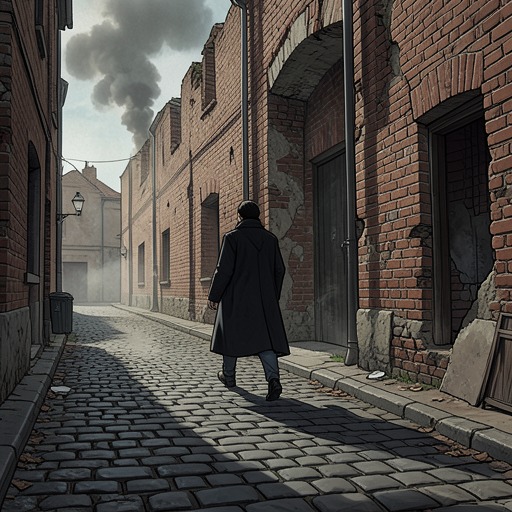
Brian Rusk's mud prank on Wilma Jerzyck
Needful ThingsBrian Rusk’s mud prank on Wilma Jerzyck is the small act that Leland Gaunt turns into an open-ended debt, making a boy’s mischief the first step in a wider chain of coercion and revenge in Castle Rock. Its significance lies in the gap between the prank’s apparent triviality and the consequences Gaunt attaches to it: Brian is told that he can keep going or be buried by what he has started.
The bargain behind the prank
When Brian tries to explain what he can afford for the baseball card, Gaunt cuts him off. The card has two prices, he says: one half in cash and the other half in a deed. The distinction makes the purchase more than a sale. Brian’s private action becomes part of the price, and Gaunt’s insistence that the buyer must not disclose how much he has frames concealment as a rule of trade.
Gaunt makes the obligation explicit when he tells Nettle Cobb to finish paying for her lampshade by playing a trick on Buster Keeton. He presents the prank as harmless and promises that Buster will blame someone else. The arrangement reveals the recurring mechanism behind the transactions: a desired object comes with a separate deed, and the deed is designed to redirect suspicion and resentment toward another person.
From mischief to a chain of retaliation
Brian’s target is Wilma Jerzyck, whose muddy sheets give the prank a concrete grievance to exploit. Wilma does not treat the incident as finished. Later, pleased by the prospect of conflict around Casino Nite, she also anticipates making Nettle pay for the sheets, believing she has Nettle under control and looking forward to putting more pressure on her. The damage thus persists beyond the original act: it becomes a pretext for further intimidation.
Gaunt returns to the prank in Brian’s dream, speaking through the figure of Koufax. He tells Brian that throwing mud at Wilma’s sheets started something, comparing the result to an avalanche set off by a shout on a warm winter day. Brian is told that his choice is to keep going or remain where he is and be buried. In the dream, he finally cries; the recognition comes too late to change what has already begun.
The debt does not end with the deed
The story of the prank sits within a larger pattern of deferred payment. Gaunt tells Slopey Dodd that the time has come to finish paying for the pewter teapot he bought with a promise to trick Lester Pratt. Slopey is relieved at first, but Gaunt’s reminder makes the obligation return after the purchase, when the customer has already taken the desired object home. A deed can therefore remain outstanding until Gaunt calls it due.
Brian’s prank matters not because the mud itself has extraordinary force, but because Gaunt turns its aftermath into leverage. Wilma’s grievance gives the deed a human target; her plans against Nettle extend its reach; and Brian’s dream exposes the coercive logic too late for him to undo it. The episode establishes how an apparently minor mischief can be made to carry the weight of a much larger, deliberately cultivated conflict.