Castle Rock Sheriff's Office
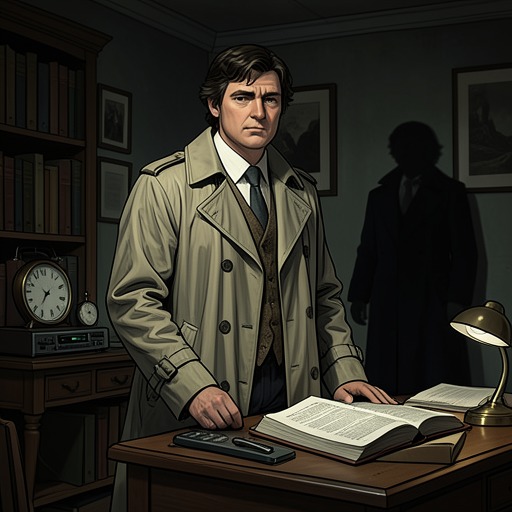
Needful ThingsCastle Rock Sheriff's Office is the town’s combined sheriff and police department, housed in the Municipal Building. More than a workplace for Alan Pangborn and his staff, it is the local seat of law enforcement where municipal authority, county oversight, and state investigative procedures meet—and, as Castle Rock descends into disorder, a place where the ordinary routines of public service give way to threat and destruction.
Setting and daily operation
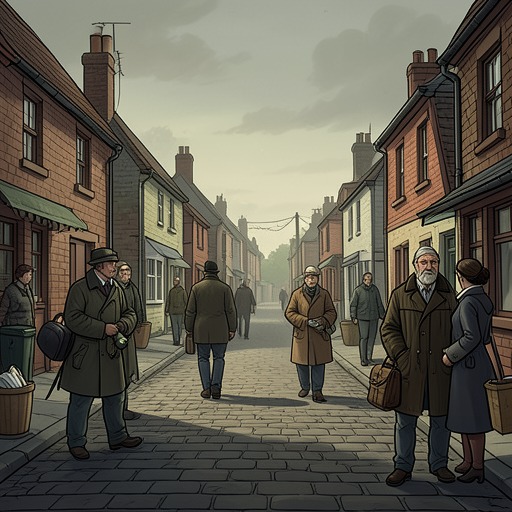
The office occupies part of the Municipal Building, a squat brick structure beside the white clapboard Water District building. Its back entrance opens onto a narrow lane marked for official vehicles. The town’s newest business establishment had already closed for the evening when Pangborn drove slowly down Main Street toward the building in an unmarked 1986 Ford station wagon. The familiar family car and the quiet approach establish the office as an everyday civic destination rather than a separate, imposing police headquarters.
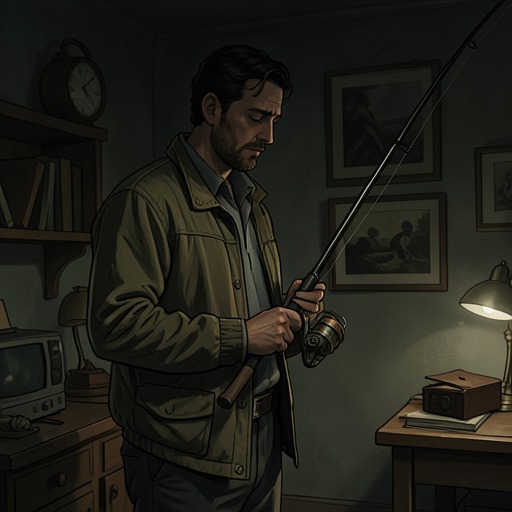
The department combines the Sheriff's Office with the Castle Rock Police Department. Its dispatch area includes a glass-walled cubicle, and a small bullpen serves as a shared working space. Staffing can be sparse: on one occasion dispatcher Sheila Brigham was reading a magazine and drinking a Yoo-Hoo while the rest of the office was empty except for deputy Norris Ridgewick. On a Saturday morning, Ridgewick was away fishing, another employee was out of town, and Brigham was helping her brother with a church letter; Pangborn could not even confirm where Andy Clutterbuck was. The office’s limited personnel make its dependence on a few individuals plain.
Pangborn’s authority and local oversight
Pangborn’s position as sheriff gives him responsibility for the office, but not unqualified control over its staff. When Danforth Keeton attempts to fire Ridgewick, Pangborn intervenes. Keeton asserts that the Board of Selectmen and the County Commissioners share approval authority over the hiring and firing of sheriff’s deputies. The confrontation makes the office a site of political as well as policing power: the sheriff’s daily decisions are constrained by a wider local-government structure.
That authority is also tested by the town’s developing crises. On the Saturday Pangborn goes to Needful Things to meet its proprietor, he leaves the building with John Brigham. Eddie Warburton, who had seemed absorbed in cleaning the water cooler, waits until the two men have gone before hurrying into dispatch and using the telephone. The seemingly ordinary office scene thus contains a quiet breach of trust: a staff member’s access to the department’s communications becomes a means of acting beyond the sheriff’s view.
Records, investigation, and accountability
The office’s work is shaped by the boundary between local policing and state authority. In Maine, murder investigations are handled by the State Police Criminal Investigation Department. The interval between discovery of a crime and the arrival of state investigators is consequential, because local officers must protect the chain of evidence while anticipating later scrutiny from judicial authorities and the Attorney General’s Office. The account presents this as a procedural vulnerability built into the relationship between local and state law enforcement, not simply as a matter of individual competence.
The Municipal Building also stands at the intersection of policing and municipal finance. Keeton keeps correspondence from the Bureau of Taxation, along with his replies, in a locked bottom drawer of his filing cabinet. When the audit correspondence is gathered for review, it becomes clear that the state intends to audit the town books. Keeton has concealed a shortfall created by his gambling: after exhausting personal funds, he borrowed one hundred dollars from the town’s petty-cash fund to cover part of it. By the autumn of 1990, he was trying to recover his losses at the track and had found a bookie who would accept larger bets than the track itself would handle. Documents kept within the municipal system therefore connect private gambling, misuse of public money, and impending official scrutiny.
From routine workplace to crisis site
The office’s ordinary routines continue even as the town becomes less stable. At one point, someone eventually contacts the Sheriff’s Office after a disturbance, and dispatch remains a practical point of entry into local law enforcement. But the building’s importance is not limited to receiving calls: it houses the people and records involved in conflicts over employment, public money, and the town’s safety.
During Castle Rock’s final night of violence, the Municipal Building is bombed and left in ruins. Its destruction turns the location itself into evidence of the breakdown of civic order. The office that had organized local response and contained the town’s official records is no longer a secure center from which events can be managed; its burning structure instead lights the street where the confrontation around Needful Things unfolds.
The final confrontation and significance
As Norris Ridgewick approaches the scene with Seaton Thomas, the fire from the ruined Municipal Building illuminates a group near Needful Things. Norris sees Pangborn arrive and recognizes Ace Merrill as the armed man holding a woman in front of him. He identifies Merrill as the man who had tried to kill him at the Municipal Building and had killed Danforth Keeton. Norris raises his service revolver from the cruiser, but its weight makes the decision difficult; he acts while trying not to alert Merrill. Afterward, Norris struggles out through the cruiser window. The danger first encountered at the office has moved into the street, but the consequences of the attack on the building remain present at the scene.
In the aftermath, Polly Chalmers points to Catholics and Baptists dispersing in separate directions, with Father John Brigham supporting Reverend William Rose and Nan Roberts holding Henry Payton. Her question to Norris about who set the town’s people against one another places his own actions within a larger pattern of manipulation and violence. Against that fractured community, the ruined Municipal Building marks the collapse of the public institution meant to serve it. Castle Rock Sheriff's Office matters not only as a setting for police work, but as the point where civic authority’s practical limits, procedural duties, political entanglements, and ultimate vulnerability become visible.