Gaunt's hyena-hide valise
Needful ThingsGaunt’s hyena-hide valise is more than a container for a travelling salesman’s wares: it holds the human souls Leland Gaunt has stolen, and its seizure gives Alan Pangborn the means to turn the final confrontation against him. Its uncanny movement and muffled cries make Gaunt’s hidden crimes materially present; when the case finally bursts open, those trapped within it are released and the supernatural harm afflicting Polly Chalmers and Norris Ridgewick begins to lift.
Appearance and Concealed Contents
The valise appears in Gaunt’s hand as an old-fashioned travelling salesman’s case made of hyena hide. Its sides puff and bulge as though something inside were breathing. The cries from within resemble distant wind or the sound of wires under strain, but Alan perceives them not as ordinary sound so much as something registered in his mind and heart. The case’s appearance makes its contents impossible to dismiss as ordinary merchandise, even before Alan understands exactly what it carries.
The souls inside are the most consequential secret the object contains. Gaunt has assured people from Hugh Priest to Slopey Dodd that he has no interest in human souls, describing them as diminished things. Alan recognizes that this denial is consistent with Gaunt’s practiced deception, and knows that the valise holds stolen souls. Gaunt’s insistence that the case is his exposes the conflict plainly: the object is not merely valuable property to him, but the instrument and repository of his predation.
Seizure During the Confrontation
As a cruiser approaches and the scene at the station wagon unfolds, Alan alone notices Gaunt emerge from Needful Things in a travelling coat with the valise. Gaunt watches both the approaching vehicle and the people nearby, apparently irritated or concerned, unaware that Alan has seen him. The case is therefore part of Gaunt’s attempt to leave, but Alan’s attention to it interrupts that departure.
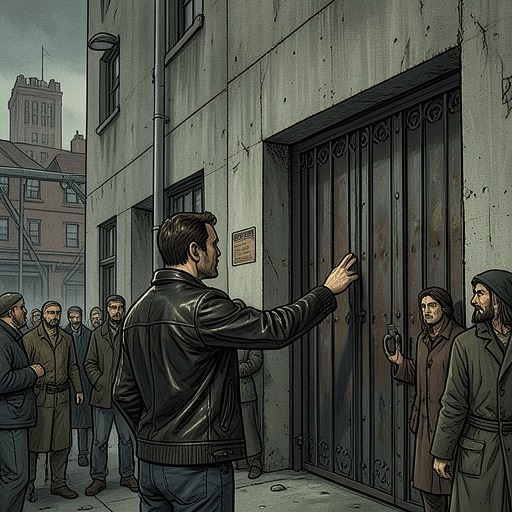
During the confrontation, a novelty snake strikes Gaunt, forcing him to drop the valise and attend to the attack. Alan uses the opening to take it. When Gaunt turns back, the case is no longer where he left it: it rests on the pavement between Alan’s feet. The quick transfer changes the balance of power. Gaunt’s demand that Alan return what is his meets Alan’s refusal; Alan identifies the contents as stolen property. The valise has shifted from Gaunt’s protected possession to the contested object around which the final struggle turns.
Release and Consequences
Alan carries the valise into the street beside Polly and raises a fountain of light-flower fireworks, whose revolving light falls on Gaunt and his Tucker Talisman. Speaking in a voice that seems larger than his own, Alan commands Gaunt to leave. The supernatural force of the command is accompanied by the destruction of Needful Things’ awning and show window, while the valise bursts open. Its trapped, wailing voices escape in a vapor that those present feel, including Alan, Polly, Norris Ridgewick, and Seaton Thomas.
The release has consequences beyond the destruction of the case. Polly feels the poisonous sensation in her arms and chest disappear, and the heat gathering around Norris’s heart dissipates. The valise thus connects Gaunt’s concealed collection of victims to the immediate afflictions of people opposing him. Its opening does not merely expose what Gaunt has hidden; it frees the captives and helps undo the harm his power has imposed.
Narrative Significance
The valise turns Gaunt’s abstract evil into something that can be carried, stolen, and opened. Its restless physical presence contrasts with Gaunt’s false assurances that he has no interest in souls: the case gives those lies a concrete, unmistakable counterimage. At first, it serves as the travelling salesman’s portable stock; in the decisive scene, it becomes evidence, a prize of the confrontation, and the vessel from which the stolen souls escape.
Its change of possession also makes Alan’s opposition practical rather than merely verbal. By taking the valise while Gaunt is distracted, he deprives Gaunt of control over what the case contains and makes the final act of release possible. The object’s narrative force lies in that reversal: Gaunt’s hidden inventory becomes the means by which his victims are freed and his hold on those around him is broken.