Knights of Columbus Hall
Needful ThingsThe Knights of Columbus Hall is the Catholic meeting place at the center of the escalating Casino Nite dispute in Castle Rock. First associated with a church fundraiser, it becomes a venue for organizing against perceived anti-Catholic hostility; when women scream outside and stink begins to fill the hall, its political argument gives way to immediate physical danger.
Setting and Casino Nite
The hall stands on the other side of town from Our Lady of Serene Waters. The Catholics plan to hold Casino Nite there on the last Thursday of the month, with the profits intended to help pay for repairs to the church roof. Father John Brigham conceived the event, while the Daughters of Isabella took up the work of organizing it. The location therefore represents more than a place to gamble: the proposed event joins church fundraising and community recreation, provoking opposition to church-supported gaming.
A Venue for Mobilization
As the dispute worsens, the hall becomes a place where Catholic residents gather to coordinate their response. On Monday evening, Father John Brigham calls a meeting at the rectory about what he describes as religious repression in Castle Rock. So many people arrive that the gathering must move next door to the Knights of Columbus Hall. Brigham recounts a telephone exchange with Reverend William Rose and tells the group that Rose, too, claims to have received an obscene note, purportedly from the opposing church faction. The news produces first shock, then anger; one attendee calls Rose a liar.
Brigham subsequently proposes that the men meet at the hall at the same time as the Daughters of Isabella’s planning session. The suggestion recasts the meeting place as a base for parallel action: the women will plan the event, while the men gather nearby amid fears that their opponents might interfere. The hall thus helps turn a dispute conducted through sermons, newspaper letters, posters, and anonymous messages into organized factional vigilance.
The Attack and Its Significance
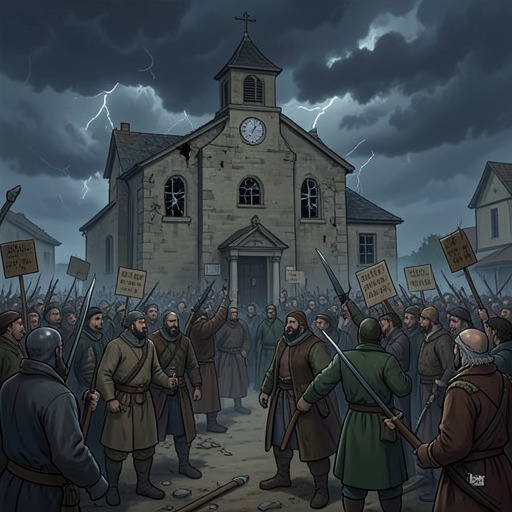
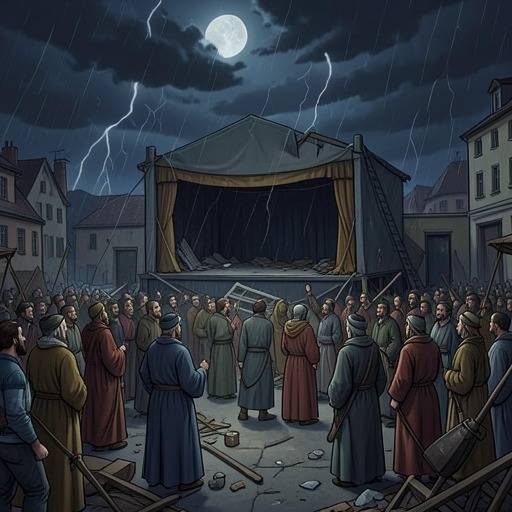
During a later meeting, Catholic men form a loose circle around Albert Gendron, who is telling stories of Catholic-baiting and revenge in Lewiston in the 1930s. The gathering is interrupted by screams from women. As the men turn toward the sound, a hissing begins and a stink billows from the back of the hall. A window shatters, and a rock bounces across the polished floor. Someone outside identifies the attack as Baptist retaliation and shouts opposition to gambling in Castle Rock.
The hall’s transformation—from a proposed site for a charitable church fundraiser, to a meeting place for defensive mobilization, to a space penetrated by stink and thrown stone—makes the religious conflict concrete. The town’s accumulated anger has been given organizational form through rival campaigns and meetings, while the attack makes clear that the contest has crossed beyond argument. The hall is the threshold where factional suspicion becomes a dangerous confrontation.