Lewiston Raceway
Needful ThingsLewiston Raceway is the racetrack where Danforth Keeton’s first winning bet ignites a gambling compulsion that grows into embezzlement and helps undo his standing in Castle Rock. For Keeton, the track is more than a place to wager: its crowds and races offer an intoxicating sense of participation in a world he cannot safely leave behind.
Setting and First Visit
Keeton’s association with Lewiston Raceway began about nine or ten years before the events of the novel, during a two-day statewide conference on revenue-sharing laws. He was then a Third Selectman in Castle Rock, accompanying Head Selectman Steve Frazier, county social-services overseer Butch Nedeau, and Selectman Harry Samuels on a trip to Lewiston. The conference’s subject would later become entangled with Keeton’s financial misconduct: revenue-sharing gave him access to public funds he could misuse, while the racetrack became the setting for the gambling that helped create his losses.
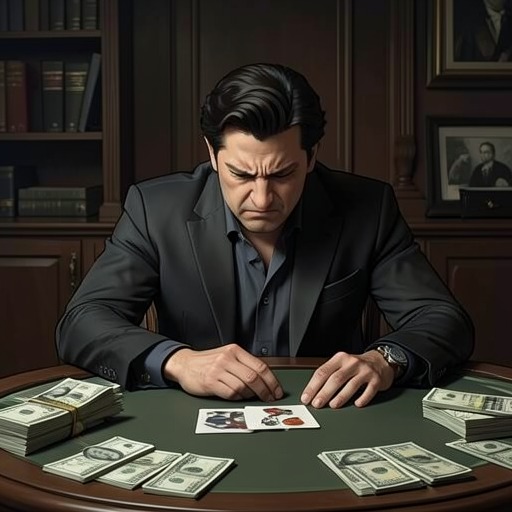
On the evening between conference sessions, Frazier suggested that the group go out. Nedeau and Samuels declined; Keeton went with Frazier despite having little interest in his company. At the track, Keeton placed a bet and won just over three hundred dollars before leaving that night. The win was not merely a temporary gain. It was the point at which the obsession took hold.
The Lure and the Compulsion
Keeton’s attraction was not simply the money. He regarded winnings as a token of having taken part in the spectacle, while the excitement came from the starter’s bell, the opening gates, the shouted race call, and the crowd’s mounting roar as the horses approached the finish. That vitality also frightened him. He understood the track as a place where people could surrender their judgment for a while, and he feared the force it had over him.
He tried to stay away because he had mapped out an ambitious political future: first becoming Head Selectman, then seeking a seat in the State House of Representatives. Yet the resolve repeatedly failed. After returning to the track, he lost sixty dollars from his earlier winnings and barely cared. When he later went back to celebrate a political victory, he moved straight to the ten-dollar betting window, lost $160, and lied to his wife, Myrtle, about the amount. Returning to win back his losses, he nearly recovered the money, then lost another $210 the following week. The pattern transformed a promising first win into escalating financial damage.
The track’s hold is expressed through Keeton’s failed attempt to leave before the final race. Even when he reached almost to the exit turnstiles, he turned back, feeling that something powerful had taken control of his feet. His image of Lewiston Raceway as a pit with greasy sides captures the trap’s progression: once he began to slide, each effort to slow the fall only prolonged it.
From Gambling Losses to Public Misconduct
The losses reached beyond Keeton’s private finances. To cover a shortfall in his checking account that Myrtle might notice, he took $100 from the town’s petty-cash fund. He later used revenue-sharing funds in a broader pattern of embezzlement. By autumn 1990, the concealment was starting to unravel; Keeton had also found a bookie, allowing him to make larger bets than the track itself would accept, but this did not improve his luck.
The evidence of the municipal books and correspondence makes the civic consequences concrete. Keeton kept Bureau of Taxation letters and his own replies locked in a filing-cabinet drawer to which only he had the key. Although the replies bore the initials of Keeton and his secretary, Shirley Laurence, she had not typed them. The state’s demand for an audit extended across the town’s financial records, including tax and revenue-sharing accounts, expenses, road maintenance, law enforcement, parks, and the state-funded experimental tree farm. Among the warning slips that Keeton gathered was one naming embezzlement, connecting his real financial misconduct to the persecution he feared.
Winning Ticket and Narrative Significance
Later, Keeton spends much of a day at his desk using Winning Ticket, a tin horse-racing game, to reenact old Kentucky Derby races from a book. The horses assigned the names of actual Derby winners repeatedly come in first, following the method Mr. Gaunt had described. Keeton is so absorbed that he does not realize until four o’clock that ten new races are scheduled that evening at Lewiston Raceway. His attention turns at once to the money he believes is waiting to be made.
The racetrack therefore recurs as the real-world counterpart to the toy’s apparent power. Keeton’s first win teaches him to pursue the excitement; his losses make him misuse public money; and the toy promises a way to turn that same compulsion into guaranteed success. Lewiston Raceway is both the origin point of his downward spiral and the destination toward which his renewed hopes are directed, even as the audit makes the cost of that pursuit increasingly visible.