
Toru Watanabe’s Daily Spring-Winding
Norwegian WoodThis flow follows Watanabe’s effort to maintain a deliberate daily rhythm while grief and uncertainty threaten to exhaust him.
increasing Bearing strength in each event
 decreasing
Bearing strength in each eventdecreasingA Routine in Tokyo

Building a Day
Ordinary discipline
Watanabe attends lectures, works part time, and keeps regular habits around reading and daily tasks. The routine does not make him happy, but it provides structure.
A life without a destination
He has no clear career ambition or social circle. Repetition is a way to keep moving while he tries to discover what he wants.
A Spring in the Morning

Starting the Day Again
A private image
Watanabe writes to Naoko that he winds his spring through the steps of getting up, washing, eating, and reaching the university. He tells himself to make the day a good one.
Effort made visible
The metaphor turns ordinary preparation into intentional self-maintenance. It acknowledges that continuing requires repeated effort rather than a single heroic decision.
Sunday Without the Spring

Rest and Loneliness
A pause in routine
Watanabe does not wind his spring on Sundays. He writes to Naoko, does laundry, reads, or walks without a fixed purpose.
Quiet becomes painful
The day’s freedom can intensify loneliness because there is no task to carry him forward. Rest exposes feelings that weekday structure keeps at a distance.
A Routine Broken by News
Collapse and Restart
Withdrawal
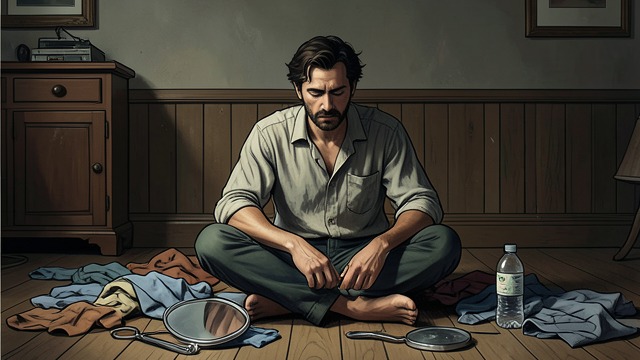
After reading that Naoko is worse, Watanabe stops caring for himself and spends days isolated. His ordinary habits disappear.
Small acts restore motion
He eventually washes clothes, shaves, cleans, shops, and exercises. The actions do not solve the crisis, but they restore enough agency for him to think again.
Responsibility as Repetition

Choosing the Next Day
A decision to continue
Watanabe decides that he must mature and accept the cost of living. He cannot remain frozen in the age he shared with Kizuki.
No final cure
His spring-winding is not an escape from grief but a practice for meeting each day despite it. The novel’s commitment to life remains provisional and hard-won.
During Watanabe’s second year at university
In the weeks after Midori’s father dies
A Sunday afternoon in autumn 1969
Early April 1970
After Watanabe resolves to face adulthood
