Huangguo
Norwegian WoodThe cucumber is an ordinary food that acquires unusual emotional weight through Toru Watanabe’s encounters with Midori Kobayashi’s ailing father. In a hospital room, its crisp sound and simple taste draw the silent patient into eating; after his death, Watanabe remembers that small crunch as one of the traces a person leaves behind. The cucumber returns later in his thoughts as a sensory link among care, grief, and a life that feels diminished without Midori.
A mistaken purchase in the hospital
Midori brings supplies to her father’s hospital room, including three cucumbers alongside grapefruits and fruit jelly. She is annoyed: she had asked her sister to buy kiwi fruit, not cucumbers, and cannot imagine what the patient is supposed to do with the wrong item. When she suggests one to her father, he refuses. The vegetable first appears, then, as a minor domestic mistake—unwanted provisions in a room where getting the patient to eat has become difficult.
Eating as an invitation
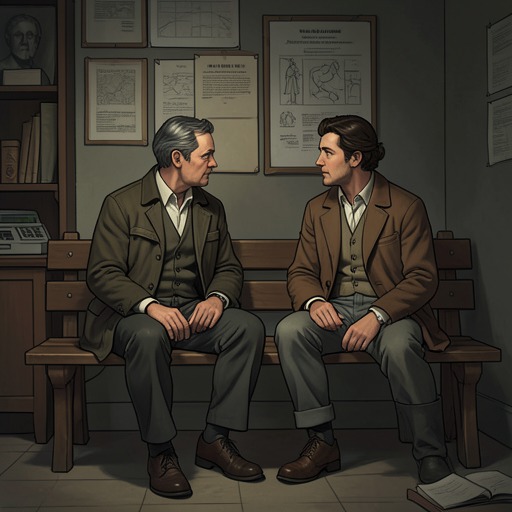
After a long conversation, Watanabe finds himself hungry and notices the cucumbers still in the paper bag. He washes three, wraps one in nori, dips it in soy sauce, and eats with evident pleasure, describing the food as fresh, simple, and sensible. Rather than press her father with another demand, he lets him hear and see someone enjoying a meal. The patient asks for a cucumber.
Watanabe prepares a small bite for him: cucumber wrapped in nori, pierced with a toothpick, dipped in soy sauce, and offered to his waiting mouth. The father chews with little change in expression, says it is good, and eventually eats the whole cucumber. When Watanabe remarks that food tasting good is a kind of proof of being alive, the line attaches a concrete bodily act—chewing and swallowing—to the fragile persistence of life. The father then asks for water and, a few minutes later, needs to urinate; Watanabe helps him with the urinal jar and washes it afterward. The episode’s care is practical and intimate, measured in food, drink, and bodily needs.
A sound that remains after death
When Midori returns to the room, Watanabe reports that her father slept, woke, ate part of his lunch, watched him eat cucumber, and then asked for some himself. Midori is astonished: the family has been unable to get him to eat, yet he has finished a whole cucumber. Watanabe thinks the father may simply have seen him enjoying his own. Midori suggests that Watanabe has a knack for putting people at ease. The scene does not establish a cure; it records a brief opening in the patient’s refusal, made possible through an unforced example and shared food.
Five days later, the father is dead. In a letter to Naoko, Watanabe recalls the tiny crunching sound he made while chewing the cucumber pieces and says that people leave strange, little memories behind when they die. The remembered sound is deliberately modest: not a grand final statement, but the physical evidence of someone eating in a hospital bed. The cucumber thus becomes a keepsake through sensation, preserving the father’s brief participation in ordinary life without suggesting that the moment could avert his death.
Recollection amid grief and estrangement
The cucumber’s significance extends beyond the hospital. Later, while drinking with Itoh, Watanabe eats cucumber slices with celery dipped in miso. The crunch recalls Midori’s father, and that recollection turns toward Midori herself: life without her has become flat and tasteless, and the thought leaves Watanabe in a foul mood. He recognizes that she has become a huge presence within him. The vegetable is no longer only the food that helped prompt her father to eat; its texture becomes a sensory route back to a relationship Watanabe misses.
That association sits within the novel’s broader insistence that death belongs to life rather than standing wholly apart from it. Watanabe’s early understanding of this idea takes shape as a knot of air and as an abstraction attached to objects; the cucumber episodes give the thought an intimate, bodily scale. A father eats, crunches, asks for water, and dies days later; Watanabe carries the sound into a letter and then into another meal. After Naoko’s death, memories return with the force of a tide, while Watanabe’s withdrawal in Tokyo leaves his attention fixed on the dead rather than the living. Against that landscape, the cucumber does not make grief disappear. It holds a small, specific memory of care and appetite—one that survives precisely because the person who made the sound cannot.