Nagasawa, Hatsumi and Watanabe's dinner conflict
Norwegian WoodThe dinner between Nagasawa, Hatsumi, and Toru Watanabe turns an elegant meal into a confrontation over what Nagasawa calls his way of living and what Hatsumi names as injury. In a private room in Azabu, talk of literature and the Foreign Ministry exam gives way to the revelation that Nagasawa and Toru once exchanged sexual partners; Hatsumi’s defense of Toru’s sincerity then makes Nagasawa’s own conduct impossible to keep at a distance. By the end, Hatsumi refuses Nagasawa’s offer to take her home and chooses Toru instead, while Nagasawa warns that Toru is no less detached than he is.
Setting and Uneasy Civility
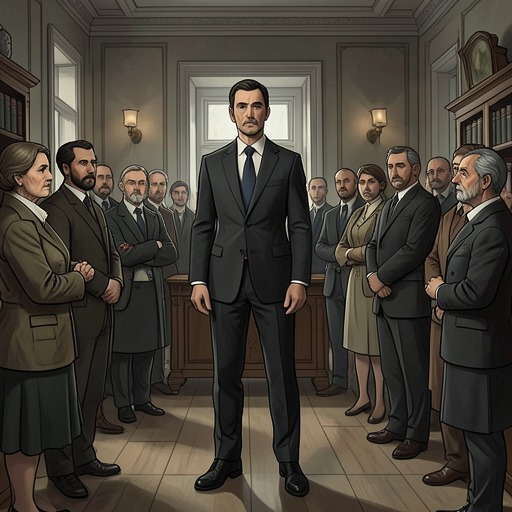
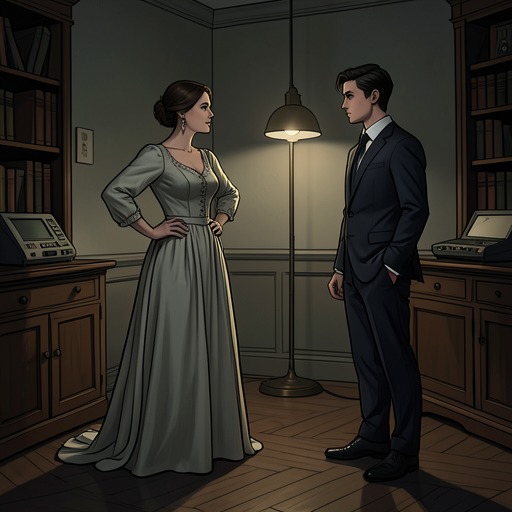
Nagasawa chooses a fashionable French restaurant on a quiet Azabu backstreet and books a secluded private room. About fifteen prints hang on its walls. The details establish a carefully controlled setting for an evening that will expose the instability beneath its polished manners: Nagasawa arrives in an expensive-looking grey suit, while Toru wears an ordinary blue blazer. Hatsumi arrives fifteen minutes later, carefully made up in gold earrings, a deep blue dress she calls midnight blue, and red court shoes.
As they wait, Nagasawa and Toru drink wine and talk about Joseph Conrad. The conversation appears companionable, but its social ease depends on what remains unspoken. When Nagasawa mentions that his father brings his mistress to the restaurant, Hatsumi asks about it; Toru drinks his wine as if he has heard nothing. The meal’s refined surroundings thus provide no protection from the personal arrangements and ethical indifference that will surface at the table.
The Conversation Turns Personal
Over hors d'oeuvres and soup, Nagasawa talks about the Foreign Ministry exam. He describes most examinees with contempt, allowing that a few may be decent, and presents the proportion of good people to bad as an immutable feature of society. Toru questions whether the ratio differs from society at large; Nagasawa says it is the same everywhere. He orders a second bottle of wine and a double Scotch, and the discussion’s broad cynicism soon narrows to his own behavior.
Nagasawa reminds Toru, in Hatsumi’s presence, that they once swapped women. He delivers the disclosure casually, then drains his whisky and orders another. Hatsumi turns to Toru and asks whether it happened. Unable to answer, Toru says nothing at first; when pressed, he says only that they were drunk. The past incident, which Toru might have left unexamined, becomes a public test of his judgment and of the sincerity Hatsumi has attributed to him.
Nagasawa grows nasty as the mood sours. The hostility is directed at Hatsumi rather than Toru, which makes Toru find it harder to remain seated and silent. When the food arrives, Nagasawa eats roast duck and continues drinking; Toru takes a forkful of spinach, while Hatsumi leaves her sea bass untouched. Her stillness contrasts with the men’s different evasions: Nagasawa maintains his swagger, and Toru has yet to make a clear response to what has been exposed.
Hatsumi Names the Harm
Hatsumi tells Toru that, whatever makes his situation complicated, the conduct he has described does not suit him. She calls him sincere and caring and says he is not that kind of person. Her defense is not an absolution: she looks him in the eye and asks what he thinks, and Toru admits that he has sometimes felt the same way about himself. Her assessment makes his discomfort explicit while also revealing that she has tried to arrange a better future for him.
Nagasawa answers by turning the argument into a dispute about male sexual needs. He says that, during his three years with Hatsumi, he has slept with many women, each only once, and claims not to remember their names or faces. He calls it a game in which nobody gets hurt. Hatsumi rejects the premise rather than simply condemning his infidelity: she says she has never really been angry about his sleeping with others, but cannot stand his arrogance. Then she gives the consequence he has erased from his account: she is hurt, and wants to know why she is not enough for him.
Nagasawa pauses and swirls his whisky. He says that Hatsumi’s not being enough is not the issue; he describes his behavior as an inner hunger he can only live with, and as what makes him himself. His explanation converts a choice into an apparently unchangeable identity. Hatsumi’s response exposes the gap between his claim that nobody is harmed and the person directly telling him she is.
The Break and Its Aftermath
Hatsumi asks whether it is wrong to want to be understood by him. Nagasawa says it is not, and suggests that most people would call such a desire love, but immediately sets that desire against his different “system for living.” When Hatsumi asks whether he is saying he is not in love with her, he begins to answer in terms of that system. She shouts, “To hell with your fucking system!” Toru has never heard her shout before, making this first and last outburst a decisive rupture in the evening’s restrained manner.
Nagasawa calls for the bill and says he will see Hatsumi home, apologizing to Toru and telling him to return to the dorm alone. Hatsumi refuses: she does not want to spend more time with Nagasawa that day and thanks him for dinner. Then she asks Toru to see her home. The choice briefly aligns her with the man she has just defended, but Nagasawa immediately tries to undo the distinction. He says Toru is practically the same as he is: nice on the surface, yet incapable of loving anyone, with a detached part that stays awake and an enduring hunger.
The dinner establishes no reconciliation or resolution; it ends with Hatsumi rejecting Nagasawa’s escort and turning to Toru. Her choice brings Toru’s own compromised past into the open even as she distinguishes him from Nagasawa. Nagasawa’s accusation complicates that distinction: whether it is insight or self-serving provocation, the scene leaves Toru implicated in the emotional distance he has not managed to answer for. The private meal’s central reversal is therefore not a change in Nagasawa’s creed, but the moment Hatsumi makes its human cost audible—and refuses to let his language settle the matter.