Watanabe's attempts to contact Naoko
Norwegian WoodToru Watanabe’s attempts to contact Naoko are a sequence of notes and letters through which he seeks an answer without pretending to possess one. After their intimacy on Naoko’s birthday, he leaves her a brief message asking for a long talk once she has calmed down. When she disappears from her home and does not answer, he writes twice to her family’s address in Kobe. The letters expose both his need for connection and his refusal to offer easy promises; their silence becomes an absence he cannot resolve by writing harder.
The note after Naoko’s birthday
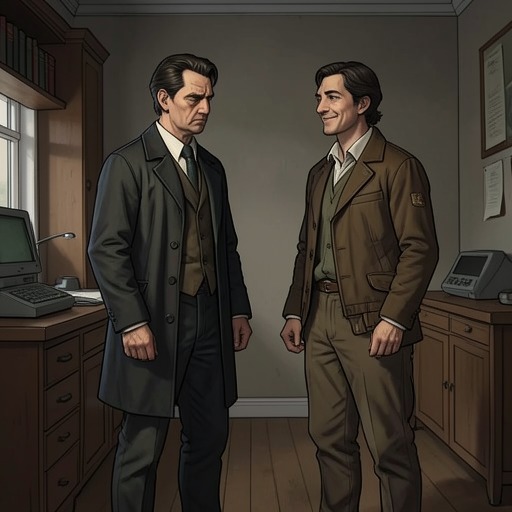
The morning after their night together, Naoko lies with her back to Toru, silent and almost motionless. He tries several times to speak to her but receives no response. The room preserves the disorder of the previous evening: record jackets, glasses, wine bottles, an ashtray, and half of the caved-in birthday cake remain scattered about. On Naoko’s desk, a dictionary and French verb chart sit beneath a calendar whose dates carry no notes or marks. Against this stillness, Toru writes on a notepad: “I'd like to have a good long talk with you once you've calmed down. Please call me soon. Happy Birthday.” He dresses and leaves quietly.
The message is a modest request rather than a declaration about what their relationship must become. Toru wants to talk, but leaves the timing to Naoko and does not press her in the room, where speech has failed. His shirt is still damp and chilly, and carries her smell; he takes one last look at her shoulder before closing the door. The note therefore holds closeness and distance together: he has been physically intimate with her, yet cannot reach her through conversation.
The search and first long letter
A week passes without a call. Because Naoko’s house has no system for calling people to the phone, Toru goes by train to Kokubunji on Sunday morning. She is gone: her name has been removed from the door, the windows and storm shutters are closed, and the manager says she moved out three days earlier without telling him where. The vanished name and sealed house turn waiting into a concrete uncertainty. Toru still does not know whether Naoko is unwilling or unable to answer, or where she has gone.
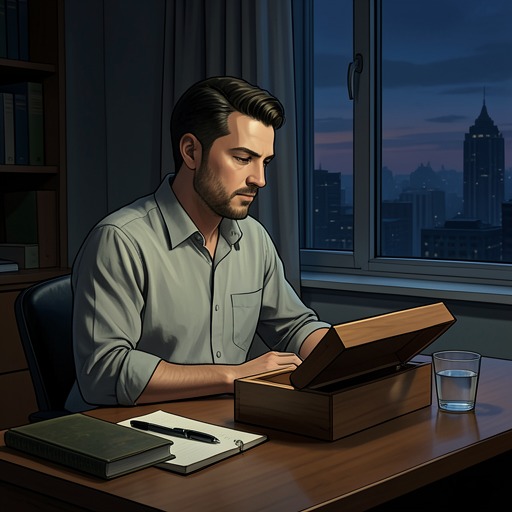
Back at the dormitory, he writes to her at her home in Kobe, relying on the forwarding service to reach her wherever she is. The letter makes no claim to understand what has happened between them. Toru admits that he still does not understand much, and that understanding will take time. Because he cannot know where he will stand after that time, he cannot honestly make promises or demands, or dress uncertainty in reassuring language. He also acknowledges that the two know too little of one another, while asking for the chance to learn more and to meet for a long conversation.
The letter connects his pursuit of Naoko with his loss of Kizuki. Toru remembers losing the one person with whom he could speak honestly about his feelings and imagines Naoko’s loss may have been similar. He recognizes that the two of them needed each other more than either had understood, and that their relationship had consequently taken a major detour and become, in a sense, warped. Rather than treating their bond as simple romance or uncomplicated comfort, the letter admits its distortion as part of the truth he wants them to face.
Toru also looks directly at the night that prompted the note. He believes he probably should not have done what he did, yet says it was all he could do at the time, and describes the warmth and closeness he felt as unprecedented for him. He needs Naoko to answer, whatever her answer may be. That insistence marks the letter’s limit as well as its plea: honesty cannot guarantee reconciliation, but Toru cannot accept silence as a response he has received.
A second appeal, and the silence between them
No answer comes to the first letter. In the meantime, something inside Toru seems to have dropped away, leaving an empty cavern and an abnormal lightness in his body. He attends lectures more faithfully than before but speaks to no fellow students, sits alone at the very front, and eats by himself. He stops smoking. His continued pursuit of routine does not restore connection; it makes the surrounding emptiness more visible.
In June, Toru sends another long letter to the same address in Kobe. It says much the same as the first, but adds a more explicit account of the cost of waiting: “Waiting for your answer is one of the most painful things I have ever been through. At least let me know whether or not I hurt you.” He does not know whether his actions have wounded Naoko and asks for even that uncertainty to be answered. Posting the letter brings no resolution; instead, he feels that the cavern inside him has grown again. Repetition here is not progress toward a reply. Each attempt renews the hope of contact while making the unanswered space harder to bear.
Contact after loss
The pattern of unanswered communication belongs to a larger struggle in Toru’s understanding of death and attachment. Earlier, he had come to understand death not as life’s opposite but as something present within life, figured as a knot inside him and as fine dust breathed into the lungs. That understanding does not spare him when Naoko dies. During his travels far from Tokyo, he thinks about her by the seashore, while his memories return with the force of waves: her yellow raincape, the birthday cake, her camel-hair coat, the hairslide she touched, and her clear eyes. In these memories she seems close enough to speak with and hold.
For a time, Toru imagines a place where Naoko lives with death inside her and tells him not to let death bother him. The experience is consoling only while it lasts. The tide withdraws, leaving him alone with sorrow, and the philosophy he had formed after Kizuki’s death proves insufficient to this new loss. Toru concludes that no truth, sincerity, strength, or kindness can cure the sadness of losing a loved one; grief must be lived through, and what one learns does not protect one from the next grief.
When Toru returns to Tokyo, his memory remains fixed on the dead rather than the living. He shuts himself in his room for days and spends much of his time in rooms he has set aside for Naoko, shuttered, with the furniture draped in white and dust on the windowsills. His earlier letters had sought an answer from Naoko; after her death, contact survives as memory, not exchange. The efforts do not deliver the conversation he wanted, but they reveal what he was trying to preserve: the possibility of speaking honestly with her, even while admitting that neither certainty nor love could make her answer or undo the loss.