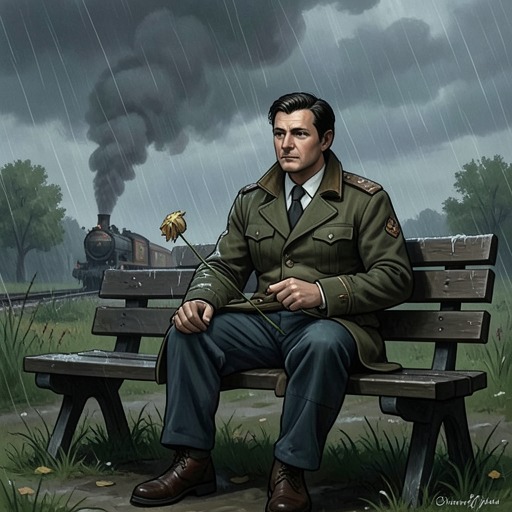
Watanabe’s letters to Naoko
Norwegian WoodWatanabe’s letters to Naoko are a private thread of communication whose meaning changes with the people who hold them. Naoko once kept and reread them carefully; later she burned them as part of a deliberate break with her past. Their disappearance does not erase what they carried: Watanabe argues that what remains in the heart can outlast paper, while Naoko’s death teaches him that no insight can make bereavement painless.
A Carefully Kept Connection
For a time, the letters mattered to Naoko as tangible objects of attachment. When she and Reiko sorted through Naoko’s belongings, Reiko found that Naoko had kept Watanabe’s letters in a safe place and read them over and over. Their careful preservation made the correspondence more than a record of messages: it was something Naoko returned to, physically and emotionally, while separated from Watanabe.
That history makes what followed a striking reversal. During the same sorting, Naoko and Reiko discarded what Naoko no longer wanted and burned her diary notebook and all the letters she had received, including Watanabe’s. Reiko found the destruction surprising precisely because Naoko had once treated his letters with such care.
Burning the Past
Naoko explained the destruction as preparation for a future in which she could be reborn. Reiko recalled her as energetic, smiling, and healthy-looking, with a clear idea of what she intended to do. The letters’ burning belonged to that purposeful clearing away of the past, not to carelessness: Naoko had once treasured them, yet now chose to destroy the physical archive as she imagined beginning again.
Reiko’s account also preserves what the act could not settle. She hoped Naoko would become healthy and happy, and accepted Naoko’s explanation as having its own logic. The letters’ destruction thus records both Naoko’s resolve to change and the uncertainty of whether such a clean break could secure the future she envisioned.
Paper and Memory
After learning that Naoko had burned every letter he sent, Watanabe tells Midori that letters are only pieces of paper: burning them cannot remove what remains in the heart, just as keeping them cannot guarantee that what matters will endure. The statement gives the letters a double significance. They had been meaningful enough for Naoko to preserve and reread, but their emotional force was never identical to their material survival.
Midori, by contrast, directly values receiving Watanabe’s letters. She tells him that when she reads them she feels he is right beside her, and asks him to write while she is in Asahikawa by herself. Watanabe promises to do so. The contrast is not that one woman cares about letters and the other does not; rather, the same form of connection can be kept or relinquished, and can mean presence to one recipient even after another has destroyed its written trace.
Loss and the Limits of Consolation
The letters’ disappearance becomes part of a larger struggle over memory after Naoko dies. As Watanabe travels far from Tokyo, he finds that memories of her return with overwhelming force, while he cannot absorb the fact that she is gone. He had already understood death as part of life, but this idea does not make loss bearable. He concludes that no truth, sincerity, strength, or kindness can cure the sadness of losing someone loved; grief must be lived through, and what is learned from it cannot prevent the next grief.
On returning to Tokyo, Watanabe withdraws into his room and remains fixed on the dead rather than the living. In that aftermath, his claim that memory can survive the destruction of paper is neither a cure nor a denial of loss. The letters could be burned, and Naoko’s presence could not be restored by remembering her; what survives is an inward bond that keeps the dead close even as the living must continue without them.