
The Search for a Vocation
Of Human BondagePhilip's changing careers trace his search for work that can sustain him materially while engaging his intelligence and interest in people.
increasing Bearing strength in each event
 decreasing
Bearing strength in each eventdecreasingThe Church Appears

The Church Appears
William Carey and Louisa Carey imagine Philip entering the Church, and the religious environment makes that path seem natural. For a time Philip embraces the idea with genuine fervour.
A borrowed calling
His religious ambition is encouraged by the school and its headmaster, but it is not yet a vocation tested against the life he wants. The expectation initially belongs more to his guardians than to him.
The German Experiment

The German Experiment
Philip leaves school for Heidelberg, expecting language study and freedom to open new possibilities. He encounters unfamiliar intellectual and social worlds, and begins to question beliefs he had accepted without examination.
A temporary direction
The year broadens him but does not establish a profession. Philip returns to England with his future still unresolved and with no desire to resume a school-like existence at university.
Accounting by Necessity

Accounting by Necessity
With Oxford and several other paths judged impractical, Philip becomes an articled clerk in London. He discovers that the work demands abilities he does not possess and offers little intellectual satisfaction.
The failed fit
His dislike deepens as he struggles with figures and office routines. The brief experience teaches him that respectable employment is not automatically suitable merely because other people recommend it.
The Parisian Ambition

The Parisian Ambition
An exposure to Paris and the romantic ideal of artistic life convinces Philip to abandon accountancy and study painting. He spends his inheritance on a new attempt to discover a talent he hopes he possesses.
Testing the dream
The studio gives him discipline, companions, and a new way of seeing, but sustained effort does not produce distinction. The dream must eventually face honest criticism and financial reality.
Medicine as a Workable Calling
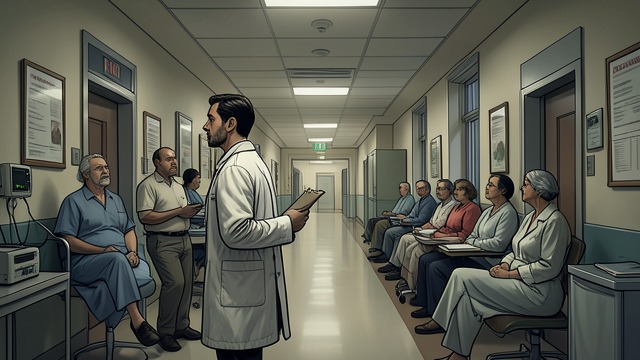
Medicine as a Workable Calling
Philip enters medical training after acknowledging that painting is not his vocation. Although he finds the early curriculum tedious, patient care gradually reveals an aptitude grounded in attention and humane contact.
A practical fit
The hospital lets him observe people directly, and his skill with patients grows more compelling than his earlier professional fantasies. Medicine offers both mobility and a possible livelihood.
childhood at Blackstable Vicarage
late adolescence, during Philip's first year abroad
early adulthood, after Philip returns from Heidelberg
after Philip's first year in the accountant's office
after Philip gives up painting
