
Work, Poverty, and Dignity
Of Human BondageThe novel contrasts respectable theories of work with the bodily exhaustion, insecurity, and mutual aid that accompany low-paid employment.
increasing Bearing strength in each event
 decreasing
Bearing strength in each eventdecreasingThe Respectable Career

The Respectable Career
Philip's guardians value professions that preserve social standing and promise income. Accountancy appears acceptable even though Philip has little aptitude or interest in it.
Respectability's price
A career can satisfy social expectations while making a person feel trapped. Philip's failure in the office exposes the limits of judging work by reputation alone.
Artists and Material Need

Artists and Material Need
Philip's artistic circle treats poverty as part of a romantic life, but Fanny Price's hunger and Cronshaw's precarious existence reveal its real damage. Art does not protect them from rent, illness, or isolation.
Dignity under economic pressure
The novel challenges those who dismiss money as vulgar. A minimum income can preserve the independence needed to work, think, and help others.
The Shop's Hidden Costs

The Shop's Hidden Costs
Philip earns little while the firm controls his hours, meals, washing charges, and accommodation. Assistants work in crowded rooms and depend on small credit from informal providers.
Labour without security
The system offers employment but little protection against illness, dismissal, or poverty. Philip sees that a job can preserve life and still leave almost no room to live.
The Price of Lost Work
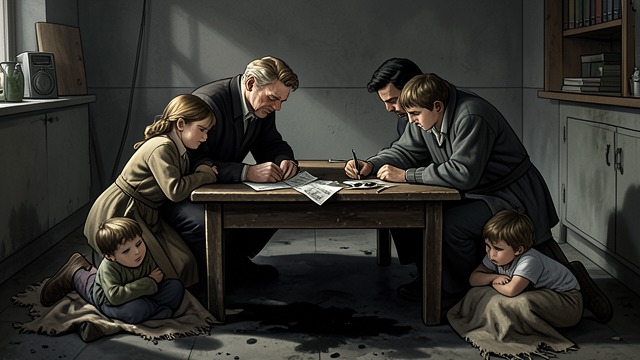
The Price of Lost Work
Philip sees families devastated when a worker loses employment, even when illness or childbirth already strains the household. The threat of lost wages can matter more immediately than death or separation.
Structural hardship
His encounters show that poverty is not simply a personal failure of thrift. Work, health, and family needs are bound together in a system where one missed wage can endanger everyone.
The Value of a Competency

The Value of a Competency
Philip learns that money is neither an ultimate good nor a trivial concern. Without enough to live on, choice and generosity shrink; with security, he can value other things properly.
Material freedom
A modest medical practice offers more than status: it promises independence and room for family life. The novel treats economic security as a condition for freedom, not its final purpose.
when Philip begins accountancy
during Philip's years in Paris
during Philip's employment at Lynn and Sedley
during Philip's district obstetrics work
near Philip's decision about a settled practice
