Cronshaw
Of Human BondageCronshaw, a poet living on the margins of literary and material respectability, is both a formative influence on Philip Carey and a test of Philip’s developing beliefs. Poor, ill, and dependent on hack work and alcohol, he offers no settled doctrine of life’s meaning; instead, he gives Philip a Persian rug and insists that its answer can only be discovered for oneself. His death does not resolve the riddle immediately. Only later does Philip understand the rug as an invitation to make a pattern from experience, even in a world without inherent purpose.
Introduction and Parisian Life
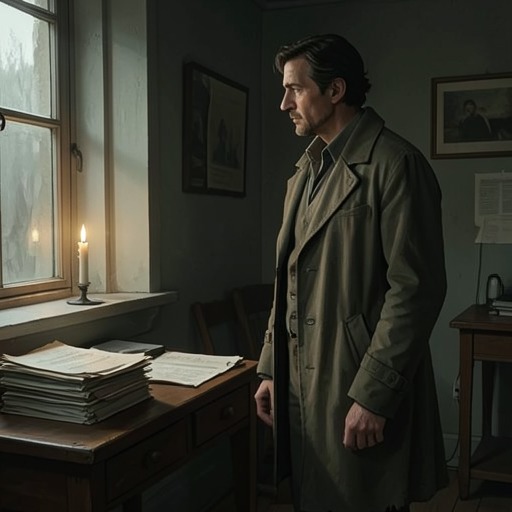
Philip first hears of Cronshaw as a poet living in Paris and is invited to meet him at the Lilas. At the café, Cronshaw sits in a sheltered corner with his coat on and collar turned up, playing dominoes with a Frenchman. His quiet greeting and the pile of saucers beside him suggest a habitual presence there. His French is poor despite years in Paris, and his writing life is materially precarious: he translates books for the British public and writes about pictures while living in an attic.
Cronshaw’s appearance and manner contrast with the authority he acquires among the younger artists. He is a large, stout man with a small moustache and an almost incongruously small-looking head; his friends laugh at his habits and lament his vices, yet his ideas shape their talk. Lawson draws paradoxes from him, and even Clutton, despite his pursuit of individuality, has absorbed Cronshaw’s language. The group’s joking familiarity does not erase its dependence on his judgments: his influence is the intellectual atmosphere in which they form opinions.
The Persian Carpet and Philip’s Questions
Cronshaw turns Philip’s question about the meaning of life toward an object rather than a doctrine. He directs him to the Persian carpets at the Cluny, describing their intricate patterns and sensuous beauty, and tells him that the answer may come through looking. The advice is deliberately incomplete: the carpet does not supply a proposition Philip can simply adopt. Its meaning must be found by the person asking.
At first, Philip receives Cronshaw’s pronouncements almost as gospel. But Philip’s practical, middle-class instincts make him impatient with theories that seem to produce no action. Cronshaw’s slim bundle of poetry, poverty, hack work, and monotonous existence between attic and café trouble Philip, who cannot reconcile the poet’s ideas with the life he sees. Cronshaw recognizes this disapproval and attacks Philip’s philistinism. Their disagreement makes the relationship more than an exchange between a sage and a pupil: Philip is drawn to Cronshaw’s freedom of thought even as he judges the conditions and apparent waste of his life.
Cronshaw’s claim that there is no abstract morality becomes part of Philip’s attempt to free himself from conscience as an absolute authority. Philip feels triumph when he casts off the knave of moral condemnation, but the victory leaves the larger question untouched: why the world exists and what human beings are for remain inexplicable. The carpet parable therefore persists precisely because it is not a ready-made answer. Cronshaw’s counsel places responsibility for interpretation on Philip rather than ending the search.
Poverty, Illness, and Death
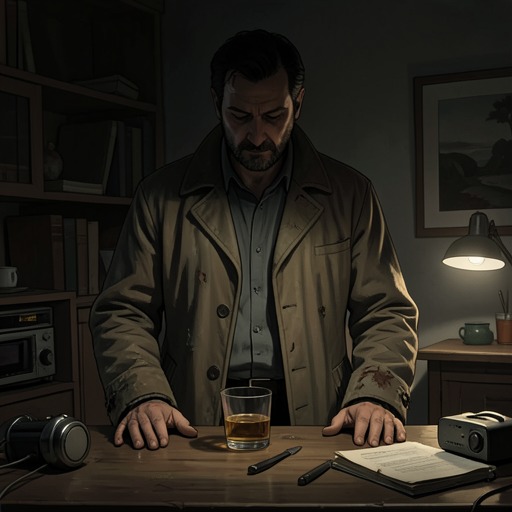
The material circumstances that Philip finds difficult to accept become increasingly severe. Cronshaw’s poverty and dependence on alcohol accompany deteriorating health. After pneumonia and a seven-week stay in an English hospital, he is reportedly told that his only chance is to give up liquor. Lawson nevertheless expects him to die within six months. When Philip asks about him, Lawson also explains that Cronshaw had sent Philip a small, apparently valueless rug bought for fifteen francs in the Rue de Rennes. Cronshaw had identified it as Persian and connected it to Philip’s question about life’s meaning, although he was very drunk when he explained the gift.
Years later, Cronshaw is living in Soho, at 43 Hyde Street, and tells Philip that he will not return to Paris because he is going to die. He speaks of fear without allowing it to govern his choices. He expects that dying will bring terror and physical struggle, yet rejects the regret he anticipates feeling at the end; even as weak, old, ill, poor, and dying, he says he regrets nothing. This stance does not deny fear. It distinguishes the fact of fear from the authority to let fear determine a life.
Philip offers Cronshaw a room so that he can leave his lodging and avoid its rent. About a fortnight later, Philip returns from hospital work, finds no answer at the door, and discovers Cronshaw lying unresponsive. Unsure what has happened, he checks for signs of life and then rushes out to fetch Dr. Tyrell. Cronshaw’s death turns Philip’s concern into the practical work of care and leaves the earlier philosophical conversations without a final explanation from their speaker.
Philip orders the single carriage for the funeral and follows the hearse with Upjohn. Lawson, unable to attend, sends a wreath; Philip buys two more so that the coffin will not seem neglected. The detail gives the funeral a modest, personal scale, unlike the literary reputation that soon gathers around the dead poet. Upjohn later publishes a delicate, picturesque, vaguely biographical article, presenting Cronshaw as an English Verlaine and describing both the Latin Quarter and his shabby end in Soho. The article prints many of Cronshaw’s best poems, diminishing the impact of a later volume, while advancing Upjohn’s own standing as a critic. Public remembrance thus turns Cronshaw’s difficult life into literary material, and the article’s polished portrait is not the same thing as the poverty Philip witnessed.
Legacy and the Pattern of Life
Cronshaw’s rug remains a physical reminder of the question he left open. Philip keeps it on the wall above the table he uses as a desk. After Mildred damages his circumstances and leaves, Philip thinks of Cronshaw as dead and forgotten, his poems sold off by second-hand booksellers and his life apparently useful only as an occasion for a journalist’s article. That bleak judgment brings the carpet back to mind. Philip suddenly understands its answer: life has no objective meaning, and human beings are not the intended climax of creation but living forms arising from planetary conditions and destined to disappear when conditions change.
The recognition does not leave Philip with mere negation. He imagines the weaver making a pattern for the pleasure of making it, and extends that image to a human life: deeds, feelings, and thoughts can be arranged into a design that is elaborate or beautiful, even if the power to choose them is itself uncertain. In this reading, the pattern does not prove that life has a purpose or that suffering is justified by happiness. Happiness and pain become elements among others, details that may enter the design. Cronshaw’s own life, difficult to fit within conventional standards, helps Philip see that a life may justify itself as a pattern rather than by conventional success or pleasure.
The idea continues to matter when Philip later imagines a future with Sally in a fishing village, watching ships pass toward lands he will never visit. He recalls Cronshaw’s assurance that imagination can hold space and time, and the memory helps him picture a life whose value need not depend on possessing every experience. Cronshaw’s legacy is therefore not a doctrine that settles Philip’s choices, but a way of seeing: the rug’s answer becomes available only when Philip makes it his own.