Goodworthy
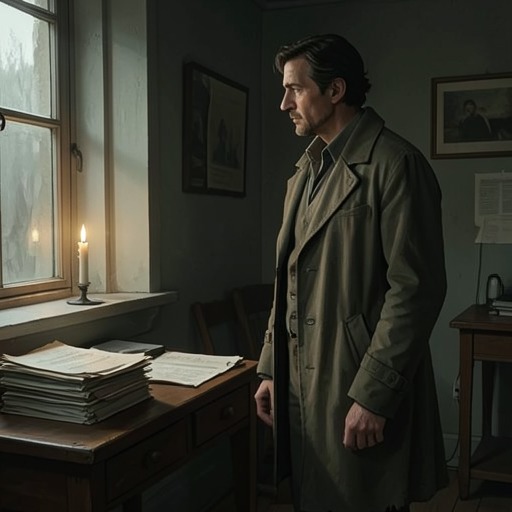
Of Human BondageGoodworthy, the managing clerk at the accountancy firm where Philip Carey is articled, represents the office’s routine and practical assumptions without becoming simply an obstacle to Philip. He supervises the young apprentice, gives him his first clerical task, and communicates that the firm expects competent, alert work. Yet it is Goodworthy who unexpectedly provides Philip with a first glimpse of Paris, turning the city from a distant artistic aspiration into a real destination.## Identity and IntroductionGoodworthy is a small, thin man who introduces himself to Philip as the managing clerk. His conspicuously large head and uneven appearance, together with his patronising but timid manner, make his effort to project authority visible. He tells Philip that the work includes drudgery, but that it becomes interesting with familiarity and offers the prospect of making money. The description presents him as a minor authority within a world whose values Philip already finds constricting: diligence, business usefulness, and financial reward.## Duties and Office RoutineOn Philip’s first day, Goodworthy receives him while the senior Mr. Carter is still absent. Since Philip admits that he knows nothing of bookkeeping or accounts, Goodworthy finds him a task that does not require specialist knowledge: sorting a large cardboard box of disordered letters and arranging them alphabetically by their writers’ names. He then takes Philip to the narrow room where the articled clerks work, introducing Watson, another young man learning business. These practical gestures establish Goodworthy’s role as the person who manages the apprentice’s immediate work and places him within the office hierarchy.## Philip’s Performance and the Limits of ApprenticeshipGoodworthy later tells Philip that Mr. Carter is dissatisfied with him. The warning comes as Philip reaches the end of his first year, already convinced that he wants to leave the office; Philip answers with a cheerful retort that Carter is not nearly so dissatisfied as he is. The exchange captures the distance between the firm’s assessment of Philip and his own judgment of the work. Earlier, Carter had criticized Philip’s sketches for being made on office paper and had repeated that an accountant had to look alive, while Philip felt he was suited to something better than adding up accounts. Goodworthy is thus the messenger of the firm’s dissatisfaction, but the evidence does not make him the source of Philip’s vocational discontent.## The Paris OpportunityGoodworthy’s most consequential intervention is not a reprimand but an offer. When the clerk who normally accompanied him to Paris falls ill and the other clerks cannot be spared, Goodworthy thinks of Philip, whose articles give him a claim on this occasional business assignment. Philip is delighted. Goodworthy explains that they will work all day, but have their evenings free; the hotel will provide meals, so the trip costs them nothing. His jokingly practical delight in travelling at another person’s expense contrasts with Philip’s more romantic longing for Paris. For Philip, who has been imagining the city as a place of beauty and artistic possibility, the assignment makes that imagined escape briefly available through the very office he hopes to quit.## Narrative RoleGoodworthy remains a supporting character defined chiefly by his position in Philip’s apprenticeship. He oversees ordinary work, communicates the firm’s judgment, and, through the unexpected trip, opens a door beyond the drab routine he administers. That contrast gives his small part in the plot its significance: the office can limit Philip through repetitive labour and professional expectations, yet it can also supply the chance to encounter the place that will redirect his ambitions.