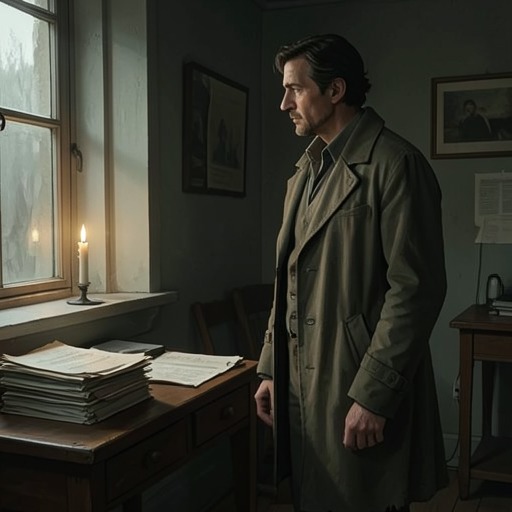
Henry Carey
Of Human BondageHenry Carey is Philip Carey’s father, a successful surgeon whose early death leaves his family with far less financial security than his professional standing had led them to expect. Remembered through family history and its consequences rather than through an extended active role in the plot, he connects a life of professional achievement and generous spending to the precarious childhood that follows for Philip.
Identity and Family Background
Henry is the younger brother of the Vicar of Blackstable and a surgeon who had a brilliant career at St. Luke’s Hospital. He was appointed to its staff and began earning considerable sums. His brother’s account presents him as financially generous: when asked to contribute to the restoration of the church, Henry gave two hundred pounds. The Vicar accepted the gift with mixed feelings, pleased that the church would benefit but uneasy about what seemed to him an ostentatious display of generosity.
Henry married a beautiful young woman who had been his patient. She was an orphan without close relations, penniless, but of good family. The wedding brought together an impressive circle of friends. In the Vicar’s recollections, Henry and his wife’s way of life contrasted sharply with his own careful habits: their house, clothes, flowers, entertainments, and costly food seemed to him evidence of spending beyond what was prudent.
Death and Financial Consequences
Henry died suddenly of blood-poisoning. Although he had been a successful surgeon, his estate did not provide the security his relatives might have assumed. After his death, his widow had little more than his life insurance and the proceeds available from the lease of their house in Bruton Street. Six months later, following further expenses and the loss of much of the remaining money, a little over two thousand pounds was left to support Philip until he could earn his own living.
The disparity between Henry’s earnings and the small inheritance becomes a defining circumstance of Philip’s early life. His mother had little experience managing money and had not adjusted her spending to the family’s altered position after Henry’s death. The Vicar interpreted this history as confirmation of his earlier misgivings about Henry’s extravagance; for Philip, its practical consequence was dependence on relatives and a childhood governed by close attention to money.
Narrative Role and Legacy
Henry’s character is established indirectly, through the Vicar’s retrospective judgments and the financial situation his death leaves behind. The Vicar regards his brother’s spending as irresponsible and his widow’s limited financial judgment as an additional cause of the family’s difficulties. That account is colored by the Vicar’s own thrift and resentment, so Henry’s generosity appears both as real support for the church and as a source of familial unease.
Henry’s legacy is therefore not simply professional success or a substantial gift to the church. His death exposes the difference between earning well and leaving lasting security, while his son inherits the consequences of a household whose spending and resources have fallen out of balance. In the novel’s account of Philip’s beginnings, Henry’s absence is made present through money: what he earned, what he spent, and what remained.