Hopping season
Of Human BondageHopping season is the annual hop harvest in Kent that brings the Athelny family back to the countryside and gives Philip Carey a temporary place in their working life. Through the season’s routines, the novel presents a distinctive mixture of labor, holiday, family custom, and rural sociability; for Philip, it becomes an occasion to experience the Athelnys beyond their London home and to see beauty and community in ordinary work.
Seasonal setting and custom
The harvest takes place at Ferne, the village where Mrs. Athelny was born. Her family had gone hop-picking regularly since her childhood, and she and her husband continued the custom with their children. For many Kentish families, the journey brought in some money, but its appeal was not only economic: the outing was anticipated as a holiday. The work was shared in the open air, children made it a long picnic, and, after the day’s picking, young people met and wandered along the lanes. The season often ended in weddings, linking agricultural labor with courtship and local social life.
While picking continued, Ferne itself was largely deserted. The seasonal workers stayed together in huts beside a meadow, each family returning to the same small shelter year after year. Local people regarded newcomers from London as outsiders, calling them foreigners and both looking down on and fearing them. The distinction marks the harvest as a community with its own boundaries as well as a place of seasonal gathering. In earlier times, pickers had slept in barns; by the period described, a row of huts had been built for them.
Philip joins the Athelnys
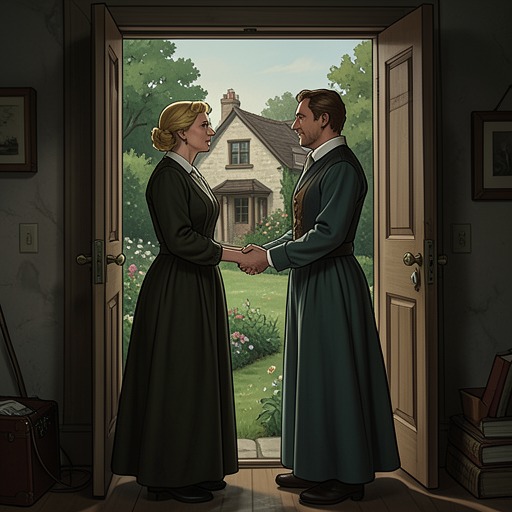
Philip arrives at Ferne late in the evening, expecting to spend a fortnight in the hop-fields. Athelny meets him at the station with a borrowed cart. Philip’s bag is left at a public-house where a room has been secured for him, a short distance from the fields, before Athelny takes him to the meadow where the family stays. The practical arrangements make clear that Philip is being welcomed into the Athelnys’ seasonal life, but not exempted from its work.
The family hut is a long, low shed divided into small rooms. Philip’s room has no furniture beyond a tin box for clothes and three beds. These are made from hopvine covered with straw and a blanket; after a day outside, the pickers sleep there. The family rises early, with breakfast at about a quarter to six and work beginning at six. Athelny insists that Philip get up and earn his board like the others. The principle is concise: “No work, no dinner, my lad.”
Work, wages, and family life
The pickers work in groups known as bin companies, each consisting of ten pickers, not counting children. They sit on chairs, stools, or boxes with baskets beside them, or stand by the bins, throwing in the hops they have picked. Children help a little and spend much of their time playing; babies are kept nearby in improvised cradles or wrapped in rugs on the ground. The harvest’s common labor is thus also a family setting, with work and care unfolding side by side.
The women, many of whom have picked hops since childhood, work faster than the London newcomers. They compare how many bushels they can gather in a day, but the talk of skill and effort is shadowed by falling returns. Formerly, a picker received a shilling for five bushels; now the rate is eight or even nine bushels to the shilling. In earlier years a good picker might earn enough during the season to live on for the rest of the year. Now, the account suggests, the money is too little to make the season more than a holiday that costs the worker little or nothing to enjoy.
The season’s customs also give the Athelnys a shared ambition. Athelny boasts that when his children are old enough he will have a bin company made up entirely of his own family. Each company has a bin-man to supply strings of hops to the pickers’ bins, and this is the position he hopes to hold. For now, he contributes more through encouragement than through sustained picking, while Mrs. Athelny is already at work. His aspiration turns the harvest’s organization into a vision of family cooperation and future participation.
Significance for Philip
The hop-fields bring Philip into a scene of collective life unlike his usual London circumstances. The work is physically shared, the children remain among the adults, and the family’s repeated annual return binds the present harvest to generations of habit. The lowered rates, however, prevent the rural holiday from becoming a simple picture of prosperity: custom and pleasure persist even as the work yields less than it once did.
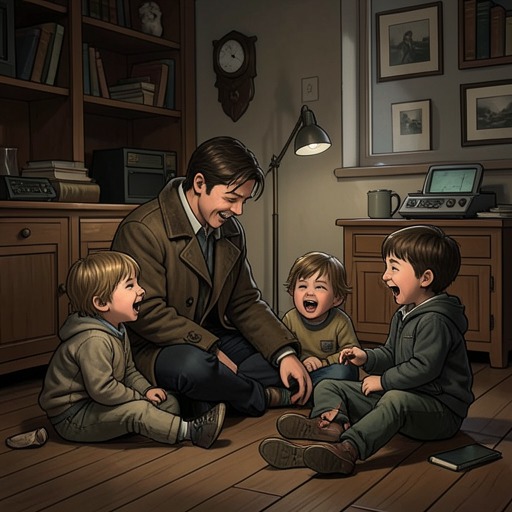
As he listens to Athelny tell his children the story of Psyche and looks down the rows of hops, Philip sees the setting as more than a backdrop for labor. He finds beauty in the English countryside and feels that the scene has a vitality not confined to books or museums. The harvest therefore connects an ordinary working day to Philip’s developing perception of beauty: its significance lies in the coexistence of economic hardship, family routine, communal activity, and an unexpected aesthetic experience.