King’s School, Tercanbury
Of Human BondageKing’s School, Tercanbury, is the school that shaped Philip Carey’s boyhood before he left feeling that he was at last his own master. Its buildings and routines remain closely bound to his memories, but his return reveals how completely his place in that world has changed: the school continues, while he stands outside it, unable to recover the boyhood or companionship he once knew.
Setting and School Life
On a visit to Tercanbury, Philip passes the gateway into the school’s quadrangle, surrounded by its various buildings. The hour is four, and the boys are hurrying out of lessons. Some have changed to play fives; others leave in twos and threes for the cricket ground, while still others go to the precincts to practise at the nets. Masters in gowns and mortarboards move among them. The scene presents the school not as a still monument but as a working institution, carrying on its daily rhythm through successive generations.
The familiar school setting also recalls the social codes Philip has learned beyond its walls. When asked what makes a gentleman, he remembers the saying that it takes three generations to make one, and lists family standing, public-school education, attendance at Oxford or Cambridge, speech, and clothing as marks of the category. Later, in the accountancy office, Watson’s Winchester and Oxford education lends force to his patronising assessment of Philip’s schooling. Together, these episodes show how education functions as more than instruction: it is treated as a credential of class and a means of distinguishing who may claim gentlemanly status.
Philip’s Return
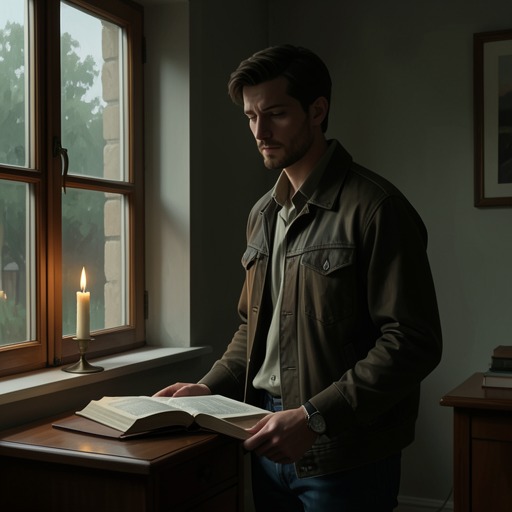
Philip has not visited the school since the day he left it with relief, believing that he would henceforth be his own master. More than ten years later, he recognizes the headmaster, still tall, cadaverous, and wild-eyed, though his black beard is streaked with gray and his face more deeply lined. Philip considers approaching him, then hesitates, afraid that the headmaster will not remember him and unwilling to explain who he is. Familiarity survives as memory, but not as a reciprocal connection.
Among the boys, Philip is a stranger. A few look at him indifferently, and visitors drawn by the Norman staircase attract little notice. He watches the boys and feels the distance between their buoyant youth and his own present life; he thinks bitterly of all he had wanted to accomplish and how little he has done. The school’s continuity makes his personal sense of failure more acute: the boys repeat activities he once knew, while his own time has passed beyond recall.
Memory, Estrangement, and Repetition
The return turns the quadrangle into a measure of change. Philip remembers that he once knew everyone there by name; now he knows no one. He imagines that in a few years the current pupils, replaced by others, will stand as alien as he does. The thought offers no comfort. Instead, the recurrence of the same school routines across generations impresses on him what he sees as the futility of human existence.
He wonders what became of his former companions, imagining them as soldiers, clergymen, doctors, lawyers, husbands, and fathers, and asks himself whether any has made as poor a job of life as he has. Even the name of the boy to whom he was devoted has vanished, though Philip can still recall the boy’s appearance and his own jealous feelings. At the school, memory preserves the shape of old attachments while failing to restore their names or relationships. His longing to begin again as one of the boys is inseparable from his loneliness and his awareness that the past cannot be recovered.
Narrative Significance
The school is both a physical setting of Philip’s formative years and a visible pattern of repetition. Its daily games and lessons continue, but the returning adult finds no personal place in them. The contrast between the institution’s durable routine and his own irretrievable years brings the novel’s concern with time, chance, and life’s apparent lack of purpose into a single remembered landscape.
That bleak reflection is complicated by Philip’s thought about poverty. He almost regrets the penury of the preceding two years, because the urgent struggle to keep body and soul together had deadened the pain of living. At the end of the school visit, the work of earning daily bread appears not simply as hardship but as a balm that can reconcile a person to existence. The remembered school therefore frames a double recognition: the past cannot be restarted, yet immediate necessity may provide an imperfect shelter from the burden of thinking about life as a whole.