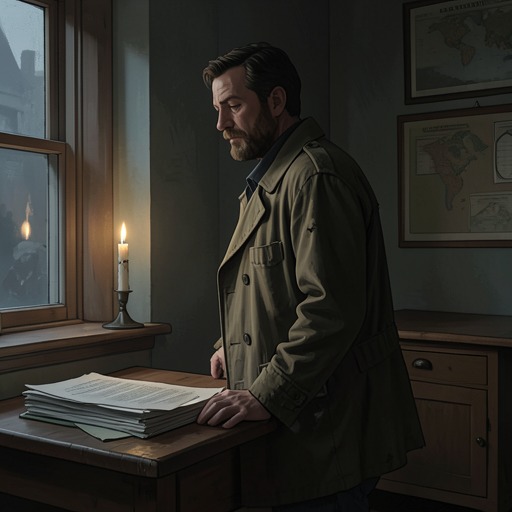
Mrs. Hodges
Of Human BondageMrs. Hodges is a fellow employee at Lynn and Sedley who becomes one of Philip Carey’s first sources of encouragement in the shop. Having known a fall in social circumstances herself, she recognizes his unease among the other workers and offers him both sympathy and practical advice. Her suggestion that he draw a costume design gives his artistic training a new use, while her kindness briefly connects his former ambitions with the ordinary demands of shop life.
Identity and Introduction
Mrs. Hodges enters the account during one of the shop’s social evenings, held on alternate Mondays. She is about forty-five, with badly dyed hair, a yellow face marked by small red veins, and pale blue eyes. She takes a liking to Philip soon after he arrives and calls him by his Christian name before he has been there a week. Her familiar manner contrasts with the reserve Philip brings to his new surroundings.
She tells Philip that Hodges is not her real name and explains that she refers to her husband as Misterodges. She says that he was a barrister and treated her badly, and that she left him in order to be independent. She has known a different standard of living: she recalls having a carriage and late dinners at home. Her account makes her sensitivity to social descent personal rather than abstract, even as her stories and manner distinguish her from the younger shop assistants.
Place in the Shop and Relationship with Philip
Philip is ill at ease among his new colleagues, and the girls in the shop call him sidey. When one addresses him as Phil, he does not realize she means him; she takes his silence for snobbery and later calls him Mister Carey with pointed emphasis. Other girls assume he must be a gentleman because he gives Miss Jewell lovely presents. In this unsettled atmosphere, Mrs. Hodges offers Philip a more generous reading of the workers’ reactions.
She tells him not to mind what the others say, because they do not know any better, and advises him that they will like him if he holds his own. She frames this counsel through shared experience, saying that she has had to go through what he has. The reassurance does not erase Philip’s awkwardness, but it gives him a sympathetic ally among people whose habits and judgments he has not yet learned to navigate.
Encouraging Philip’s Drawing
At a social evening, the staff discuss costumes for a music-hall performance. Mr. Sampson offers ideas, but Mrs. Hodges does not think they will work. She turns instead to Philip, asks whether he can draw, and suggests that he try. Her prompt draws on a capacity he had developed while studying art in Paris, although his current employment is far removed from his former artistic plans.
Philip buys a cheap box of watercolours and makes sketches in the evening while Bell arranges his stamp collection. Remembering costumes he saw in Paris, Philip adapts one design and builds its effect from an unusual combination of strong colours. Mrs. Hodges is surprised by the result but takes it straight to the buyer. When the design is judged unusual and potentially effective, Philip begins to suggest alterations to protect himself; Mrs. Hodges advises that it be shown to Miss Antonia as it is. Her practical confidence helps ensure that the sketch is assessed on its own terms rather than concealed by Philip’s self-conscious revisions.
Departure and Narrative Significance
When Philip learns that his uncle is dying, he tells the buyer he must leave. The news has spread through the department in an exaggerated form, and the workers think he has come into a fortune. Mrs. Hodges has tears in her eyes as she shakes hands with him. Philip says he is glad to get away from Lynn and Sedley, but her emotion shows that the short connection has mattered to her, even though his departure ends it.
Mrs. Hodges’s role is modest but distinctive: she is neither a professional mentor nor a close companion, yet she offers Philip recognition at a point when he feels out of place. Her own experience of lost status informs her sympathy, and her eye for a useful idea turns a casual workplace conversation into an opportunity for Philip’s drawing. The episode also places artistic ability inside the routines of commercial employment, where a Paris-trained eye can still prove useful even after Philip has left the pursuit of painting as a career.