Norah Nesbit
Of Human BondageNorah Nesbit is a separated wife and working mother who supports herself and her child by writing cheap novelettes. Her lively intelligence, practical outlook, and instinct for care make her Philip Carey’s lover and a source of happiness he experiences as durable and companionable. Their relationship is broken by Philip’s return to Mildred Rogers; Norah’s later engagement to Mr. Kingsford gives her a new prospect of affection and material security, while exposing the cost of Philip’s decision to leave her.
Identity and Work
Norah lives in rooms in Vincent Square and earns her living through fiction produced to formula. She is separated from her husband and responsible for a child. A publisher pays her fifteen pounds for a thirty-thousand-word story; she knows the work is not distinguished, but it is reliable enough to meet immediate needs. She changes the names and repeats what readers like, and keeps writing by concentrating on the washing, rent, and clothes her child requires. Her account of this routine is not self-pitying: she treats repetitive labor as a practical means of getting by.
Norah refuses to organize her life around distant security. As long as she has three weeks’ rent and a little extra for food, she does not worry about what comes next; when circumstances are worst, she expects something to happen. The outlook is a form of resilience as well as a limitation imposed by insecure work. Her writing is ill-paid, her friends are poor, and she appears to have no family support, but she remains capable of making light of her struggles and finding pleasure in the present.
Meeting Philip and Becoming Lovers
Philip meets Norah through Lawson, who invites them to a Sunday luncheon after finding a theatre understudy willing to model. Norah’s conversation and ready humor draw Philip to visit her in Vincent Square. He returns so often that daily tea becomes a habit, bringing a cake, butter, or tea so that his visits will not burden her. They begin using each other’s Christian names. Philip, accustomed to loneliness and to keeping his troubles to himself, finds in her a willing listener and a sympathetic response he has not found in friendship with men.
Norah knows that she has no talent for more ambitious literary work, and Philip is impressed by her willingness to face the limits of her situation without pretending otherwise. He compares her intelligent interest with Mildred’s obstinate refusal to take an interest in what she does not know. That contrast makes him recoil from the thought that he might have been tied to Mildred for life. When he tells Norah the humiliating story of his love for Mildred, she listens and concludes that he is well out of it. Her clear sympathy strengthens his growing attachment.
The relationship becomes intimate and happy. Norah’s love has a maternal, domestic quality: she enjoys petting Philip, scolding him, fussing over his health and linen, and tending to him. She is tender about his clubfoot, a source of lasting sensitivity for him, and her pity is expressed without ceremony. Young, strong, and cheerful, she likes his laughter and his company, not an imagined ideal of him. Philip is surprised by the completeness of her acceptance, and the two become lovers while remaining friends.
Affection, Security, and Philip’s Departure
For Philip, the relationship offers the emotional steadiness of marriage without the sense that he has surrendered his freedom. Their sexual bond deepens a friendship that he values in its own right; with his appetites satisfied, he becomes more equable and easier to live with. Looking back on the winter of his obsession with Mildred, he feels disgust at both her and himself. Norah’s affection makes a striking alternative to passion that had left him at once yearning and miserable.
Norah takes a personal interest in Philip’s medical examinations and asks him to tell her the results at once. When he passes all three parts of the First Conjoint examination, she bursts into tears from relief and happiness. Her response registers the degree to which his prospects have become part of her emotional life. The care between them is reciprocal in feeling, even though she often expresses it through practical attention and he depends on her sympathy.
Norah receives a new commission worth fifteen guineas and proposes that they celebrate by spending a day in Oxford. She is frank and delighted with him, making toast and cutting it into small pieces for him as if he were a child. Philip, meanwhile, knows he has returned to Mildred and cannot bring himself to tell Norah the truth. The contrast is painful: Norah’s open welcome and plans for shared pleasure meet his concealed decision to leave.
The Break and Its Aftermath
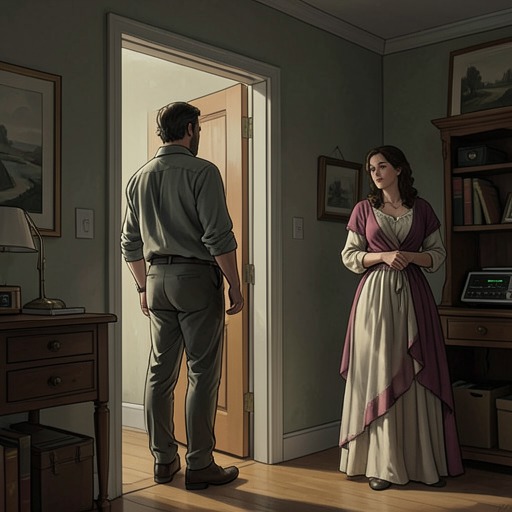
Philip follows the advice to end the relationship in writing. His letter tells Norah that they should leave things where they stood on Saturday, that there is no use continuing now that the relationship has ceased to amuse him, and that he will not come back. Its cool phrasing turns a consequential abandonment into a claim about lost amusement. When Norah confronts him, asking whether he had simply been waiting for an opportunity to throw her over, he does not answer. She sits on the floor beside the armchair and cries silently, the tears running down her face without reproach or concealment. Philip finds this harder to bear than an angry quarrel, which might have offered him a sense of justification; instead, he turns away and apologizes for hurting her, saying that he cannot help not loving her.
The separation does not erase Norah’s concern for him. Later, when Lawson reports that he has seen her, Philip flushes at the mention of her name. Norah had asked how he was. Her continued interest, carried indirectly through Lawson, contrasts with Philip’s attempt to make the break final and exposes how much remains emotionally unsettled for him.
A New Future and Narrative Significance
When Philip meets Norah again, she tells him that she is engaged to Mr. Kingsford. She explains that she met him after Philip had hurt her; he was kind while she was unhappy, and she eventually told him about her husband. Tired and feeling ill from working continually, she accepted Kingsford’s offer to provide money for her divorce on the condition that she marry him as soon as she could. He has a good job and does not expect her to work unless she wants to. Norah says that she has become very fond of him. The engagement therefore offers more than a new romance: it joins affection to release from a difficult marriage and the possibility of no longer having to support herself through exhausting, poorly paid work.
Norah’s arc sets the practical warmth of mutual companionship against Philip’s attraction to an idealized, destructive passion. She gives him tenderness without demanding that he become someone else, and their intimacy briefly makes him feel whole and self-possessed. Yet his return to Mildred shows that affection and sexual obsession do not carry equal force in his choices. Norah suffers the immediate cost, but her later engagement prevents her from remaining only an abandoned figure in Philip’s story. Her independence, humor, and capacity to accept care as well as give it let her move toward a future of her own.