Tom Perkins
Of Human BondageTom Perkins is a former scholarship boy who returns to King’s School as its headmaster, exposing the class prejudice embedded in the institution that once educated him. His unconventional manner and broad curiosity unsettle his colleagues, while his serious religious mentorship helps shape Philip Carey’s early hopes and the struggle that eventually takes Philip away from the ministry.
Identity and Background
The school’s governing Chapter appoints Perkins to succeed Dr. Fleming, bypassing the choice favored by the masters: Mr. Watson, headmaster of the preparatory school. Their dismay is not principally about Perkins’s ability. They know him as the brilliant former day-boy whose education was paid for by a scholarship, and they cannot forget that he is the son of a linendraper. His father’s shop, Perkins and Cooper, had supplied the school; the family business later failed, with Cooper’s drinking part of the story the masters tell to magnify the disgrace.
Perkins’s academic record makes the resentment harder to justify and therefore more revealing. He won the school’s most valuable scholarship, gained another at Magdalen, and achieved a double first at university. After taking Holy Orders, he taught at Wellington and Rugby before returning to lead the school where his former teachers had once treated him as a promising boy, but never as a social equal. Their anxiety about calling him Mr. Perkins and receiving him at their dinners shows how strongly they confuse institutional authority with inherited gentlemanly standing.
Leadership and Character
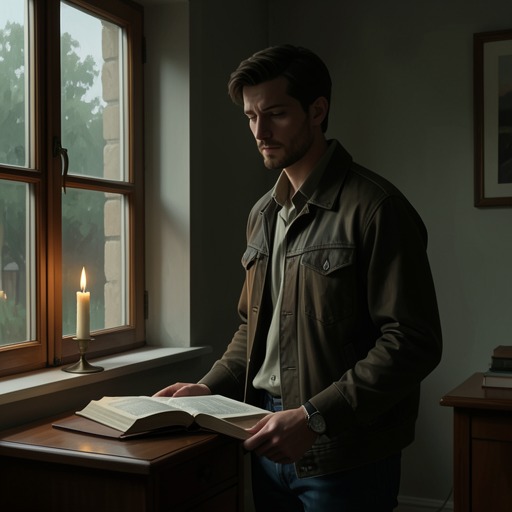
At his introduction to the masters, Perkins is thirty-two, tall and lean, with long, untidy black hair, a black moustache, and a beard rising almost to his cheekbones. His clothes are shabby and ill made. He pushes his hair away from his eyes with a quick movement, yet speaks to the men who taught him as readily as if they had parted only a week earlier. He appears not to notice the awkwardness of being addressed as Mr. Perkins. When a master remarks that he has plenty of time before his train, Perkins cheerfully says he wants to go and look at the family shop. The small response quietly refuses the embarrassment his colleagues expect him to share.
His teaching also departs from the school’s settled habits. Seeing pupils study the agrarian laws of Caius Gracchus, he asks whether they know anything about agrarian troubles in Ireland; discovering that their knowledge extends only to Dublin’s position on the Liffey, he turns their attention to General Gordon. The masters conclude that their new head has a mania for general information. Perkins doubts the value of examinations built on material crammed for the occasion and wants pupils to possess common sense. His classical scholarship is genuine—he is writing a treatise on trees in Latin literature—but he speaks of that work lightly, as a pastime rather than a solemn credential. The contrast between his learning and his refusal to treat academic convention as sacred helps explain why his colleagues find him difficult to place.
Religious Mentorship of Philip Carey
Perkins’s authority over Philip becomes personal after he speaks kindly to the boy during a painful episode of abuse. Philip responds with intense, almost dog-like adoration: he treasures passing words of praise, searches for ways to please the headmaster, and listens with rapt attention at quiet meetings in Perkins’s house. The ordinary surroundings make their discussions of religious mysteries feel especially powerful to him. Philip imagines Perkins’s dark eyes and pale face as those of an Old Testament prophet; religious instruction is not merely a school duty but, for the boy, an encounter with a compelling adult presence.
Perkins takes preparation for confirmation seriously. In a crowded working day he makes time to see each boy separately for a quarter of an hour or twenty minutes. He wants confirmation to feel like the first consciously serious step in a boy’s life, and tries to reach into each pupil’s inner life and instil his own intense devotion. In Philip he recognizes the possibility of a religious passion like his own. When he asks what Philip intends to become, Philip explains that his uncle expects him to be ordained. The exchange joins family expectation to the spiritual direction Perkins hopes to strengthen.
Conflict Over Philip’s Future
When Philip later changes his mind about ordination, Perkins does not treat the decision as a routine matter of school performance. Although Philip’s work is poor and his prospects of winning the scholarship needed for Oxford are slight, the headmaster considers the more important question to be what Philip will make of his life. He speaks to him not simply as a master addressing a boy but as one human being addressing another, and tries with great tact to restore his desire for the ministry. Perkins is genuinely distressed: he believes Philip is surrendering his chance of happiness for an unknown alternative.
His appeal reaches Philip emotionally. Philip is moved by Perkins’s interest and feels guilty at the grief he is causing him; the attention is flattering, too, because the headmaster has the whole school to think about and still makes time for him. Yet the pressure cannot reverse Philip’s decision. He clings inwardly to his refusal, even as Perkins’s persuasiveness touches him. The episode reveals both the strength and the limit of Perkins’s influence: he can make a vocation feel precious, but he cannot supply Philip with a conviction that Philip no longer possesses.
Significance
Perkins’s career forms a pointed counterexample to the schoolmasters’ assumption that social origin determines who may properly lead them. The scholarship boy whom they remember as a tradesman’s son has earned distinctions at school and university, entered the church, and returned as headmaster; their discomfort exposes the class boundary more clearly than any formal rule could. His appearance, manner, and lack of deference do not imitate the gentlemanly polish his colleagues expect, but neither do they diminish his intellectual authority.
In Philip’s story, Perkins represents sincere religious commitment rather than mere institutional routine. His patient, individual conversations and evident distress at Philip’s retreat make the religious vocation a real personal bond, not simply an obligation imposed by the school or family. That bond cannot prevent Philip’s departure from inherited belief and expectation, but it gives his refusal emotional weight: leaving the ministry means resisting a mentor who has treated him as a soul worth understanding.