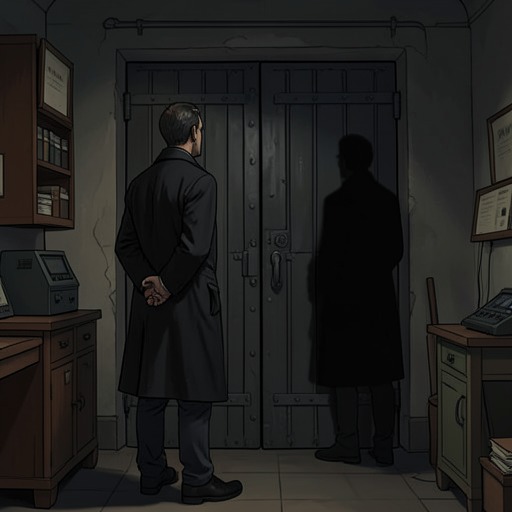
“Simple. Keep it simple, stupid.”
Off Campus“Simple. Keep it simple, stupid.” is Tom Worthington’s blunt self-command to avoid the complications of connection. The phrase gives his withdrawal the sound of a rule, but the events around it show how little control that rule can secure: Tom wants to keep his life simple precisely as Reese begins to act with unexpected decency and new complications enter their shared room.
The Rule and Its Immediate Context
Tom has just declined an opening for friendship, reasoning that he does not want to make new friends only to have them let him down later. Reese accepts his response without pressing him. Tom rolls over and resumes reading, but guilt still pricks at him; irritation follows, directed at himself, Reese, and a world he experiences as one more source of trouble. The slogan condenses that sequence into a command to stop complicating things rather than answer the feeling Reese has stirred.
The sentence’s clipped repetition makes the instruction sound almost mechanically reliable: simplicity is named, then named again as an order. Its final insult turns the rule inward. Tom is not merely telling others to stay away; he is scolding himself for being susceptible to a situation that cannot be kept neatly contained.
A Strategy Under Pressure
The rule appears alongside two contrary pressures. Cash keeps calling and is determined to get Tom out of his room, while Reese has begun behaving in a way Tom describes as human and decent. Tom recognizes both as complications. His insistence on simplicity therefore functions as resistance to renewed social involvement, not as evidence that his isolation has made him content.
That resistance holds only partially. Tom and Reese reach a tentative peace, and Tom starts studying in their room rather than in the library. He explains the choice to himself through convenience—the nearby bathrooms and freedom to snack on dry granola bars—but also recognizes that he is retreating toward hermit-like isolation. He avoids campus and skips track practice because he does not want others to see how much he has fallen behind. The phrase’s promise of simplicity is shadowed by the narrowing of his life.
The Rule Meets the Room
The instruction is undercut when Reese enters their room with his best friend, a blue-haired biker who speaks like a psychology major. The two arrive in the middle of a loud argument, bringing other people and their unsettled business directly into the space where Tom has been trying to withdraw. His resentment feels justified to him, but the scene makes clear that his room cannot remain a sealed refuge from relationships.
The phrase thus marks a recurring tension rather than a lasting solution. Tom can tell himself to keep things simple, yet guilt, Cash’s persistence, Reese’s decency, and the arrival of Reese’s friend all resist that order. Its significance lies in the gap between the clean, dismissive command and the increasingly complicated social life it is meant to contain.