Boston
Off CampusBoston is the city where Tom Worthington tries to make his finances and feelings obey a practical schedule. He travels there to drive taxis and save for tuition, treating paid work and long hours as a way to avoid dwelling on a life unsettled by his father’s scandal and his strained living situation with Reese. Yet the routine that is meant to keep him detached becomes a measure of how much he has begun to care about what happens back on campus.
Work, Money, and the Weekend Route
Tom’s connection to Boston begins with a limited budget. At a bar, he orders the cheapest beer on tap, conscious that the money in his wallet must last until he can return to the city for several nights of driving the following weekend. He is nearly twenty-two but feels far older, and imagines that earning cash on weekends—through legitimate cab work or informal taxi driving—will let him concentrate on classes during the week. With little room in his budget beyond inexpensive food and drink, even a modest purchase is weighed against the need to keep going.
After returning to campus, he makes the journey a fixed weekly pattern. Every Friday morning he heads to Boston, drives a licensed cab during the day, and also takes informal fares through contacts among bar bouncers. They direct customers to him when regular taxis are delayed, especially women or groups of women who need a safe ride home after a night out. He leaves early Friday and returns on Sunday night, fitting the work around his studies rather than giving up the academic week altogether.
The commute itself marks the start of the routine. On one Friday, Tom drives east on the Massachusetts Turnpike as the sun rises, watching traffic build as he nears the city. He has more than seven hundred pages of reading to complete over the next three days, but expects the driving shifts and the need to manage late-night passengers to leave little room for idleness. His plan is deliberately narrow: work, study, save, and avoid thinking beyond the next obligation.
A Routine That Reaches Back to Campus
The weekend pattern affects the room Tom shares with Reese even while Tom is away. He understands that Reese has settled into the rhythm of his absences. When Tom returns on Sundays, the sheets on both beds have been changed, and the small accumulations of the week—coffee cups, dessert plates, and other clutter—have been cleared away. Tom means to offer help and tries to keep his own side tidy, though he recognizes this as a limited response to Reese’s substantial cleaning.
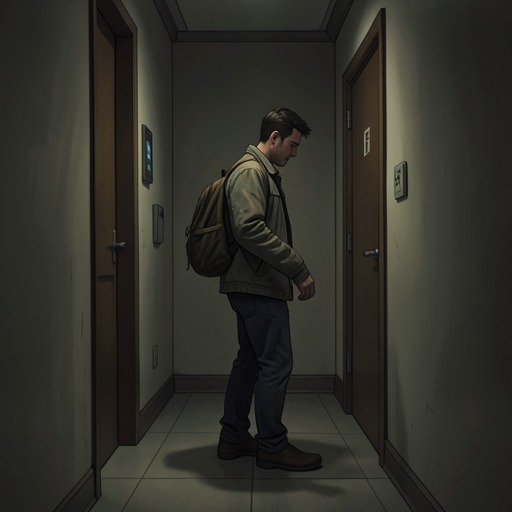
His departure also carries an anxious question. One Friday, as he walks away from Perkins House, Tom looks back and wonders whether Reese will return to their room now that Tom, whom he describes to himself as the person who took advantage of Reese, is gone for several days. The regular journey to Boston therefore does not simply give Reese space; it gives Tom time to imagine what Reese might do with that space. The city’s distance makes the uncertainty more acute rather than resolving it.
The City as Escape and Reminder
Before the landline in the room rings, Tom’s experience of Boston has already become associated with escape. He recalls slipping into a movie theater on the Common without paying the full ticket price because he did not want to spend fifteen dollars. Watching The Departed in the dark offered a few hours outside himself and an ending to follow while he endured what he regarded as the grinding remainder of his degree. The film’s song later became the ringtone on his phone, but after his father’s arrest and before his father’s suicide attempt, Tom changed his number and withdrew from most former friends. Calls dwindled to work dispatchers, a few people connected to his informal driving, and his father’s lawyer, whom Tom warned not to give the new number to his father.
That history makes Boston both refuge and reminder. Tom uses its work to fund his return to campus, and its theaters and streets have offered temporary ways to be elsewhere; at the same time, the city’s connection to his new telephone number and his former social world underscores how deliberately he has cut himself off. He continues to follow the legal proceedings through his father’s attorney but refuses direct conversation with his father. Work gives him contact with customers and dispatch, yet his personal communications remain sharply restricted.
The Routine Breaks
Tom’s weekend schedule proves less reliable when he cannot stop thinking about Reese. Six hours into a twelve-hour shift, driving business passengers between the Prudential Center and Logan Airport, he realizes that his attention has returned repeatedly to the question of whom Reese might bring back to their room. After getting caught in traffic around Faneuil Hall for the third time, partly because he keeps forgetting the construction on Congress Street, he tells dispatch that he has an emergency and brings the cab back.
The word emergency is not tied to an external crisis in the scene. It names the intensity of Tom’s inability to redirect his thoughts. He has built the Boston shifts to earn money and keep himself busy, but the routine cannot prevent his concern about Reese from following him into the workday. He considers staying in the city longer, perhaps taking more dispatch work and missing class, but recognizes that doing so would further isolate him from his seminar and its professor.
On another Sunday night, Tom drives back toward campus after refusing to speak with Reese by phone during the trip. He says he is ending the call because driving at extreme speed while distracted could end with him dead, and promises to see Reese in an hour. The drive is a return to Perkins House, not an escape from it: the prospect of seeing Reese has become powerful enough to disrupt the controlled distance that the weekly Boston routine was meant to preserve.
Narrative Significance
Boston gives Tom a concrete strategy for surviving financial pressure: work long hours, save what he can, and reserve the weekdays for college. The repeated Friday departure and Sunday return impose a clear structure on his life, while cab fares, late-night customers, and the long commute make that structure materially specific. But its purpose—to earn money and keep his mind occupied—comes into tension with his emotional attachment to Reese. The city is therefore not merely a backdrop for employment. Each trip tests whether distance and busyness can keep Tom’s feelings contained, and the abandoned shift shows that they cannot always do so.