Christmas
Off CampusChristmas is the first extended holiday Tom spends with Reese and the Anders family, and it makes visible what Tom has tried to keep hidden: his financial collapse, his reluctance to accept care, and his growing recognition that familial closeness can look nothing like the relationship he had with his father. A failing laptop and a battered replacement bring those tensions into the open; the holiday’s warmth offers him a place to belong, but it also sharpens his grief over what he thought family meant.
Arrival Under Strain
Reese tells Tom to plan on spending part of the Christmas holiday at the Anders home, and Tom knows better than to argue. The invitation comes as the semester ends in a sleepless rush of research papers and projects. Tom’s laptop freezes beyond repair, but he has not explained how severe his financial situation is. Reese takes his refusal to replace it for a matter of time rather than money, and reads his avoidance of gifts as charmingly anti-materialistic, a striking misreading of a need Tom has concealed even from his boyfriend.
The concealment extends to the small bodily costs of getting by. Tom’s running shoes are separating at the sole, and the worn cushioning has left his knees aching with tendonitis. He times his runs so he can ice them while Reese is away, avoiding questions as he avoids explaining why he cannot simply replace his shoes or computer. The practical details make deprivation legible before Tom names it: the old wealth attached to his upbringing has not protected him from the immediate, physical arithmetic of having too little.
The Laptop and the Limits of Refusal
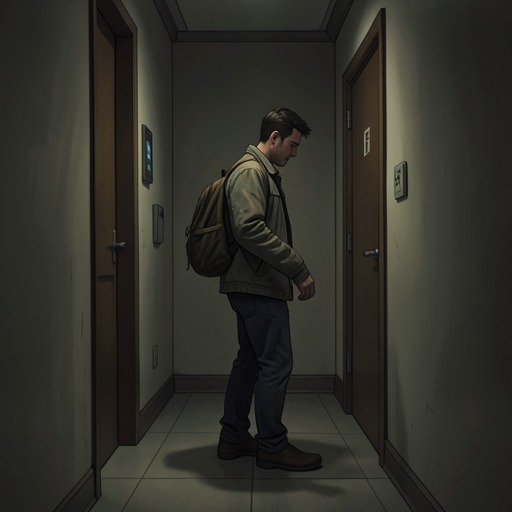
Tom arrives at the Anders home on Christmas Eve after driving for three days straight. He parks outside and texts Reese to wake him in the morning, reluctant to disturb Reese’s father and judging that the weather is not yet cold enough to make sleeping in the car unsafe. Reese is at his window less than a minute later, hopping barefoot on the frozen ground. Tom embraces him tightly before pulling back, alarmed that he has held on too hard. The reunion’s first gesture is both an expression of need and an immediate retreat from it.
Because there is no guest room, Reese suggests that Tom share his old room, but Tom refuses and sleeps on the living-room couch instead. He cannot tell whether the refusal comes from manners or fear that sharing a bedroom would amount to another public declaration of being gay. At the foot of the dark staircase, he kisses Reese goodnight, then settles beneath a scratchy homemade afghan Reese has given him. Even inside the household that has welcomed him, Tom is still negotiating how much intimacy he can bear to claim.
Christmas morning, Reese brings down a battered laptop with a red bow stuck off-center. Tom freezes; the sudden loss of color in his face reflects what Reese does not yet understand about the severity of his money troubles. Reese insists that it is not a present, since they had agreed not to exchange gifts, but a loan: his old high-school laptop, whose stuck S key has to be struck to work. He explains that it will spare Tom the daily run with coffee across campus to the science building, whose jars of fetuses in formaldehyde creep him out. Reese’s casual, practical framing cannot prevent the machine from exposing the gap between what he thinks Tom can afford and what Tom has been hiding.
A Different Picture of Family
In the Anders kitchen, Tom watches Reese and his father interact and recognizes a contrast with painful force. Their connection consists not of pronouncements from above but of ordinary complaints, laughter, and enthusiastic encouragement of one another’s small triumphs. Tom concludes that the lessons and warnings he absorbed from his father were not the same thing as this everyday reciprocity. What he had taken for a real family bond now seems like an imitation, or perhaps something he mistook for the real thing because he had known no better.
The recognition arrives amid the material fullness of Christmas morning: Bruce Springsteen sings “Santa Claus is Coming to Town” on the radio, the kitchen windows fog with the steam of food being prepared, and coffee mingles with the smells of roasting meat, baking bread, and cut apples. Tom huddles over his mug as the contrast presses in. The pressure behind his ribs becomes unbearable enough that he shoves back his chair, drawing Reese and his father’s attention, and announces that he has to run. The scene turns the hospitality around him into more than comfort: it gives him an intimate view of what he has lost, and makes that loss impossible to keep abstract.
Help, Refusal, and the Holiday’s Aftermath
Tom’s response to help is shaped by the financial reality he has not shared. His father’s lawyer and the bankers have told him that everything is frozen and will most likely be lost when judgment is final and civil suits begin. He has not told Reese, or anyone else in his former social circle, “I have nothing.” Friends who once knew him do not understand why he cannot join spontaneous trips to ski in Vermont or go clubbing in Manhattan; when he repeatedly backs out, they regard him as melodramatic. Tom stops expecting them to understand and no longer asks for help. Against that history, the laptop’s red bow is not simply a kind holiday surprise: it is care arriving where Tom has trained himself not to expect it, and it makes his undisclosed need impossible to ignore.
The holiday leads into a January term in which Tom tries to meet his expenses by driving a cab, or informally using his own car as one, for as much as twenty hours a day during the first week. He catches a few hours of sleep with Reese after the bars close on most nights, until seven days of exhaustion leave his vision blurred and his reflexes shot. Reese refuses to let him leave the house before he has slept eight solid hours, then sits him at the dining-room table with his father to persuade him to accept a loan. Tom refuses to take money from either his boyfriend or Reese’s father, reasoning that the Anders family is not wealthy and that their offer would come from money needed for Reese’s education. He does, however, let them persuade him to email the dean, the head of the economics department, and his favorite economics professor. Their offers of help mark a change: Tom remains reluctant to receive personal financial support, but begins to disclose the extent of his circumstances to people able to assist him academically. Christmas thus stands at the hinge between concealed hardship and an imperfect, hard-won willingness to let others know he needs help.