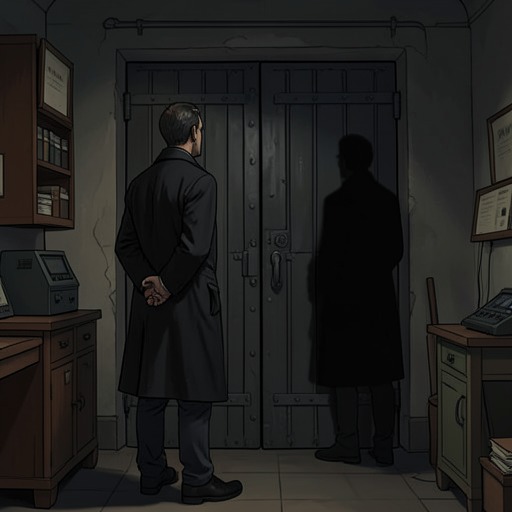
Jack Tarkington’s expulsion from Carlisle College
Off CampusJack Tarkington’s expulsion from Carlisle College is the institutional consequence of his harassment of Tom Worthington, the student he targets over his father’s financial crimes. It derails Jack’s plans to study abroad and sends him back to the Iowa town he had hoped to leave behind; the decision also exposes the difference between Jack’s accountability for harassment and Tom’s fear that the college might reject him because of circumstances beyond his control.
Cause and Context
Jack had expected to spend his junior year studying in a city such as Paris or Rome. Instead, after taking his anger out on Carlisle’s celebrated student, Tom Worthington, whose father had defrauded Jack’s parents, he faced possible expulsion. The grievance has a concrete family basis, but it does not excuse the choice to direct that anger at Tom.
The college’s decision also takes shape against Tom’s own strained relationship with institutional authority. After disclosing that his father’s case and the possibility of unwanted press attention had shaped his return to campus, Tom interpreted the dean’s letter as a warning that he could be removed if his presence caused a media spectacle. He later learned that the letter was intended to advise him on protecting himself, not to make him responsible for protecting the college from publicity. Jack’s case, by contrast, concerns conduct toward another student: the dean tells Tom that students are entitled to attend college without harassment and says that, if Jack harassed him, Jack would be dismissed and could face academic probation.
Decision and Immediate Consequences
The narrative first presents Jack as facing possible expulsion, then describes the outcome from the perspective of his return home: he has been kicked out of school for harassing someone. With no way to explain the situation to his parents before arriving, Jack recognizes that the reason cannot be made presentable or spun into a more favorable account. His return to the small Iowa town he had thought he had escaped is therefore not a planned visit but the immediate consequence of losing his place at Carlisle.
The expulsion also closes off the future Jack had expected to pursue at college. He had been proud of winning admission to a prestigious school and had avoided returning home during the academic year when he could. Now he is back earlier than his parents expect, with his plans for junior year abroad displaced by the repercussions of his own actions. The account acknowledges his anger at what he regards as unfairness, while making clear that the disciplinary cause is his harassment of Tom.
Tom, Harassment, and Institutional Responsibility
Tom does not initially welcome the prospect of punishment for Jack. When the dean questions him about their confrontation, Tom argues against consequences and tries to frame Jack’s behavior as justified by the harm Jack’s family suffered. The dean interrupts that defense, says she will investigate independently, and makes clear that any finding of harassment would carry consequences regardless of Tom’s attempt to excuse it. Tom later reflects that he felt both close to laughing and close to crying as he heard the dean’s words, which echoed Reese’s perspective more than his own.
That response makes the disciplinary outcome more than a simple victory for Tom. Tom’s impulse is to absorb or excuse hostility directed at him, while the dean treats harassment as a violation of a student’s right to attend school safely. Jack’s expulsion thus marks the institution’s willingness, in this case, to act on the principle the dean states—even when Tom himself resists the consequences. The contrast is especially pointed because Tom has been reading institutional communication through the lens of his own public exposure and fear of exclusion.
Significance and Aftermath
Jack’s removal is a reversal of status as well as a punishment: the student who had announced his admission to a prestigious college returns to the hometown he had tried to outgrow, unable to conceal the reason. The episode links the family harm caused by Tom’s father to Jack’s resentment, but distinguishes that inherited grievance from Jack’s responsibility for how he treats Tom. His anger may explain the conflict’s origin; it does not erase the school’s stated obligation to protect students from harassment.
The expulsion also redirects Jack’s story away from the campus future he imagined and toward the consequences of coming home. The narrative frames that return as humbling rather than triumphant, while leaving room for the fact that Jack’s academic prospects are described at first as uncertain. What is settled is the immediate cost: his conduct has ended his place at Carlisle and forced him to confront, at home, what he cannot credibly deny.