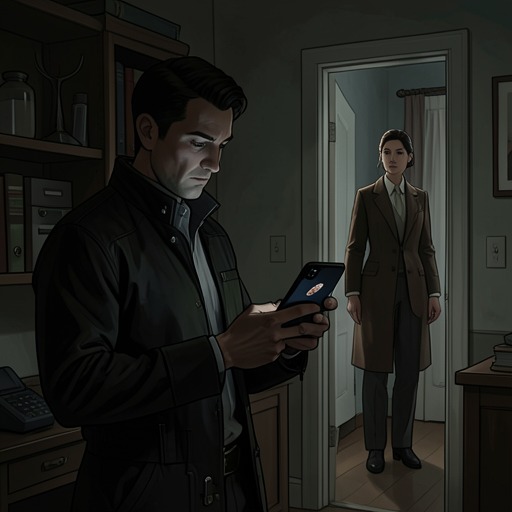
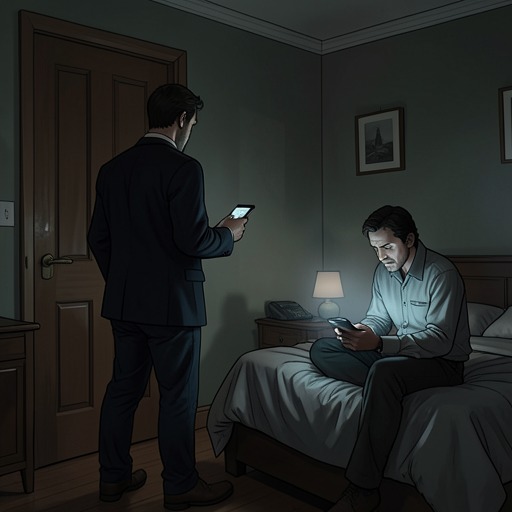
Reese cares for Tom after he is burned by steam
Off CampusReese cares for Tom after a steam burn turns an ordinary return to their Perkins room into a scene of pain, dependence, and uncertain intimacy. The episode’s significance lies in the way practical attention becomes a test of trust: Reese finds immediate ways to ease Tom’s injury, then offers touch and comfort while the two men navigate attraction, consent, and the effects of Reese’s trauma. Their closeness grows through acts of care, not through any claim that care can make the underlying hurt disappear.
Causes and Immediate Circumstances
Tom arrives back at Perkins with a severe burn on his hand and wrist. He had tried to help a woman and her children after their car broke down on the highway; a hose tore, scalding him with steam. He had declined an offer from an MDOT worker to take him to an emergency room, and by the time he reached his room he regretted that decision. The burn’s pain overwhelms his attention, making it difficult to think beyond the sensation of his skin still burning.
The room offers little comfort at first. It is hot and stuffy after sitting with its window closed, and Tom can only open the window a few inches because his injured hand makes the awkward crank difficult to manage. He has bought burn cream and gauze, but trying to treat himself with his left hand leaves the bandage tangled; he cuts it apart with scissors borrowed from Reese’s desk, then abandons the mess. His clothes lie on the floor, and he sits on his bed unable to work out what to do next. The injury makes basic tasks conspicuously difficult, while his reluctance to ask unfamiliar neighbors for help leaves him alone until Reese comes in.
Reese’s First Aid
Reese initially asks what happened, then realizes Tom is talking about the state of the room rather than the injury. Tom manages to explain that he burned his hand. Reese responds by tidying the clothes and gauze, opening the window wide, and improving the air circulation with the box fan. He turns off the bright overhead light and uses his desk lamp instead, a small adjustment that makes the room feel less oppressive to Tom even while the pain continues.
Reese examines the wound carefully, unwinding the twisted gauze and asking whether Tom put anything on it. He identifies the blisters as evidence of at least a second-degree burn and urges Tom to go to the emergency room. When Tom refuses, Reese proposes the campus health center and says security can drive them if Tom does not trust him with his car. This is care expressed as practical options rather than as a demand that Tom surrender control: Reese presses for medical attention but offers an alternative when Tom rejects his first suggestion.
Instead of immediately leaving for the health center, Reese brings a bucket and empties a bag of ice cubes into cold water. He takes Tom’s burned hand by the fingers and places it in the icy water. Tom is startled by the cold, but the sensation gradually numbs his skin; for the first time in hours, he can think clearly enough to speak in a complete sentence. Reese explains the idea through his own memory of burning himself with a curling iron as a teenager, when he could not keep his hand in a bowl of ice water. His nervous explanation makes the gesture feel improvised rather than authoritative, but the intervention gives Tom real relief. Reese’s smile is tentative when Tom thanks him, as though gratitude is not easy for him to receive.
From Relief to Intimacy
Reese offers Tom a Tylenol 3, clarifying that he means acetaminophen and codeine rather than illicit drugs and insisting that he no longer uses drugs. Tom accepts and apologizes for having assumed otherwise. Reese says Tom cannot blame him for the misunderstanding after Reese has told him his own difficult story. Even amid the immediate need to manage pain, their exchange recalls the vulnerable information already shared between them.
Reese then makes a teasing offer to perform oral sex if Tom were gay, presenting it as a way to distract him from the pain. Tom freezes; Reese laughs, then waits for a response. Tom is caught between wanting the contact and fearing what it might mean, and he cannot make himself say what he intends. Reese approaches gently, strokes Tom’s face, and tells him to close his eyes and that it is okay. The reassurance does not settle the question of what Tom wants, but it slows the encounter and gives him room not to answer immediately.
Reese begins with a foot massage. Tom has never had anyone hold his feet in their hands, press their thumbs into his arches, cup his heels, and ease the tension from his soles through touch. He groans at the unexpected pleasure. Reese works across both feet, rotating and stretching Tom’s ankles, then massages his calves and moves along his lower legs. Tom’s injured hand remains in the ice water, the cold holding the burn at bay while Reese’s touch draws his awareness away from pain and toward the sensations of his body. When Reese nudges his legs apart, Tom notices the possibility of sexual charge in the massage; the scene shifts by degrees, through touch that is soothing and suggestive at once.
The intimacy is not simply a progression toward sex. Elsewhere in their developing relationship, Tom’s forceful kiss abruptly freezes when Reese says to wait; Tom lets go. Later, Reese explains that touching is permitted but asks Tom not to hold him down or move his body. Tom promises not to, and touches him only within the boundary Reese has named. These moments establish the importance of stopping, asking, and distinguishing wanted contact from control. They inform the burn episode’s charged physical attention without making Reese’s willingness to be close a cure for his trauma.
Care, Boundaries, and Consequences
The episode places bodily vulnerability in the foreground. Tom cannot manage the bandage, open the window properly, or think past the pain; relief first comes from Reese’s concrete adjustments to the room and then from the ice water. As the pain recedes enough for Tom to attend to other sensations, Reese’s hands become both a source of comfort and a possible invitation. The transition depends on Tom’s uncertainty and Reese’s care in responding to it, rather than on a sudden disappearance of the injury or of their emotional complications.
Their later conversation makes the limits of that closeness explicit. Tom wants to touch Reese but waits because he is unsure whether he has regained the right to do so. Reese touches Tom’s face, making contact acceptable, and Tom then reaches for Reese’s thigh and chest. Reese tells him that being with Tom that night made him feel bad; Tom acknowledges it. Reese adds that his plate of things that make him feel bad is already full. The exchange prevents the care scene from reading as a simple resolution: physical tenderness can create a moment of safety, but it does not settle the emotional costs or give Tom permission to assume that intimacy is always welcome.
Reese’s care is therefore significant both for what it accomplishes and for what it leaves unresolved. He reduces Tom’s pain, changes the conditions of the overheated room, and gives Tom a way to receive touch without forcing him to decide immediately what it means. At the same time, their encounters insist that comfort and desire remain subject to consent, memory, and changing boundaries. The burn brings them into close physical proximity; the trust between them depends on recognizing that proximity alone is not an answer.