Reese's PTSD
Off CampusReese’s PTSD is an ongoing condition following sexual assault, expressed through startle responses, panic, fear around intimate touch, and the exhausting work of discussing what happened in therapy. The novel treats recovery not as a cure delivered by romance but as a gradual, difficult process involving safety, boundaries, professional support, and the willingness of others to listen without taking control.
Symptoms and Conditions
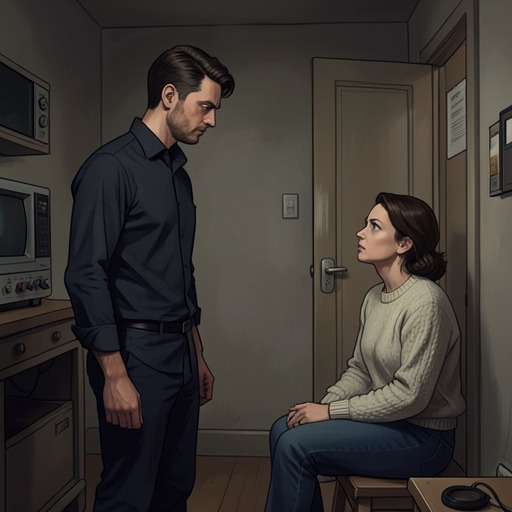
When Tom enters their room unexpectedly, Reese reacts with alarm and puts a chair between them. His wide, unfocused gaze and defensive posture make clear that the response is not playacting. The scene establishes how an ordinary arrival can become frightening for Reese, and how little Tom initially understands about what the right response might be.
Reese explains that his return to Perkins House was tied to a promise the school made to his father, who had insisted on conditions before allowing him to return and might otherwise have spoken to the press. His withdrawal and vigilance therefore occur within a wider context of family concern and the circumstances surrounding his return, not simply as private difficulties between him and Tom.
The symptoms recur in intimate situations. When a moment between them abruptly stops, Reese signals that he needs a pause; Tom lets go rather than continuing. Later, Reese specifies that touch can be welcome while being held down or having his body moved is not. The distinction makes consent concrete and conditional: permission for one kind of contact does not authorize another, and Reese needs to retain control over his body.
Intimacy, Boundaries, and Witnessing
Tom tries to make intimacy predictable by thinking through how to approach Reese and how to avoid bringing back painful reactions. That caution reflects his concern, but it does not give him certainty about what Reese might find difficult. Their attempts to navigate closeness consequently require communication and adjustment rather than a formula that can guarantee safety.
The strain becomes explicit when Reese speaks about PTSD during an argument. He is angry that Tom has treated his condition as an obstacle to sex, while Tom insists that his concern is whether an unexpected movement might trigger a flashback and whether Reese should talk to someone about his fear. The exchange exposes a gap between Tom’s protective intentions and Reese’s experience of being reduced to a problem to be managed. Tom later recognizes that he has hurt Reese by denying or misstating his bisexual identity in the course of their conflict, and apologizes.
Reese tells Tom that being with him has made him feel worse, adding that he already has a full burden of painful things. This is not a rejection of all closeness: their relationship remains a source of touch and companionship. It does, however, establish that affection does not automatically relieve trauma, and that Tom’s presence can be comforting in one moment while adding pressure in another.
Therapy and the Work of Recovery
Reese describes therapy as repetitive and punishing. His therapist wants him to recount the details of what happened; Reese understands that talking may help him gain control over its effects and eventually discuss it without freezing or having a panic attack, but he is tired of the process and does not want to continue. The scene gives recovery both a purpose and a cost: Reese can recognize the potential benefit without being ready to bear the work easily.
Tom waits in their room when Reese returns from sessions, prepared to listen and to serve as a witness, while recognizing that approaching him when he is upset may be a mistake. Reese eventually wonders whether the expectations placed on Tom keep changing. That exchange marks the limits of informal support: Tom can remain present, but neither his devotion nor his willingness to absorb anger can make him responsible for directing Reese’s treatment or guarantee that he will always know how to help.
Relationship and Narrative Significance
The novel links the couple’s negotiations over trauma with Tom’s fear of public exposure. Tom wants privacy because information about him could become gossip; Reese, meanwhile, wants their relationship to be acknowledged more openly. Their disagreement is not reducible to Reese’s PTSD, but his need for safety and Tom’s difficulty discussing vulnerability sharpen the stakes of how they communicate and what each can ask of the other.
In a later discussion, Tom explains that he was not afraid of one person knowing about his boyfriend so much as the scale and publicity of his private life becoming widely known. His admission helps distinguish intimate disclosure from public exposure, but does not erase the ways his fear has affected Reese. Across these conflicts, PTSD is portrayed as a lived condition that involves recurring reactions, constrained choices, and demanding recovery work—not as a temporary obstacle that love alone can overcome.