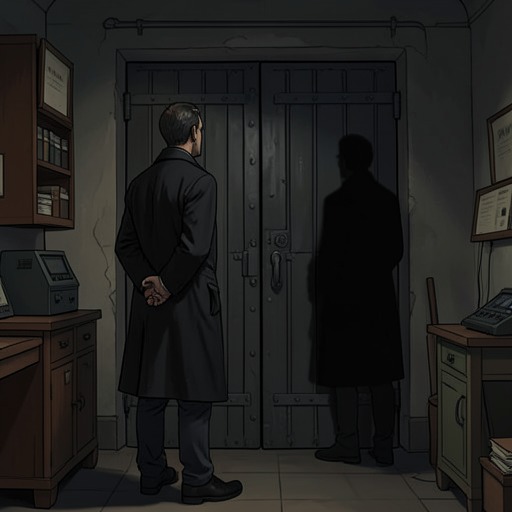
Tom Worthington’s lingering campus notoriety
Off CampusTom Worthington’s lingering campus notoriety is the durable aftermath of a family scandal that made him publicly recognizable and wary of further exposure. The attention shapes how he moves through Carlisle and how he negotiates disclosure with Reese: Tom wants intimacy and a place to belong, but fears that private information will become material for campus gossip.
Origins of the attention
The notoriety begins with Tom’s father’s arrest in a major federal price-fixing case. The story spread nationally, and coverage intensified after Tom’s father attempted suicide while under house arrest. Tom had been sent home from college at the school’s request after reporters swarmed his campus movements; at home, he found his father unconscious and called emergency services. The scale and persistence of the coverage made the family story difficult to keep private, leaving Tom exposed to public attention through events he had not chosen.
At Carlisle, that exposure becomes personal stigma. When another student taunts Tom about his father and refers to a letter from the dean advising him to keep a low profile, Tom braces himself and stays quiet. His silence is a learned response: he tries not to react while others vent their dislike, even when their remarks make clear that his father’s story has followed him into campus life.
Privacy and belonging
Tom’s reluctance to be known extends beyond the scandal. He tells Reese that anything people learn about him could end up in a gossip column, and says he does not want people to know anything about him. His concern is not simply whether to disclose his sexuality; it is who will control the information, how widely it will travel, and what strangers will make of it. The earlier public scrutiny gives that fear a concrete history.
He nevertheless considers a limited form of openness: being out with Reese at Perkins House, without being out everywhere. Reese responds by offering to lend him a family identity and joking about distant Swedish ancestry and Viking beliefs. The exchange suggests how their relationship can make disclosure feel less solitary, while Tom’s sense of home has shifted toward Perkins House, where he feels able to relax and feel safe. That local refuge does not erase his concern about exposure beyond it.
The tension appears in small distinctions as well as major decisions. When Reese describes Tom as gay, Tom corrects him to bisexual, then recognizes that the correction can sound like a denial of Reese. Later, he becomes less inclined to correct Reese automatically. The change does not mean that Tom has stopped caring about the words used for him; it marks his growing effort to acknowledge his identity without turning every label into a defensive retreat.
Public visibility and its costs
Tom’s private limits become a relationship conflict when Reese wishes he could believe that the world would not end if he kissed him in the campus center. Tom’s fear is therefore tied to a specific kind of visibility: affection in a shared public space could make a private relationship available for discussion. His attachment to Reese is real, but it does not immediately resolve his anxiety about what others might say or infer.
At an LGBTQ student meeting, Tom gives that anxiety a more precise explanation. He says that the difficulty lies less in coming out than in the volume and reach of public knowledge. He had not minded that an individual person knew he was with his boyfriend; the prospect of many people knowing and discussing his private life frightened him. Speaking aloud turns his withdrawal into something he can examine. He also considers whether the attention surrounding his father’s arrest and trial had provided an excuse to retreat from other uncertainties, including what he wanted after graduation and whom he might want to share his life with.
A new room, an old reputation
When Tom and Reese return to campus, Tom has received the dean’s permission to arrive a day early so their friends can settle in before the larger student body returns. At the suite, he pauses at the brass number plate marked 412, tracing its grooves and thinking of the students who will fill the building the next morning. The room number signals a new domestic beginning, but it does not promise a clean break with his reputation: Tom expects that gossip will still follow him, perhaps indefinitely. His notoriety persists not as proof that every student is watching, but as a pressure that influences what he is willing to make public and how safe he can feel doing so.