Tom’s Friday-to-Sunday Boston driving weekends
Off CampusTom’s Friday-to-Sunday Boston driving weekends turn a practical way to earn tuition money into a recurring test of his priorities: each trip takes him away from Reese, yet his growing attachment to his roommate makes him shorten the work that is supposed to keep him in school. The routine links the daily mechanics of cab driving to the larger financial risk he is reluctant to share, and gives his repeated returns to campus both an emotional pull and a material cost.
Work and Weekly Rhythm
Since returning to campus, Tom has left early every Friday for Boston. He drives a legitimate cab during the day, taking business travelers between the Prudential and Logan Airport, and supplements that work by providing informal rides for patrons of bars whose bouncers know him. Those contacts send him customers, often intoxicated women or groups of women who need a safe ride home when regular taxis have waits of more than an hour. His work therefore shifts between an established cab service and a less formal arrangement built on trust and personal connections.
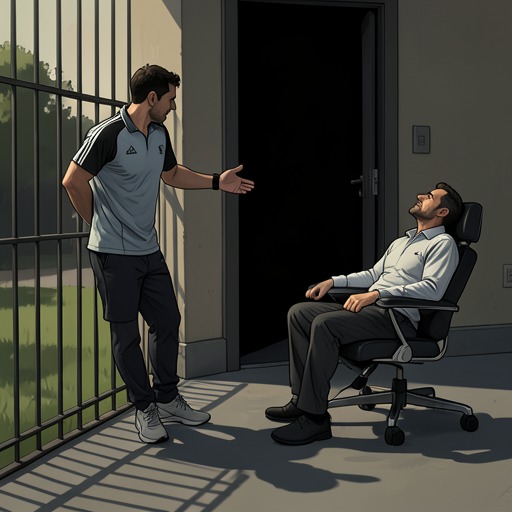
Tom generally leaves on Friday morning and returns on Sunday night, making his absence a stable part of the week in Perkins House. Reese adjusts to the pattern without either roommate making it an explicit arrangement: on Sundays, Tom finds the sheets on both beds changed and the room’s accumulated clutter—dirty coffee mugs and dessert plates—cleared away. He recognizes that Reese has undertaken a substantial cleaning routine during the seventy-two hours he is gone. Tom means to offer help and tries to keep his own side of the room tidy, though he regards that effort as inadequate; domestic labor and the weekend separation settle into an unspoken habit.
Absence, Suspicion, and Return
The established routine becomes difficult for Tom when he thinks about Reese’s absence from their shared room. Leaving Perkins House early one Friday, Tom looks back, wondering whether Reese will return now that the person who took advantage of him is away for several days. The thought gives his departure a new charge: the weekend is no longer only a block of paid work but also time in which Tom imagines what Reese might do without him there.
That preoccupation disrupts a shift before it is over. Six hours into a twelve-hour day, Tom is still thinking about Reese and who might be visiting their room. After becoming stuck repeatedly in traffic around Faneuil Hall—where he keeps forgetting about construction on Congress Street—he tells dispatch he has an emergency and brings the cab back early. The stated emergency is not a practical crisis described in the narrative; the concrete reason for abandoning work is that Tom cannot stop thinking about Reese. His decision makes the emotional cost of the weekend schedule visible in lost hours on the clock.
The next departure is harder for a different reason: Tom has spent the night beside Reese, and the prospect of leaving their bed competes with the hours he has already lost. He gets up because the money matters and dispatch may not give him another cab that weekend after his earlier return. He leaves with the work obligation still pressing, while anticipating that he will replay their intimacy during the stretches when he is not driving. Even with Reese close enough to make staying tempting, Tom goes back out to earn.
On the Sunday drive back, the pressure reverses. Tom drives at a dangerously high speed on the Massachusetts Turnpike and refuses to speak with Reese during the trip, eventually telling him he is hanging up and will see him in an hour. He changes radio stations repeatedly to manage his excess energy and sexual tension; hearing music his father had loved briefly softens him, and he switches back to heavier music. After turning off the highway and navigating the side streets, he finds a parking spot around the corner from Perkins House. The return is still part of the weekly circuit, but now its anticipation, distraction, and risks have become as consequential as the work itself.
Money, Secrecy, and the Cost of Cutting Hours
Tom initially lets Reese believe the cab work is for spending money or perhaps to cover room and board. He has not told Reese that he is working to meet the much larger challenge of paying for another semester. The distinction matters: the weekends are not spare employment that Tom can casually give up, but a narrow opportunity to earn the money needed to remain at Carlisle College.
As his attachment draws him back to campus, Tom begins leaving later or returning earlier, telling himself he can replace the lost hours during January term. He also considers the consequences of the informal rides that extend his earning opportunities. His savings balance makes the tradeoff concrete: he is ten thousand dollars short of what he needs for the second semester. Between Thanksgiving, Christmas, January term, and pushing the limits of his cab-driving hours, he hopes to accumulate enough by the end of January to write a check that will not bounce. The goal remains uncertain, and each shortened trip consumes time from an already slim chance of meeting it.
Tom knows Reese does not understand the risk. He fears that Reese will be furious if he learns Tom may not return for the second half of the academic year, especially after Tom has failed to disclose that possibility. His silence lets the weekend routine appear more manageable than it is, while his effort to spend more time with Reese makes the financial gap harder to close. The pattern consequently binds care and concealment together: Tom’s pull back to their room is real, but so is the cost of acting on it.
A Routine Under Strain
The Boston trips recur as a practical schedule, yet their meaning changes as Tom and Reese grow closer. At first, the weekends organize Tom’s work and Reese’s domestic routine; later, Tom’s glances back at Perkins House, early return to a shift, and urgency to get back on Sunday show how thoroughly the separation occupies his thoughts. The cab becomes a measure of time and money that Tom cannot afford to waste, while the room he leaves behind becomes the place to which he keeps trying to return.
The routine also exposes the imbalance between what Tom tells Reese and what he carries alone. He eventually admits that the weekend trips are for work rather than visits with friends, but he still withholds the extent of his tuition shortfall and the possibility of not returning to Carlisle College. That partial disclosure does not resolve the pressure: the work remains necessary, the emotional pull remains strong, and Tom continues to gamble that later shifts will compensate for hours surrendered to being with Reese. The weekends thus become a recurring conflict between financial survival and intimacy, without either need cancelling the other.