Tom’s public stigma as the son of a convicted financier
Off CampusTom’s public stigma as the son of a convicted financier is both an imposed identity and a pressure that reshapes how he moves through campus, protects his privacy, and approaches intimacy. The public exposure of his father’s crimes gives Tom concrete reasons to fear attention; over time, however, the fear also becomes a shield against disclosure and change. His arc turns on the distinction between being watched against his will and choosing whether to let others know him.
Identity and the source of the stigma
The scandal begins with Tom’s father’s arrest in the largest price-fixing takedown in the history of white-collar-crime undercover stings. The case made the Worthington name front-page news across the country for months. Coverage intensified after Tom’s father attempted suicide while under house arrest: Tom, sent home from college after reporters swarmed his movements on campus, found his father unconscious beside an empty pill bottle and a mostly empty glass of Scotch and called 911. The story’s combination of financial crime, celebrity, and family crisis made Tom’s association with his father impossible to keep private.
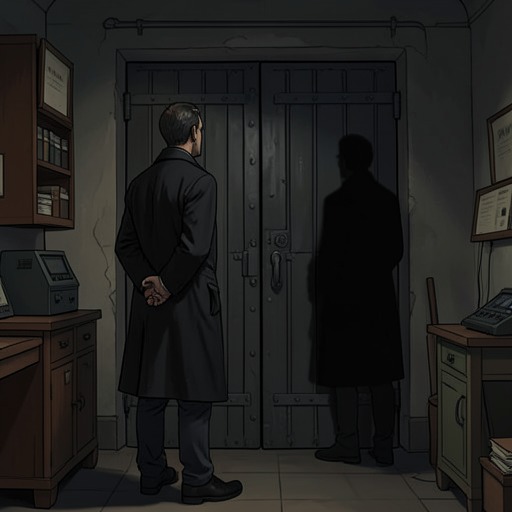
The exposure was not just a headline that Tom could leave behind. During the weeks and months after the arrest, photographers’ flashes met him whenever he tried to leave the family’s Beacon Hill home. Even attempts to slip out at night did not escape observation; Tom came to think of the reporters as the Evil Nemesis. He also remembered a reporter shouting a question about whether his father had embezzled money as Tom tried to push through the crowd at the gate. The public gaze turned ordinary movement into an occasion for scrutiny and accusation.
Campus life and self-protection
At Carlisle, Tom expects that the scandal will follow him into his room and social life. When Reese’s curiosity about him briefly surfaces, Tom considers delaying the truth for one more night, imagining that the alternative could be compromising photographs and a sensational gossip headline. The fear is not simply that people will know his family history: he has learned to anticipate that any glimpse of him can be repackaged as entertainment. His response is to manage information by keeping himself difficult to find and by withholding details before anyone can circulate them.
The scandal also alters Tom’s idea of what counts as fun. Parties, stunts, drinking, sex, and even running—the activity he once experienced as pure joy—have become entangled with the whispers he expects to follow him. He imagines people asking where his father hid the money, even when the people gossiping are themselves well-off. Tom wants to protest that no money was hidden, but the urge to shout does not undo the isolation: he grips his thighs until his fingertips turn white, then recognizes that anger at his father, the college, and the world has left him physically tense.
Tom’s social retreat has practical as well as emotional signs. He changed his phone number after the arrest, making himself nearly invisible to friends, many of whom disappeared along with his former pride and wealth. Later, the first ring of the room’s landline startles him; the sound contrasts with the song he had spent a dollar downloading as his mobile ringtone, which he had never expected to hear because calls to his changed number had become so rare. The small domestic interruption registers the distance between the social life he once anticipated and the isolation he has built around himself.
Reputation, aid, and the cost of pride
Tom’s stigma is sharpened by the college’s response to the scandal. He interprets the dean’s warning to keep a low profile as a threat that he will be removed if his presence causes a press circus. In conversation with Reese, he insists that he wants no one to know anything about him because whatever gets out will end up in a gossip column. His expectation has a history behind it: the press once followed his family continuously, and he remembers reporters at the house even during the period when his father was on suicide watch in jail.
That history helps explain why Tom rejects a form of assistance connected to his father’s imprisonment. When application papers arrived with requests for documentation of the prison sentence, he threw them away, registered for fall classes, and went to work. He understood accepting aid as taking advantage of others, and clung to his own hard work as proof that he could choose not to resemble his father. That effort paid for three more semesters of classes and brought him back to campus, but it did not make him feel entitled to enter a party downstairs without hearing the whispers. His achievement restores a measure of independence without removing the shame he associates with his family name.
Tom’s distrust of help is thus part of the stigma’s continuing effect, not a simple absence of support. He summarizes the lesson he believes he learned at college as never asking for help, because help comes at someone else’s expense. The belief makes self-reliance feel morally necessary: taking assistance risks becoming, in his own eyes, another Worthington who benefits at others’ cost. Yet the cost is that he faces academic and social pressures while convinced that support itself compromises his integrity.
Privacy and intimacy with Reese
Tom’s relationship with Reese brings the old fear of exposure into a different register. Tom distinguishes private knowledge from public circulation: he says he does not want people to know about the relationship because he expects any information about him to become gossip. He also tells Reese that the dean has effectively warned him that a press circus could mean the end of his place at Carlisle, and says he has that warning in writing. For Tom, the risk of being seen with a boyfriend is bound to the already familiar prospect of becoming a public story.
Reese makes clear that secrecy has a cost of its own. He already has one private matter that he rarely discusses and cannot bear to add another secret relationship. Tom understands the conflict but remains caught between his desire for Reese and the instinct to keep everyone off his radar. At one point the prospect of even a limited disclosure produces a weekend of hyperventilation while Tom drives a cab in Boston; he stays on campus Friday night, delaying the lost income, then spends much of the next day worrying about what it would mean to be out in even a small way. He eventually calls Reese and tries to explain that he is not ashamed of being gay or bisexual, but cannot understand why the thought of other people knowing makes him panic.
The stigma therefore does not simply prevent Tom from naming his sexuality. It affects the terms on which he can make that part of himself visible: who knows, how many people know, and whether private affection might be transformed into public spectacle. When he imagines headlines about the son of a jailed financier becoming gay, he frames the exposure in the sensational language he has learned to expect from the press. Reese’s laughter at one of Tom’s imagined headlines briefly lightens the conversation, but does not erase the underlying anxiety. Their closeness becomes a place where Tom can speak more honestly even while he remains uncertain about a wider audience.
From imposed spotlight to chosen visibility
Tom’s sense of home begins to shift as his relationship with Reese develops. On the highway between Boston and campus, Reese offers to lend him clothes and jokes about his family’s Scandinavian habits. Tom laughs, and realizes that his emotional center has moved from Boston to the campus edge in the Connecticut River Valley: Perkins House feels like home, a place where he can relax and feel safe. The contrast matters. Boston is associated with the public scrutiny and family crisis that drove Tom into hiding; the college room becomes a space of belonging, even as Tom still fears what the wider campus might make of his private life.
Tom also draws on a social skill he once used among wealthy, hard-partying peers: his father’s ability to make people like him. He considers using that inherited talent to ease a coming-out experiment, even joking internally that he might feel guilty about the manipulation later. The impulse shows that Tom is not simply trying to disappear. He can imagine managing a new social situation actively, though his old fear of tabloids remains close enough that he worries a person might sell photographs of him.
At an LGBTQ student meeting, Tom finally describes the distinction that has been governing his choices. He says that one person knowing he was with his boyfriend had not frightened him in the same way as the thought of many people knowing and talking about his private life. As he continues speaking, he reconsiders the role the earlier scandal played in his withdrawal. The public eye gave him a real and invasive threat to point to, but it also offered a convenient explanation for avoiding other fears: deciding what to do after graduation and admitting that his future partner need not fit an expected gender. The stigma remains real, but Tom begins to see that it has also helped narrow his world at the very moment he was supposed to be widening it.