“On the Come Up” goes viral
On the Come Up“On the Come Up” goes viral after Brianna Jackson uploads the track to Dat Cloud and sends Supreme the link, a decision that turns her belief in the song into a sudden public breakthrough. Its reach brings twenty thousand streams, trending attention, and an industry opening, but it also makes Brianna’s lyrics available for sensational headlines and arguments about violence. The song’s rise is consequential not only because it makes her visible, but because visibility places her artistic identity under competing demands: the press and petitioners treat her performance as evidence of danger, while Supreme urges her to use the role others project onto her. Brianna’s later refusal to sing a ghostwritten track and her own freestyle make the terms of that success explicit: recognition is not worth surrendering authorship of herself.
Upload and Breakthrough
Brianna uploads “On the Come Up” to Dat Cloud after deciding she will show Aunt Pooh the song is worth pursuing rather than merely argue about it. The upload takes ten minutes; she sends Supreme the link by text, and he responds in less than a minute with reassurance that he has her back and predicts she is about to blow up. The speed of his reply offers a first sign that the song might become more than a private conviction, though the scale of what follows is still a surprise to Brianna.
Curtis later tells Malik that Blackout has posted Brianna’s song. The gossip blog places her on its front page with a photograph from the Ring and a headline identifying her as the daughter of Lawless, the underground rapper, rather than using her name. Brianna notices the omission and the headline’s gendered framing, but for the moment accepts the exposure because the post embeds the track directly from her Dat Cloud page. The song’s arrival in a widely visible space is thus both promotion and a first loss of control over how Brianna herself is presented.
The numbers make the breakthrough concrete. Brianna sees that the song has reached twenty thousand streams and shouts the figure in the hall; Curtis adds that the count is still rising and that she is trending. Her excitement is not just about an abstract prospect of success: a track she uploaded from her room has drawn an audience large enough to command attention at school. When Brianna wonders how it happened, the answer is Supreme: he kept his word. Malik offers quiet approval, while Curtis stresses that attention of this scale is unusual for someone from Garden Heights and treats it as a major achievement.
From Popularity to Public Controversy
The song’s spread shifts its meaning as it passes from Brianna’s own page to media coverage. In a television report, Megan Sullivan calls it a track by local rapper Bri, shows the Dat Cloud page, and describes it as violent and popular among young listeners. The report plays only fragments, with profanity removed, and emphasizes lyrics about weapons and confrontation with law enforcement. This edited presentation narrows a song into selected lines and makes those lines the basis for a public account of Brianna and her audience.
The controversy grows into a petition to remove the song from Dat Cloud. Hype introduces the issue on his radio show by pointing to the claim that the song led to a riot at a local school and to accusations that it is anti-police. Brianna is angered by the petition and by the news coverage that, in her view, makes her the villain without asking why students were protesting. When Hype challenges the lyrics as excessive and suggests they imply that she would kill police officers, Brianna rejects his interpretation. Her distinction is between speaking about what she sees and claiming that the lyrics describe what she herself will do.
The exchange also exposes the unequal standard applied to Brianna as a sixteen-year-old girl. Hype says the song’s references to being armed caught him off guard because its performer is a sixteen-year-old girl. Brianna asks whether her father’s rapping about such things at sixteen had surprised him; Hype says it had not. Her question identifies the gendered contrast within the controversy: the material is treated differently when delivered by a girl than when delivered by her father as a young rapper. Popularity gives the song a platform, but it does not protect its author from being judged through assumptions about age, race, and gender.
Visibility, Stereotypes, and the Demand to Perform
The song’s reception belongs to a broader pattern Brianna already understands from trying to enter rap. When a man at a studio asks whether a song was made for a little girl and jokes that she will perform nursery rhymes, Brianna recognizes the familiar disrespect Aunt Pooh had warned her about: she would have to work twice as hard for half the respect, be as cutthroat as the men around her, and show no weakness. Her answer earns laughter and acceptance in the room, but the exchange makes clear that acceptance is conditional on meeting a standard of toughness designed around men.
After a parking-lot confrontation draws attention, Supreme explains that people will turn it into a headline about a “Ghetto Rapper” having a “Ghetto Encounter.” He advises Brianna to play the role others expect and describes using executives’ assumptions about him to make money. The advice recognizes the practical power of performance, but it also places a risk before Brianna: a public role can be used strategically, yet it may be mistaken for the person performing it. As the song goes viral, media accounts and arguments about its lyrics do precisely that, treating the track as a transparent statement of Brianna’s character and intentions.
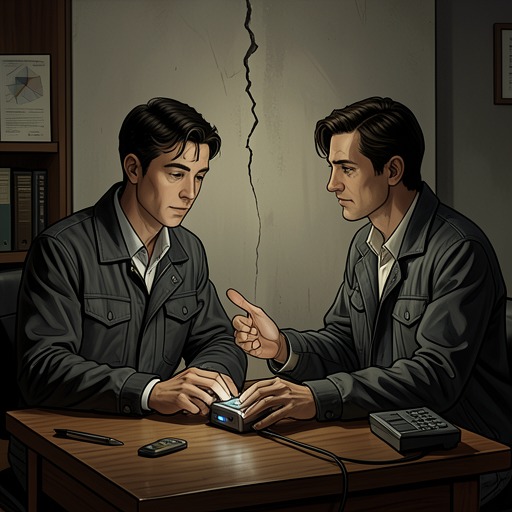
The music business sharpens the conflict. Supreme later presses Brianna to record a song written by Dee-Nice, arguing that it is business and that the opportunity could bring money. He offers to make the song’s street image look authentic, citing the way he had encouraged Law to rap about street life and associate with the GDs for credibility. Supreme says Law had not been a gangster when he met him, and acknowledges that Law took the performed identity seriously. He warns Brianna to play a role without becoming it, but also describes her as a chance to redo what he and Law did not get to accomplish. His faith in her talent is entangled with a plan to shape it for commercial success.
Brianna refuses the ghostwritten song because she has already been accused of having a ghostwriter and considers it phony to make that accusation true. Her objection is not simply to a particular track: it is to allowing public judgment and business pressure to displace her own writing. James Irving’s casual description of her as having “sassy black-girl” attitude further shows how quickly her assertiveness can be converted into a racialized and gendered label. Brianna’s emerging success thus places her between two kinds of imposed image—the threatening rapper imagined by critics and the marketable persona encouraged by the industry.
Authorship and the Meaning of Success
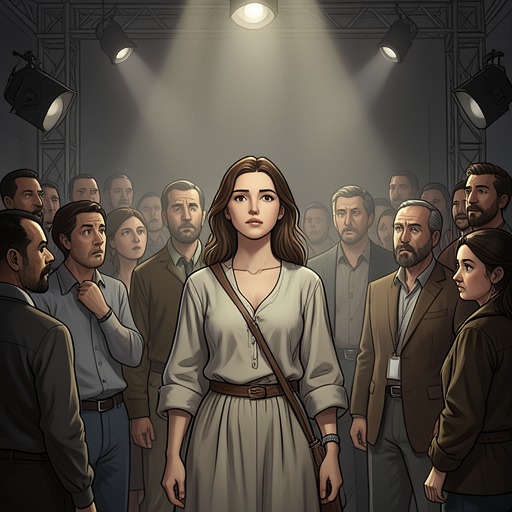
In her eventual freestyle at the Ring, Brianna answers the conflict between song, image, and ownership in her own words. She refuses to be treated as a joke, a pet, a puppet, or a clone, and insists that she will not stand up and say words that are not hers. She describes herself as a daughter, sister, source of hope, and mirror, widening her identity beyond the narrow roles assigned to a rapper from Garden Heights. The performance connects individual authorship to the people who may hear her: her words can reflect a community without making her responsible for performing the assumptions others attach to it.
Brianna also turns the controversy around. Rather than accept the idea that rap causes the violence it describes, she says the music speaks about what people see, while refusing to claim that description as her own identity. She links the demand for violent imagery to an audience and system that profit when listeners accept the image as truth, and argues that the issue is larger than rap. Her declaration that retaliation reinforces the separation of neighborhoods echoes her refusal to be mistaken for a gang representative simply because she calls herself a queen. The response is not a retreat from visibility: it is a claim to control what visibility means.
The cheers that follow her freestyle mark a different kind of reception from the stream count, the blog headline, or the petition. The song’s viral rise makes Brianna publicly legible to strangers, but her own performance insists that attention is not the same as understanding. By the end of this arc, “On the Come Up” has opened a path toward recognition while exposing its terms: Brianna can gain an audience and still be misnamed, misread, or pressed into a persona. Her answer is to keep the work and the words her own, making artistic authenticity—not popularity alone—the measure of whether she has truly come up.