A prominent rapper invites Bri to collaborate
On the Come UpA prominent rapper invites Brianna to collaborate in the epilogue, transforming the response to her freestyle into a possible breakthrough while leaving the terms of that breakthrough unsettled. Brianna says yes, but makes her agreement conditional: she will do it her way. The exchange gives the invitation its decisive meaning—not simply access to a larger audience, but a test of whether opportunity can coexist with artistic self-determination.
The Invitation
The invitation reaches Brianna through a social-media post, not a private meeting or formal offer. Curtis tells her to get on Twitter and hints that someone has posted her freestyle; when she checks, her notifications have climbed past 99+, as if the platform can no longer keep pace. One tweet stands out among the attention: the rapper calls her the future of hip-hop and proposes making a song together.
The post’s public form matters. It addresses Brianna directly while displaying the offer to an audience that can like and retweet it. In a few lines, it turns her performance into a widely visible judgment of promise and a concrete invitation to work. Brianna stares at the tweet and at the profile that posted it, registering the possibility before she answers.
The Freestyle Behind the Offer
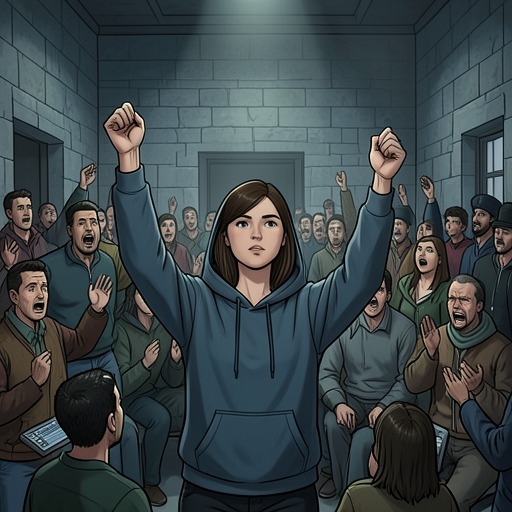
The rapper’s attention follows Brianna’s freestyle from the previous night. In that performance, she refuses to be treated as a joke, a mascot, a puppet, or a copy; she insists that she is a daughter, a sister, a source of hope, and a mirror. The verse also challenges the assumption that rap lyrics transparently describe the person performing them. Brianna distinguishes speaking about what she sees from claiming that what she says is simply herself.
That insistence on authorship gives the collaboration offer a particular charge. Earlier, Supreme had urged Brianna to play whatever role the industry expected, explaining that he used others’ assumptions about him to make the business work in his favor. At the studio, however, he tried to persuade her to record a song written by Dee-Nice, arguing that it would make money and invoking the fabricated street image he had helped construct for Law. Brianna rejected the song because it did not feel like her. The invitation arrives after that conflict, when her own writing and performance—not a manufactured persona or ghostwritten track—have drawn notice.
Attention, Opportunity, and Choice
The sudden scale of the response is visible in the overflowing notifications, and Curtis’s excitement frames the tweet as life-changing. Brianna’s mother, Jayda, also sees its significance, but asks whether Brianna wants to take the opportunity rather than deciding for her. That question makes room for a choice: the offer may be major and could provide the shot Brianna needs, but its importance does not erase her say in what happens next.
Brianna agrees, then immediately sets a limit: she will collaborate as long as she can do it her way. Her answer accepts the possibility without granting the invited rapper, the online audience, or the music business control over her artistic identity. The condition is brief, but it changes the meaning of her yes. The invitation opens a door; Brianna’s terms determine whether she will walk through it.
Significance at the Ending
The scene closes the book’s movement from performance under scrutiny toward a more self-defined public voice. Brianna has been treated as the embodiment of other people’s narratives: a Crown sees Law’s chain and identifies her as Lawless’s daughter; commentators connect her song to school violence; and Supreme describes role-playing as a way to turn stereotypes into leverage. Her freestyle answers those pressures by refusing to let a performed role become a definition of the person. The collaboration offer tests that principle at the very moment it seems to reward her.
The ending offers possibility, not a report of a completed recording or a settled career. The rapper’s identity is not disclosed in the scene provided here, and the proposed song has not yet been made. What is established is Brianna’s response: she recognizes the stakes, welcomes the chance, and attaches her own condition. Her final acceptance therefore does not resolve the tension between visibility and control; it gives her a way to enter that tension without surrendering authorship.