Black and Latinx Student Coalition
On the Come UpThe Black and Latinx Student Coalition is an unofficial student group at Midtown organized in response to what students see as racially unequal treatment by campus security. Its members intend to demand changes from the administration and consider publicizing Malik’s recording of Brianna’s restraint as a way to contest the rumors used to excuse it. The coalition turns an individual encounter with security into a broader, organized challenge to the school’s practices and explanations.
Formation and Purpose
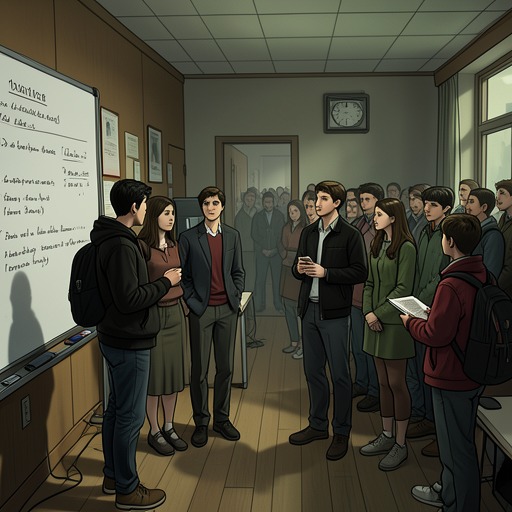
The group emerges after students discuss a pattern in which security guards Long and Tate appear to target certain students more than others. Shana names the students at issue as Black and brown, while Brianna makes explicit that the conversation concerns Black and Latinx students. Shana connects her willingness to act to the previous year’s riots and protests: they inspired her not to remain a bystander. The coalition has formed, but its members have not yet decided exactly what action to take.
Malik describes it as an unofficial Black and Latinx student coalition. Its stated plan is to demand changes from the administration, which, he argues, depends on students of color: the school began busing students from other neighborhoods in order to qualify for grants. The group’s appeal therefore links students’ unequal treatment to the institution’s interests and public standing, rather than treating the problem as a private dispute between one student and a guard.
Security Incident and Evidence
The immediate context for the coalition’s organizing is Brianna’s encounter with security at the metal detector. Other students pass through without incident, but after the detector does not beep for Brianna, Long orders her to go back. The confrontation escalates into a restraint and search by Long and Tate. Malik records the incident, and other students also record, though their footage begins only after Brianna is already on the ground.
The recording gives the coalition a possible means of challenging the account that Brianna deserved the guards’ treatment. Malik says the full video shows she did nothing to warrant what happened and that the rumors spreading about her serve to justify the incident. He proposes posting it online, and suggests that what happened to Brianna could help bring wider attention to the students’ concerns. Brianna resists being made the coalition’s poster child, exposing a tension between the value of public evidence and the personal cost of becoming the face of a campaign.
Institutional Response and Wider Stakes
The coalition’s effort unfolds against school procedures that leave students’ complaints contested. In a meeting with principal Dr. Rhodes, Brianna’s mother, Jay, raises her son’s earlier report that guards singled out certain students. Dr. Rhodes promises an investigation but maintains that guards treat all students alike, even as Jay challenges that claim by pointing to the severity of the incident. The coalition’s focus on unequal treatment answers this institutional insistence on uniformity with students’ own observations and evidence.
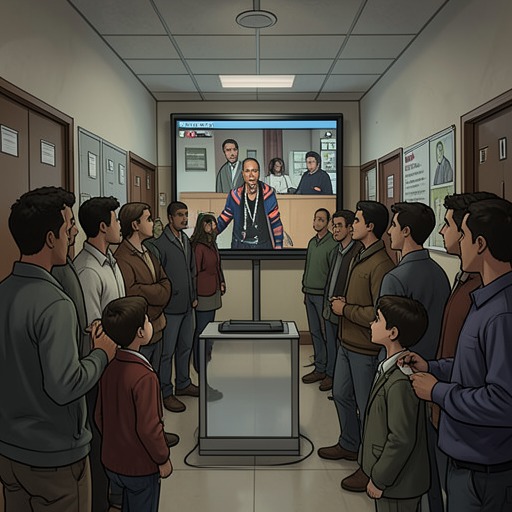
The school’s security measures are also challenged in a public meeting. A parent questions the metal detectors, random pat-downs, and armed police, arguing that a school should not subject children to prison-like measures. Superintendent Dr. Cook cites recent crime spikes to explain heightened security but does not explain the presence of armed officers. These exchanges frame the coalition’s organizing within a larger dispute over safety, surveillance, and whose account of campus conditions the administration accepts.
Significance
The coalition’s formation marks a shift from private concern to collective action. Students connect Brianna’s treatment to a pattern affecting Black and Latinx classmates, and Malik’s recording offers a concrete counter to rumors and official claims. Yet the group’s strategy remains unsettled: it has committed to demanding change, but has not settled on the form that demand will take, while Brianna questions whether solidarity requires her to become its public symbol. The coalition’s significance lies in bringing those competing needs—evidence, institutional pressure, and the affected student’s agency—into the same organizing effort.