Bri’s Ring freestyle
On the Come UpBri’s Ring freestyle is the turning point at which Brianna refuses to perform the song Supreme has chosen for her and claims the stage for her own words. Its force comes from a choice made in public: rather than treat success as a role she must play for the music business, she speaks about being a daughter, a sister, a source of hope, and a mirror, and rejects the identities others are trying to impose on her. The cheers that follow—and Supreme’s departure—make the performance both an artistic declaration and a break with his management.
Background and Stakes
Brianna’s decision follows a conflict over the kind of rapper she is expected to become. Supreme has urged her to play the role others imagine for her, and later presses her to record a song written by Dee-Nice. He describes the arrangement as business and argues that it can make money; Brianna objects that the song is not her. She has also resisted the idea of using a ghostwriter, particularly after Hype’s interview made that accusation part of the public discussion around her music. The planned Ring performance therefore asks her to choose between the opportunity Supreme is arranging and the authenticity she believes her work requires.
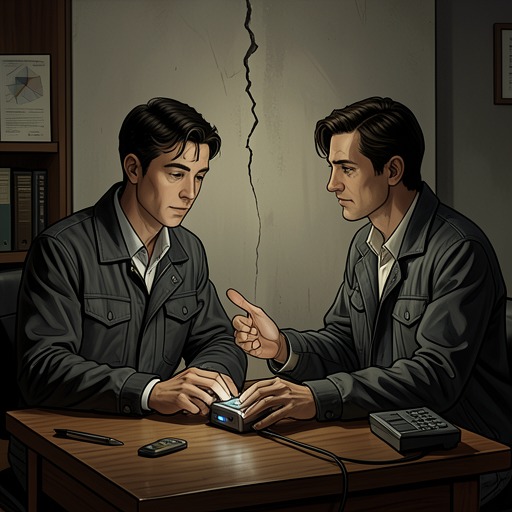
The pressure is complicated by Brianna’s family history. Supreme tells her that he encouraged her father, Law, to adopt a street image and associate with the Garden Disciples to appear authentic, and warns her to play a role without becoming it. In the studio, however, he says Law took that role seriously. Brianna understands that Supreme sees her, in part, as a chance to redo what happened with her father. Her refusal at the Ring thus challenges not only a particular song but also the business strategy and inherited script Supreme wants her to follow.
Permission to Perform
Brianna’s ability to take the stage is contested at home before the event. Trey argues that Jayda has told Brianna she can no longer rap and will not let her perform at the Ring. Jayda says she is concerned about the trouble Brianna has encountered and about Supreme encouraging her to act recklessly; she fears Brianna could end up like Law. Brianna answers that she is not her father and insists that she is smarter. She admits that she dislikes what Supreme wants her to do and hates the song, but explains that rapping is what she is good at and what she wants to pursue.
Jayda finally allows her to perform, though she warns that Supreme will no longer manage her after the appearance. That decision gives Brianna room to act, while making the performance a test of trust as well as artistic independence. Brianna’s appeal is not that she approves of Supreme’s plan: she explicitly does not. Rather, she asks for the chance to find out whether she can pursue her dream on her own terms.
The Performance and Its Message
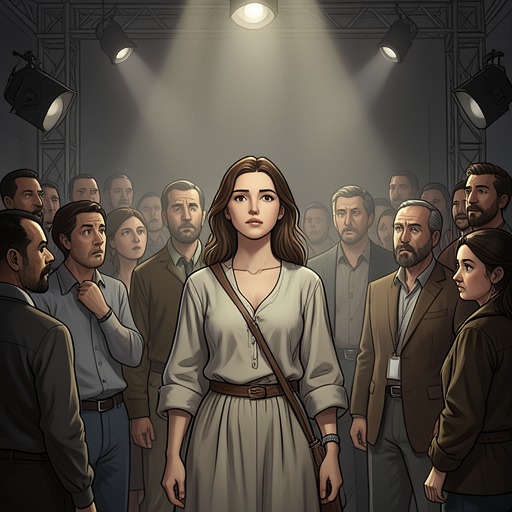
At the Ring, Brianna interrupts the expected set by telling the audience to stop the music. The backing track cuts off, leaving the planned song unperformed. She explains that she was supposed to sing a new song but would rather perform something from her heart, and asks whether the crowd will accept that choice. Their loud approval gives her the response she needs to continue. Hype, present at the event, recognizes that she is about to freestyle and asks whether she needs a beat.
Brianna closes her eyes and begins. Her lyrics refuse to be a laugh or a pet, a puppet or a clone; she names herself as somebody’s daughter and sister, somebody’s hope and mirror. She claims the right to be called a genius and a star while rejecting the labels of sellout and thug. The freestyle turns outward as well: it points to hunger and hardened hearts in Garden Heights, challenges the assumptions that cast her as a performer of trigger-pulling fantasies, and objects to the way such images can enrich others while being treated as the truth about her community. She distinguishes speaking about what she sees from claiming that she personally embodies it. The song’s central insistence is that artistic representation is not proof of personal identity.
The performance also revises the meaning of the role Supreme had urged her to play. Brianna does not simply replace one marketable persona with another; she uses the microphone to name the gap between other people’s expectations and her own account of herself. Her words connect individual authorship to the lives around her, insisting that the song is about more than rap and that her dream cannot be silenced. In that sense, the freestyle answers both the ghostwriting dispute and the public controversy over how her lyrics are interpreted.
Response and Break with Supreme
The audience responds with an outpouring of cheers and chants of Brianna’s name. The response is not universal: the Crowns do not chant, and neither do Supreme or James. James heads for the door, shaking his head, and Supreme follows him. Supreme looks back at Brianna with an expression she reads as final: their relationship is over. The applause therefore marks more than a successful performance; it accompanies the loss of the manager who had been trying to direct her sound and public image.
The ending shifts the measure of success away from Supreme’s business plan. Brianna recalls that, as a child, she imagined crowds chanting her name while she stood before mirrors with hairbrushes, but says the feeling of the actual moment exceeds what she had imagined. For the first time, she knows she is where she is supposed to be and doing what she was made to do—even if the crowd were silent. She connects that certainty to the hip-hop that Aunt Pooh introduced her to and to Nas’s assurance that the world was hers. At the Ring, the crowd’s recognition matters, but it does not create her conviction: she leaves the performance certain of her own voice.