Brianna records On the Come Up
On the Come UpBrianna records “On the Come Up” after a rap battle brings new attention and Aunt Pooh arranges a studio session. The recording turns a chance to build a music career into a conflict over who gets to define Brianna: she shapes a song from the violent expectations placed on her, but its public reception repeatedly treats performance as proof of identity. The track’s making is therefore both an artistic breakthrough and the beginning of a struggle over authorship, representation, and the difference between playing a role and becoming it.
Opportunity and Entry into the Studio
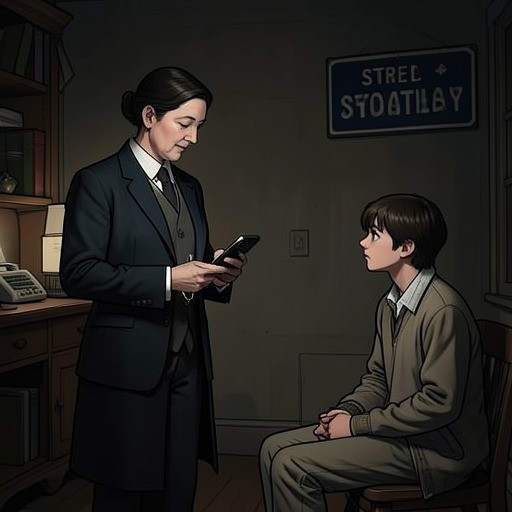
After Brianna’s battle, she tells Aunt Pooh they need to make the rap career happen immediately. Aunt Pooh says she has already heard from people because of the battle and has arranged for Brianna to return to The Ring to build a name. She also has a more immediate opportunity: a producer approached her after the battle, gave her his card, and agreed to make a beat and bring Brianna to his studio the next day. For Brianna, the prospect of recording is startling; for Aunt Pooh, it is the next step in making the attention count.
The studio entrance sets up a contrast between expectation and reality. The garage is covered in graffiti, and Aunt Pooh knocks on a side door; once several locks are opened, the space inside proves more capable than its exterior suggests. Cardboard drink carriers cover the walls as soundproofing, and the room contains computer monitors, drum pads, keyboards, speakers, and a microphone. The improvised workspace gives Brianna access to recording without making the industry feel polished or welcoming.
That welcome is tested as soon as a man on the couch questions whether the producer made a beat for a girl and mocks the prospect of her delivering nursery rhymes. Brianna understands the exchange as a familiar version of the obstacle Aunt Pooh had warned her about: she will have to work harder for less respect, be as cutthroat as the men around her, and avoid showing weakness. Rather than retreat, she answers the man with a joke at his expense. Some of the men laugh and give her dap, and the immediate dynamic shifts: she has met their challenge on her own terms, though the sexist expectation behind it remains.
Finding the Song
The beat does not immediately yield a song. Brianna turns through her notebook and finds that none of her existing writing fits; the instrumental calls for something new, tailored to its rhythm. Aunt Pooh hears a future in it, anticipating that they will be on the come up once the track is released. Her phrase gives Brianna a title and a possibility, but not yet a finished piece.
Brianna eventually finds a way into the music by confronting the image others expect her to perform. She mutters lines about being seen as a thug and claiming the role, then recognizes that she has found her approach. Half an hour later, she steps to the microphone and puts on the headphones. As the music starts, she closes her eyes and builds the track around a repeated declaration that she cannot be stopped on the come up. The song invokes guns, threats, police, and the neighborhood’s reputation, echoing the threatening picture imposed on her rather than presenting that picture as a simple account of her life.
The lyrics also interrupt that performance from within. Brianna connects the image of violence to how others see her, then turns to her mother’s struggles to juggle bills and food and her determination to help her. The refrain’s defiance thus carries two pressures at once: anger at being cast as a threat and a concrete hope of easing her family’s hardship. The song is not only a bid for recognition; it records the demands, assumptions, and responsibilities surrounding that bid.
Recording and the Missing Mentor
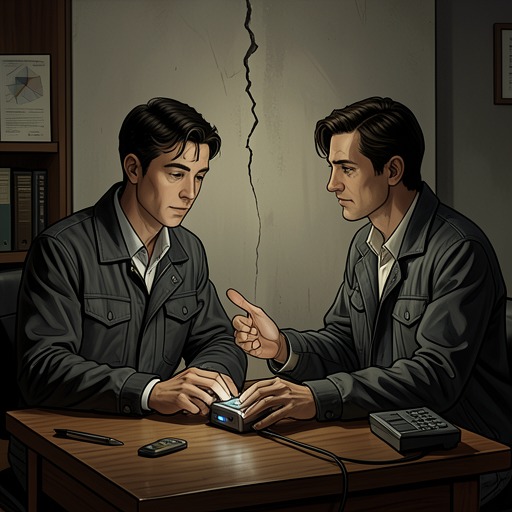
The recording session gives the new material a finished form. Brianna completes the song, and Doc polishes it and puts it on a USB drive. But Aunt Pooh does not return. Brianna tries calling and texting her, and learns that Aunt Pooh’s girlfriend Lena has not heard from her either. Brianna knows her aunt sometimes disappears and later returns as if nothing has happened, but the familiar pattern does not make this absence feel harmless: Aunt Pooh was supposed to judge whether a line worked, encourage her when a verse landed, and tell her what to do with the song.
Without that guidance, the completed track becomes a decision Brianna does not know how to make. She has not uploaded it, partly because she has no plan for promoting it and does not want to drop an unsolicited link into online conversations. More deeply, releasing the song feels like exposing a part of herself that she cannot take back. The studio has enabled Brianna to put her words on record, but it has not made public exposure feel safe or settled.
That vulnerability appears again when Sonny asks whether she recorded a song and then asks to hear it. Brianna opens “On the Come Up” on her phone and plays it for him, her hands shaking as she does. She contrasts the freedom she felt alone at the microphone, saying what the rapper in her wanted to say, with the self-consciousness of hearing it in front of someone whose opinion matters. The shift from solitary performance to an actual listener makes the song newly personal: recording gave the words a form, but sharing them makes Brianna feel seen.
From Performance to Public Evidence
The song later circulates beyond the circumstances of its creation. On television, a report identifies “On the Come Up” as Brianna’s track, shows her Dat Cloud page, and describes its violent content as popular with young listeners. The broadcast presents excerpts, including lines about being pinned to the ground and the possibility of violence toward police, rather than the song as a whole. That selection turns a complex performance into a partial public record, detached from the circumstances Brianna meant to address.
When Hype interviews her about the track, he frames it through a petition to remove it from Dat Cloud and claims that some lyrics suggest she would kill police. Brianna rejects his reading, arguing that her song did not make students protest and that the coverage has ignored why they were protesting. When Hype says the lyrics are especially startling because she is a sixteen-year-old girl, Brianna points out that her father rapped about similar material at that age without provoking the same reaction. The dispute makes the standards applied to her visible: the same subject matter is judged differently when it comes from a Black girl whose public image is already being read as threatening.
The recording’s significance deepens when Brianna learns what Supreme means by playing a role. After a parking-lot confrontation draws phones and invites a predictable headline, he tells her that people will keep using the image they expect, and that a performer can use that expectation to gain advantage. He later describes how he encouraged Law to rap street material and associate with the Garden Disciples to look authentic, though Law took that performance seriously. Supreme advises Brianna to play the role without becoming it, presenting her father’s experience as both a warning and an opportunity to do things differently.
The song’s career-making potential therefore comes with a serious risk. Supreme tells Brianna that the music business is about making money and urges her to perform a song written by Dee-Nice, arguing that there is money to be made and that poverty and food drives are not acceptable alternatives. Brianna resists: after Hype has already mocked her as a possible ghostwriter, accepting someone else’s song would feel false. Supreme’s pressure, and his revelation that he shaped Law’s street persona, recasts “On the Come Up” as an early assertion of authorship. The question is not only whether Brianna can succeed, but whether success will require her to surrender control over what her words mean.
Reclaiming the Meaning of Her Words
Brianna’s later performance offers a direct answer to the pressure built into the recording’s public life. In a freestyle, she refuses to be made into a joke, a mascot, a puppet, or a clone, and insists that the words she delivers must be her own. She describes herself as a daughter, sister, hope, and mirror, rejecting the choice between being called a thug and being praised as a sellout. Rather than accept that her recorded lyrics define her as the threatening figure others expect, she distinguishes speaking about what she sees from claiming that image as herself.
The movement from “On the Come Up” to that later declaration does not erase the first song or its consequences. It clarifies the conflict the recording began: Brianna can use a role that others impose, but she refuses to let that role become her identity. The track gives her a voice that reaches audiences and media, while its selective circulation shows how readily those audiences can turn a performance into a verdict. Its decisive importance is that Brianna’s first studio song makes that struggle audible—and leaves her determined to speak in her own name.