Dr. Rhodes
On the Come UpDr. Rhodes is an administrator at Midtown School of the Arts whose appearances trace the widening gap between the school’s official response to conflict and students’ lived experience of it. She is present when Brianna Jackson’s song begins attracting attention, promises an investigation after the security incident, and later attempts to direct students amid a protest that turns Brianna’s lyrics into a collective chant.
Identity and Introduction
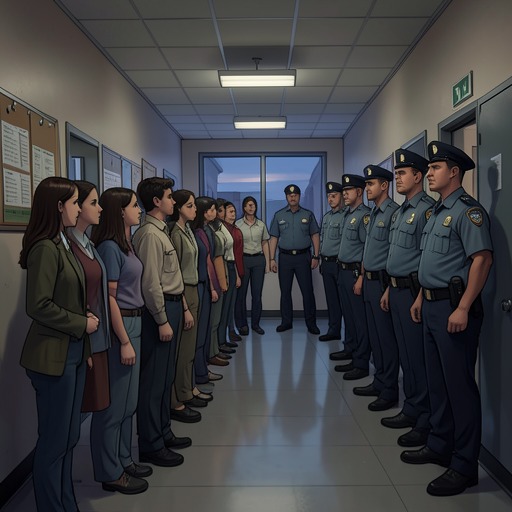
Dr. Rhodes is identified in the narrative as a school administrator. The available evidence does not give her a fuller biography or specify her precise title, but it repeatedly places her in situations where the school’s authority is visible: watching students in the hall, addressing the school community, and directing people at the entrance.
Her first notable appearance in this evidence comes as Brianna discovers that her song has reached twenty thousand streams. Dr. Rhodes is nearby and looks over her glasses when the excited Brianna shouts the news in the hall. The moment sets Dr. Rhodes’s institutional presence beside a breakthrough Brianna experiences as personal and public triumph.
Response to the Security Incident
After security guards Long and Tate restrain and search Brianna, Dr. Rhodes says there will be an investigation and that disciplinary action may follow if the administration considers it warranted. Brianna later doubts that the promised accountability has amounted to anything: when the guards return, she interprets their presence as evidence that their conduct did not meet the school’s threshold for bad behavior.
That contrast shapes Dr. Rhodes’s role without establishing what the investigation concluded. Her stated response recognizes the possibility of discipline, while Brianna and her classmates see the guards back at school and conclude that the response has not addressed their concerns. The evidence records the promise and the students’ perception of its failure, but does not confirm whether any formal findings or sanctions were made.
Protest and Student Response
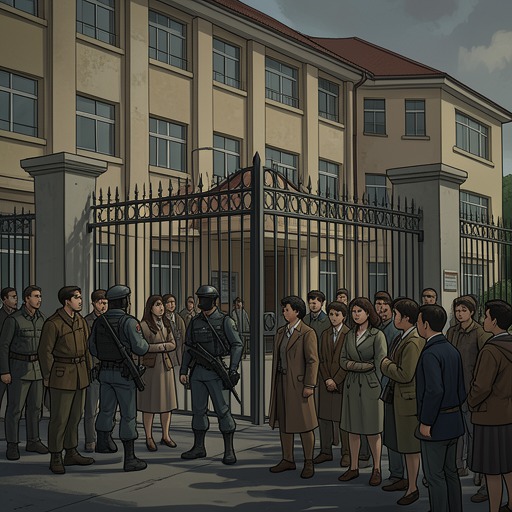
When students gather and Dr. Rhodes is near the doors, she tells them to come inside in an orderly fashion. Her attempt to manage the entrance takes place as students question why Long and Tate are back and argue that the incident did not attract enough attention. The orderly instruction thus meets a crowd already focused on whether the school has listened.
As the protest grows, students repeat Brianna’s lyrics. Dr. Rhodes calls over them that the school will not tolerate that type of language and tells students to stop. Her warning does not end the chant: Curtis raises the repeated line “You can’t stop me, nope, nope,” and the crowd takes it up. The lyrics, first written and performed by Brianna, become a public answer to the school’s attempt to control the demonstration.
Narrative Role and Significance
Dr. Rhodes’s scenes mark the institutional frame around Brianna’s changing public life. In the hall, she witnesses the excitement around the song’s online success; during the later protest, she confronts the lyrics as a form of dissent. The shift from the song’s circulation as a personal recording to its use by students at school shows how Brianna’s words acquire a meaning and audience beyond her control.
The narrative gives Dr. Rhodes limited access to the story: she speaks for the administration in moments of public tension, but her private views and the eventual institutional decisions remain unstated. That restraint leaves the consequences visible chiefly through student response—the guards’ return, the crowd’s anger, and the chant that continues over her warning.