Garden Heights
On the Come UpGarden Heights is the neighborhood Brianna Jackson calls home, but it is not a single, stable place: its east and west sides bear different reputations, while violence and policing unsettle the whole community. The aftermath of a teenager’s killing by a police officer makes the neighborhood’s public life, Brianna’s family history, and her emerging identity as a rapper inseparable from questions of safety and who is treated as a threat.
Geography and Everyday Life
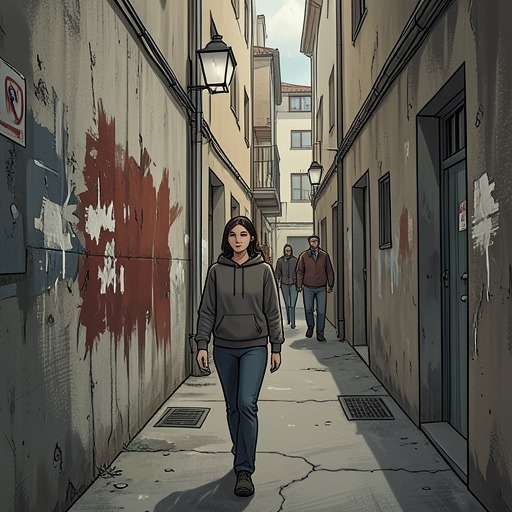
Brianna lives on the east side, where houses are described as nicer, homeowners older, and gunshots less frequent. Maple Grove projects lie a fifteen-minute walk west. Brianna’s grandmother calls that side “that ol’ rough side,” and it appears more often in the news; yet Brianna rejects the idea that the east side is truly safe. Comparing the neighborhood to a Death Star, she suggests that the difference between its sides is relative rather than reassuring.
At Maple Grove, six three-story buildings stand close to the freeway. A seventh burned down years earlier; instead of rebuilding it, the state removed it, leaving a grassy field where children play. Brianna notes the stark contrast between that play space and the playground used by people struggling with addiction. These details make the neighborhood’s divisions material: its uneven resources are visible in its buildings, recreation areas, and public image.
Garden Heights also contains ordinary routines that persist amid that hardship. Brianna sees older residents watering flowers and taking out trash, while cars play music nearby. The familiarity of these scenes does not erase the change that followed the unrest; the neighborhood can look normal through a window and still feel less safe to the people who live there.
Violence, Unrest, and Policing
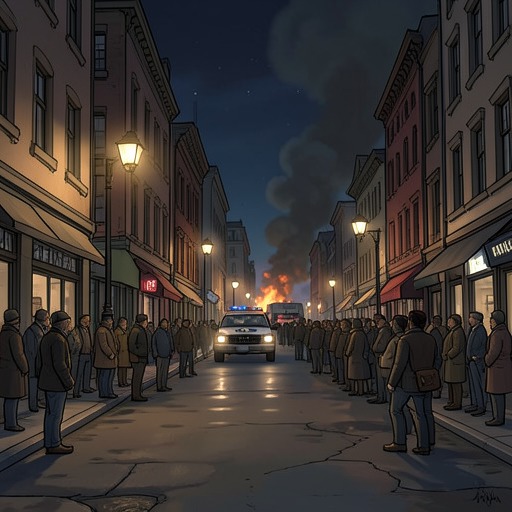
The events that altered Garden Heights began when a police officer killed an unarmed teenager a few streets from Brianna’s grandparents’ home. A grand jury declined to charge the officer. Riots and protests followed for weeks, and businesses across the neighborhood were burned, either intentionally or as casualties of the wider conflict. Club Envy, a regular Thursday-night gathering place, was among the businesses lost.
In the aftermath, Jimmy’s parking lot becomes a venue for the Thursday-night crowd after the Ring’s final battle. Brianna dislikes partying in the cold, but observes people displaying customized cars while police vehicles repeatedly pass. The presence of patrols is presented as a new normal. What might be framed as reassurance instead feels to residents like surveillance: the visible policing does not settle the question of whose safety is being protected.
Brianna’s mother, Jayda Jackson, describes the killing and the public response through the image of a stranger entering a home, taking a child, and blaming the family for being dysfunctional, while outsiders judge the family’s grief. The comparison gives the neighborhood’s unease an intimate scale: the issue is not only that violence occurred, but that the community’s loss is followed by scrutiny and blame.
Home, Reputation, and Public Scrutiny
Garden Heights is also the place where Brianna’s connection to her father, Law Jackson, remains visible. At Maple Grove, a stranger recognizes her as “Li’l Law.” Brianna has never seen him before, but waves; being her father’s daughter is a bond she carries even when others know her chiefly through his name.
That inheritance intersects with the demands of a male-dominated rap scene. When a man questions whether Brianna can perform and mocks the prospect of a girl rapping, she answers with a joke that turns the ridicule back on him. The moment reflects the standard her aunt had warned her about: she must work harder for less respect, be as cutthroat as the men around her, and avoid appearing weak. Her wit wins laughter and acceptance in the room, but the need to prove herself is part of the cost of being a young woman pursuing rap.
The neighborhood’s public image follows Brianna beyond its streets. After her song “On the Come Up” attracts attention, a television report identifies her as a local rapper from Garden Heights and presents the track as violent and popular with young listeners. The coverage excerpts its lyrics and links them to attacks on law enforcement. Later, during a radio interview, Hype challenges the song’s references to weapons and suggests that it implies killing police officers. Brianna rejects that interpretation and points out the double standard in his response: her father had rapped about similar material at sixteen without drawing the same objection. Garden Heights is thus not merely the setting for her music; it is part of the context through which others interpret and police it.
Narrative Significance
Garden Heights holds ordinary life, aspiration, loss, and surveillance in the same frame. Its residents maintain daily routines; young people gather around music and cars; Brianna discovers that she can succeed at the Ring. At the same time, burned businesses, the killing of an unarmed teenager, and the recurring presence of police mark the limits of any easy return to normality.
The contrast between the neighborhood’s own experience and its mediated reputation is central to Brianna’s story. News coverage can present her lyrics as a danger while neglecting why students protest, just as public judgment after the killing can recast a grieving community as the problem. Garden Heights gives Brianna both a source of identity and a difficult audience: the place she represents is often described by outsiders through violence, even as its people continue to build community, make art, and pursue change.